Showing posts with label Other People's Work. Show all posts

Sunday, 3 May 2026

March-April 2026 Miscellany: Raging Wazirs of Angelic Khartoum

I have been reading, writing, and occasionally watching. 

***

I re-read the Mortal Engines Quartet and gave my own particular take on twenty-five years of that series, hopefully improving the grade of TRACTION CITY DISCOURSE

***

     Worldbuilding & Woolgathering and
     The Wishstone and the Wonderworkers (1990) and
     The Wazir and the Witch (1990) and
     The Worshippers and the Way (1992)

A return to Hugh Cook. As before, these were read in the wake of the False Machine two-part review of all ten of the Chronicles of an Age of Darkness. For those after a fairly quick introduction to the series, I could do worse than point you towards these two summaries with a smattering of comment by Adrian Tchaikovsky. I also read between posts The Women and the WarlordsThe Walrus and the Warwolf and The Wicked and the Witless, but there wasn't the time or impetus for a post on them.

I don't have any new comments on Cook here, or anything much I'd like to add to the linked material. The main thing I would stress about Wishtone, Wazir and Worshippers is that they are set in contrast one to another. Wishstone and Wazir we will treat as one for these purposes, set against Worshippers.


To it: Wishstone is set on the baking, fertile remote island of Untulchilamon (which produces many exotic commodities), far from the centre of power of its nominal imperial ruler; Worshippers is set in Dalar Ken Halvar, city of the Silver Emperor - a notably dusty and infertile place with near-exhausted silver mines. Wishstone's protagonist is the callow youth Chegory Guy, an Ebrell Islander. Worshippers' is Asodo Hatch, a middle-aged man of some experience (thanks to the Combat College, experience and systematised knowledge barely any on the planet could hope to match), and a Frangoni - who have been pitted against Ebrell Islanders on the continent of Parengarenga. Chegory Guy struggles to unite with the object of his affections; Asodo Hatch has a wife, several children - and, in time, a mistress. 

Untulchilamon in Wishstone contains the city of Injiltaprajura, beneath which is the ruined spaceship-arcology of the Below; this is unmapped and poorly understood by those in the city above. Dalar Ken Halvar in Worshippers is home to the Combat College, of the same space-faring civilisation as the Below but intact, utterly familiar to many of the main characters and working sort-of as intended. This extends to the alien entities and machine-minds of the Below and the Combat College. 

Wishstone sees a constant confusion, a chaos of multiple moving parts, deceptions, miscommunications, bluffs, feints and ploys (something added to by the many metatextual elements). It's not that clear what Chegory Guy or Justine Thrug (who we may as well treat as the protagonist of Wazir) actually have to do to come out on top. Worshippers sees Asodo Hatch face off against Lupus Lon Oliver to become Instructor of the Combat College; if he can accomplish this - by fair means or foul - he will become basically secure. There's no ships arriving in harbour with parties of questing heroes or false government officials: his opponents are there and effectively obvious from the start.

At the end of Wazir Justina Thrug and many of the main characters leave Untulchilamon. This is sad - exile and flight from somewhere you once had power, from a bustling and prosperous city in the face of imperial power (as wielded by Ardarch III, Mutilator of Yestron - who sounds charming). But Untulchilamon was always a bit crazy - it could be actively unpleasant if you were an Ebrell Islander  - and Justina didn't really manage to improve the place much. Why not try elsewhere? Asodo Hatch wins the day in Worshippers beating out his opponents in the Combat College, subduing the city, curing his wife and even squaring the AI that has somehow maintained the Combat College through the millennia. But he has given up so much to reach that point that exile could well seem the preferable option - at least, for Hatch personally. 

Just as all that suggests, Worshippers may be the bitterest of the Chronicles since Wizards. In some ways, I'm surprised there weren't more Chronicles in this tone. But taking Wishstone and Worshippers together, we have Cook asking us something like this: Comic Defeat or Tragic Victory. The answer is not an easy one.

As in the previous review, I was interested to read Worshippers by reason of comparison with the setting and backstory of Punth: A Primer. Having done so - they're not as similar as all that. The remnant of a space-faring civilisation warps a society to their will in both, but the Worshippers-analog events in Punth happened centuries (perhaps most or all of a millennium) before the Primer was written. It's also noteworthy that the Combat College is following its original purpose  fairly closely, unlike whatever the Qryth are doing by this stage. 

***

The Rage of Party: How Whig Versus Tory Made Modern Britain, George Owers, 2025

A quite recent book detailing English politics in the last decades of the seventeenth century and the first few of the eighteenth. Some of the highlights were familiar (Titus Oates, Marlborough, The Favourite, the Monmouth Rebellion) as were the broad strokes of nonconformist and Anglican, Jacobite and Hanoverian. But frequently histories dance over all this promptly in time for Queen Anne to die or concentrate on the War of the Spanish Succession, so view of the period firmly addressing domestic politics is welcome.

A warning: this is high-middlebrow history, though it still will occasionally drop in a sensationalist line one-line paragraph to round off a chapter or feel it has to define a halberd or refers to 'Carry-On Antics'. Further, whatever the merits of The Rage of Party, it still is making a bid for Relevance, with the introduction discussing the migration of Palatine Germans to England and the Tory bid to end Marlborough's 'Forever War' in Europe (and beyond) set against Whig vows of undying support for their Dutch and German allies. 

But, importantly, it doesn't get stuck in this mode. Whig and Tory swap roles as Optimate and Populare, but this maps poorly onto the present - and, more to the point, Owers provides a goodly number of instances where both sides employ both modes (or are made up of both types, in varying proportions). Other elements feel contemporary without very direct parallels having to be drawn: Defoe's Shortest Way with Dissenters is received as both a genuine and ugly attack on nonconformists and a piece of satire. Addison's Cato is warmly welcomed by both Whig and Tory, and plays to packed and hearty crowds applauding different sections, despite being from the pen of a committed Whig. An assassination attempt is made on Robert Harley, the Earl of Oxford and Tory Chief Minister via a rigged parcel - the Bandbox Plot, 1712 - and because it is privately thwarted, is regarded as a hoax (Jonathan Swift was there, and his private correspondence certainly suggests that it was real, and he was worried). As some of those names suggest, there is a flowering of literary patronage in the period.


The element that gets stressed - rightly - is religion. For all that an acquaintance with the Vicar of Bray will help, The Rage of Party will take you painstakingly through Occasional Conformity Bills and Tackers. The fame of Henry Sacheverell ought to be far better known, as a marker of the power of religion and the strange contortions of popularity and fame. 

I've enjoyed The Rage of Party for it's own sake, but it clearly has a bearing on The Rest of All Possible Worlds. Certainly, Malmery-as-written is fevered by the Rage of Party and hasn't blossomed to what it could be. Religion is less stressed by TRoAPW than it might be, for all that The Majestic Vision has been outlined, as have the Schools of Calliste that Teach It. While the Schools will have their political influence and effects, I suspect that politics in TRoAPW should foreground magical debates over religious ones. 'How dare you tax us so heavily to pay for more mages!' 'The systematic creation of mages divorced from their customary state will result in a tyrannical ruling caste of sorcerer-kings!' 'Magic should be for the people, not the Lords!'


Also, A Tale of A Tub is the equivalent of a Substack composed of equal parts political ranting and esoteric vignettes.

***

In addition to diving into the riddle-games and vasty imagery of Solomon and Saturn, here's an essay on Carolingian Angelology, in which the ranks of the saints blend into the ranks of the angels. There's an obviously fantastical image there, though I wasn't expecting the use of the angelic hierarchy as a tool by the Emperor and the Episcopate. I'd certainly heard of folk saints and Guinefort the Holy Greyhound and so forth, but I'd taken it that the proper replacement was an approved sacred virgin or apostle or something - to say nothing of 'Angels in the guise of Martyrs'.

***

I read (and approved of) Queen Mab's Palace, as well as several rather different forms of space travel.

...and speaking of Medieval space travel, this post somewhat resembles my own Faufreluches, categorising and cataloguing the Dying Earth subgenre. You will likely want to pick holes in some of it, though a line between The Night Land and Viriconium is sensible. One question being: Is Yoon-Suin Dying Earth? Certainly, Viriconium and The Book of the New Sun are in its Appendix N. But I'd argue that there is a mild but telling difference between a world where deeds and actions will be swallowed by the death of all (and many deeds and actions have already gone before) and a world where all deeds and actions will be swallowed by growth and fecundity and the weight of a thousand cycles of this in ages past.  

***

The Troy Book of John Lydgate, partially employed in my last post, also has a long section on armour as the Trojans arm for battle: Book III, line 40 or so onwards.

W[h]ere alle þe worþi noble werriours 
Of Troye toun to-gydre assemblid be, 
And many oþer to be-holde and se 
Þe famus knyȝtes arme hem in þat place.
And some of hem gan ful streite lace
Her doublettis made of lyne cloth,
A certeyn fold þat a-boute hem goth;
And some also dempte most surest
To armen hem for bataille of arest,
And dide on firste, aftir her desires,
Sabatouns, grevis, cusschewis, and voideris—
A peire breke, aldirfirst, of maille;
And some þer wer eke þat nolde faille
To han of maille eke a peir[e] bras,
And þer-with-al, as þe custom was,
A peir Gussetis on a petycote,
Garnyssched with gold vp on-to the þrote,
A paunce of plate, whiche of þe silf be-hinde
Was schet and clos, and þer-on, as I finde,
Enviroun was a bordure of smal maille. 

Like Chaucer, his near-contemporary, try reading it aloud (treat yogh - ȝ - as Y and thorn - þ - as Th: Þe famus knyȝtes arme hem in þat place -> The famous knights arm them in that place). 
So we see armour: 'Sabatons, greaves, cuisses and voiders'; a pair of breeches, made of chainmail. 

Choices of armour vary:
some wold armyd be more liȝt
In þikke Iackys curid with satyn;  

'rather be clad in a thick jack cured with satin'.

As do choices of weapons:
To welde hym wel, whan þat he schal fiȝt.
And some wiln han a target or a spere,
And some a pavis, his body for to were,
And some a targe, makyd strong to laste;
And some wil haue dartes for to caste,
Some a pollex, heueded of fyn stele....

A target shield, a spear, a pavise, darts, poleaxes..... 

And some a swerd his enemy for to mete.
And some wil haue a bow for to schete,
Somme an arblast, to stonden out a-syde;
And some on fote and some for to ride
Arraie hem silf, her fomen for to assaile;

Lydgate has no special knowledge of arms and armour, and openly proclaims it, suggesting that you may correct it as you prefer. This is not a technique likely to impress your PhD supervisor, but it's honest and interesting here.

I haue no konnyng euery þing to telle,
And vn-to ȝow it were to long to dwelle—
Where I faile, ȝe mote haue me excusid;
For in swiche crafte I am litel vsid,
And ignoraunce doþe my penne lette,
In her ordre my termys for to sette.
And oft chaungeth swiche harneis & devis;
And ȝe þat ben þer-in experte & wys,
Disdeyneth nat þat I speke in þis place
Of her armyng: for al is in ȝour grace,
Riȝt at ȝour luste to correcte euerydel.

An abridged and annotated version of the Troy Book is here; the arms and armour segment above is here.

***

Khartoum, dir. Basil Dearden, 1966

This is not a very good film, while being a lavishly-funded epic; bad for different reasons than B-Movie blood and guts. It details the 1884-85 siege of Khartoum, and the conflict between General Gordon (Chinese Gordon, Gordon of Khartoum) and the religious leader Muhammad Ahmad bin Abdullah bin Fahal, known as the Mahdi. I've made no focused study of Gordon, but had encountered some of his life, his intransigence, his drive and notable Christian faith. Even setting aside his spectacular death, I suspect that the biographers would be making hay of him in any event. Obviously, do some reading of your own on the Mahdist War. (You may find a detailed summary of the film here).

To get one thing out of the way first: Laurence Olivier plays the Mahdi in brownface, adopting a silly high-pitched accent. This look unnatural against everybody else and doesn't work very well, but otherwise isn't that interesting (other than that it's a real contrast with more contemporary portrayals of Islamic revolts, and for every nineteen reviews that fulminate against it, you can find one that quite likes Olivier).

Gordon is played by Charlton Heston, with what I think is something of a cowboy affect. His defence of Khartoum has a touch of 'defend the frontier town' about it - though the film is quite clear that Khartoum is an old city, with a mixed population of Sudanese, Egyptians and Europeans. He is introduced on a train, which feels a rather Western touch (if without any Colonel Mortimer shenanigans) and later rides out alone into the desert to confront the Mahdi before the siege begins. His personal bravery, strict moral code and quiet defiance of Gladstone et al adds to this. But maybe I'm just reading back from an actor's biography. (Though actually, a Western transplanted to the Sudan might be interesting...)

The film (shot in Panavision) looks a bit sad in places. There's some good wide scenes of battle and fury and armies, though often there's a sad-looking insert with a backdrop for Charlton Heston; these scream 'Charlton didn't want to sit around in the desert'. The soundtrack is often quite what you'd expect, though there's a quote from 'Highland Laddie' that works as a sort of 'Anthem for Doomed Youth' with its contrast of youthly vigour and splendour - and a doomed expedition. To say nothing of the Scottish connection between 'Highland Laddie' and Gordon (as in Highlanders) himself.

The elephant in the room is Lawrence of Arabia, the dialogue of which references Gordon directly. They're trying to capture some of the same magic, but it's not as spectacular, not as impassioned. It lines up very nicely in some ways: the imperial ambitions, the desert war in an Islamic culture, the driven and eccentric protagonist clashing with his political masters. Gladstone and his ministers make multiple appearances, unlike in Lawrence - which drains something from the desert setting, and spells things out in a way that Lawrence didn't do so bluntly with Allenby and Dryden; although in fairness, the tangle of British involvement in the Sudan probably required a little more background for audiences than the First World War. Further, Gordon as an experienced colonial administrator and general can't well be compared to the callow lieutenant Lawrence. The brief, clumsy narration at the start of Khartoum is far vaguer and emptier than the reflections on Lawrence's life at his funeral. 

But there are the lines of a better story, with an often clumsy execution. Gordon's ruthless pre-film efforts to eliminate slave trade and bring peace to the Sudan have produced death and disruption, as the Mahdi notes - and cost him local allies. In theory, this ought to be a contrast of similar personalities: two messianic, highly successful, fanatical warlords, and how their respective cultures treat them. What if both sides had a Lawrence? What if both sides had a Kwasitz Haderach?  

(In theory, this is Feyd-Ruatha. But he's riding on the Baron's coat-tails - and while the Dennis Villeneuve film nods at his popularity, the freakiness of the arena scene, his blatant viciousness and the Nuremburg-like processions distract from this and imply something different with the propaganda spectacles. His moments of military competence are there, but it's never clear that he could found an empire or play the game of imperial politics. Cf. this assessment.)

But, alas, Heston's Gordon is somewhat too heroic; his popularity with the British public is never quite apparent enough to contrast with the Mahdi's dervishes and his clashes with Gladstone's representatives and the delays of Wolsey's forces don't have a good contrast in the Mahdi's ranks. Admittedly, this would have made the film longer and more complex, but if you are going to set yourself up as another Lawrence, such a thing is inevitable. 

Anyway, don't expect to be amazed - but do contemplate giving it a watch. Per one interview, it's a guilty pleasure of Martin Scorcese. And it was enough to make me write all that. 
Thursday, 2 April 2026

The Terpsichorean Sodality welcome the Grand Commodore

 The latest post over at Grand Commodore has a great number of Animal Men listed. I read it over, appreciating the Osprey Man and the Musk Ox man, among others.

Then it occurred to me that there was some overlap between the various Avian Animal Men and the Aviscaputs listed in The Terpsichorean Sodality of the Bird People, my entry for the False Machine Dungeon Poem challenge back in February 2021. These were less animalistic - and definitely more English - than HCK's Animal Men (as I even observed at the time!) But there's enough of the bird species used in TSotBP* that overlap with this new post that I feel I'd quite like to fill in the gaps.

Anyway, referring to the list of Sodality Members.

  1. Hoopoe Tietjens.  [Hoopoe]
  2. Picador Vansittart. [Magpie]
  3. Raptora Uexkull.  [Kestrel]
  4. Iolanthe Wrenfield. [Wren]
  5. Lanner Coningsby. [Lanner falcon]
  6. Urgulanilla Guillemot. [Guillemot]
  7. St. John Goldfinch. [Goldfinch]
  8. Clemency Yaffle. [Green woodpecker]
  9. Gymkhana Dabchick. [Dabchick]
  10. Monedulus Alleline. [Jackdaw]
  11. Egret Dalziel. [Great white egret]
  12. Hilarion Ptarmigan. [Ptarmigan]

Magpie Men already exist, as do Wren Men and Kestrel Men. For completeness, here are their entries.

Kestrel man

The animal man attack helicopters; hover and dive
A lot of people like their coats
Discourse tends to be sort of ratchet

Flying (don't need traverse to remain airborne), +d6 Damage when diving at least 15’

***

Magpie man

It’s not that you have to be a thief, it’s that skill and interest have a compelling channelizing effect
You are profoundly intelligent, however intelligence is orthogonal to impulse. Impulse may win out against reason. Desire often wins out against reason
You can sing beautifully; that’s one way to gain coins (them being shiny is less important than reputed)
Or you can do what people will expect you to do
Pica pica
Their mate-attraction is done a little bit more suavemente than most bird men

-1 Str, +3 Int, -3 Wis, +3 Cha, +3 to Bardic performance, Advantage to Pickpocket, Advantage to Lockpicking, Professional Skill: Numismatist (Int)

 ***

Wren man

Songs appeal to dilettantes
Attracted to the caves of the Bat Men and the Cave Swallow men; often serve them as heralds, troubadours, and auxiliaries. Despite enjoying insect man flesh, wren men often serve with antman armies, as well
Small-bird Napolewren complex**

-1 Str, +2 Cha, +2 to Bardic performance
 ***

And on the remainder from TSotBP.


Hoopoe man
Massive crrrrresssssst
Long elegant beak, which seems like it would be a bad idea to be on the wrong end of
Occasionally claims to be the king of the birds; this is amusing to eagles, offensive to swans and an affectation to most others
Probably never going to invent a religion, but pretty good at keeping one going (occasionally, one will turn out to be a particularly magnetic cult leader)

Flying, Animosity: Swan men, Advantage to Intimidate

 ***

Lanner falcon man
Fly best in straight lines, and take a lot of airborne prey - if kestrels are attack helicopters, they are interceptors
Like the savannah, great on a safari
Cooperative hunters, no glory boys here (by Raptors standards)

+2 Str, Flying, Copes well with the heat


***
Guillemot man
Cliff dwellers, highly fertile
Can attack water-dwellers in one-minute dives to surprising depths and swim 30' underwater
Mostly spend their time fishing and ignoring you
Some are black and white, some brown and white. The abstract curves of their patterns have led guillemots to develop a form of folk-art rather like dazzle camouflage 
 
Flying, Diving, -1 Cha  
*** 

Goldfinch man
Small, with red, white and black faces like exaggerated theatrical masks
Excellent singers and quick learners, frequently find a place as an artiste of some kind (sparrows are far more down-to-earth and easier to get on with backstage)
They know how popular they are, and how much the powerful like to keep them around - they are almost always adopting a social persona of some kind  

-1 Str, +2 Cha, +2 Int, +3 to Bardic Performance 

 ***

Green woodpecker man***
Sleek, red-headed. 
Thick beak, thick skull.
Better joiners than lumberjacks; they pair up with Beaver men to corner the woodworking industry. Vertical integration: tree-roots and tree-trunks!
Sounds like they're laughing at you, probably aren't
 
+1 Con, Flying, Affinity: Beaver Men, Can make a d4 attack that ignores light armour or breaks a wooden shield

*** 

Dabchick man
Small, dumpy
Like to live by lakes and other smaller bodies of water
Better in the water than on land, if not quite to penguin levels 
Beautiful chestnut throat and cheeks 
Have a reputation in some circles as being really good harbourmasters and lockkeepers. Have a reputation in other circles as being good smugglers.

-1 Str,  Flying, Advantage to stealth in water


*** 
Jackdaw man
Look faintly clerical and shabby, decent mimic, excellent for spy work in cosmopolitan settings
Social, but not always very talkative
Smaller than Crow men and Raven men, and less of a target for Swan men
A jackdaw man is reputed to have invented the first joke

+1 Cha, Flying, Choose 1 additional language, Suffers no disadvantages in ruins and tunnels

*** 

Great white egret man
Long tall white streak with thin legs and manic eyes. 
Will squint at you like a librarian then puncture you full of holes with a spear-sharp beak
Politely baffled by people who fish for a hobby. Utterly antisocial white fishing
Good with a harpoon, thinks tridents and eelspears are for losers

Flying, d8 beak attack with the reach of a polearm, Animosity: Frog men

*** 

Ptarmigan man
Undergo a personality shift with their winter plumage - from dowdy summer shyness to glacial winter hauteur
Not a frequent flier.
They taste delicious, and they know it.
Not afraid of thunderstorms

+2 Cha in Winter, -2 Cha in Summer 

*** 

I regret not making Urgulanilla Guillemot a Gannet.

I suspect that the Great white egret man would serve as a heron man also.


* Pronounced 'Tsot-Bop', if you must...
** Alas, a missed opportunity to discuss London architecture.
***I'd forgotten that these turned up in the Three Mile Tree.

Tuesday, 31 March 2026

The Cape of Four Pleasances: Nereid Bell Edition

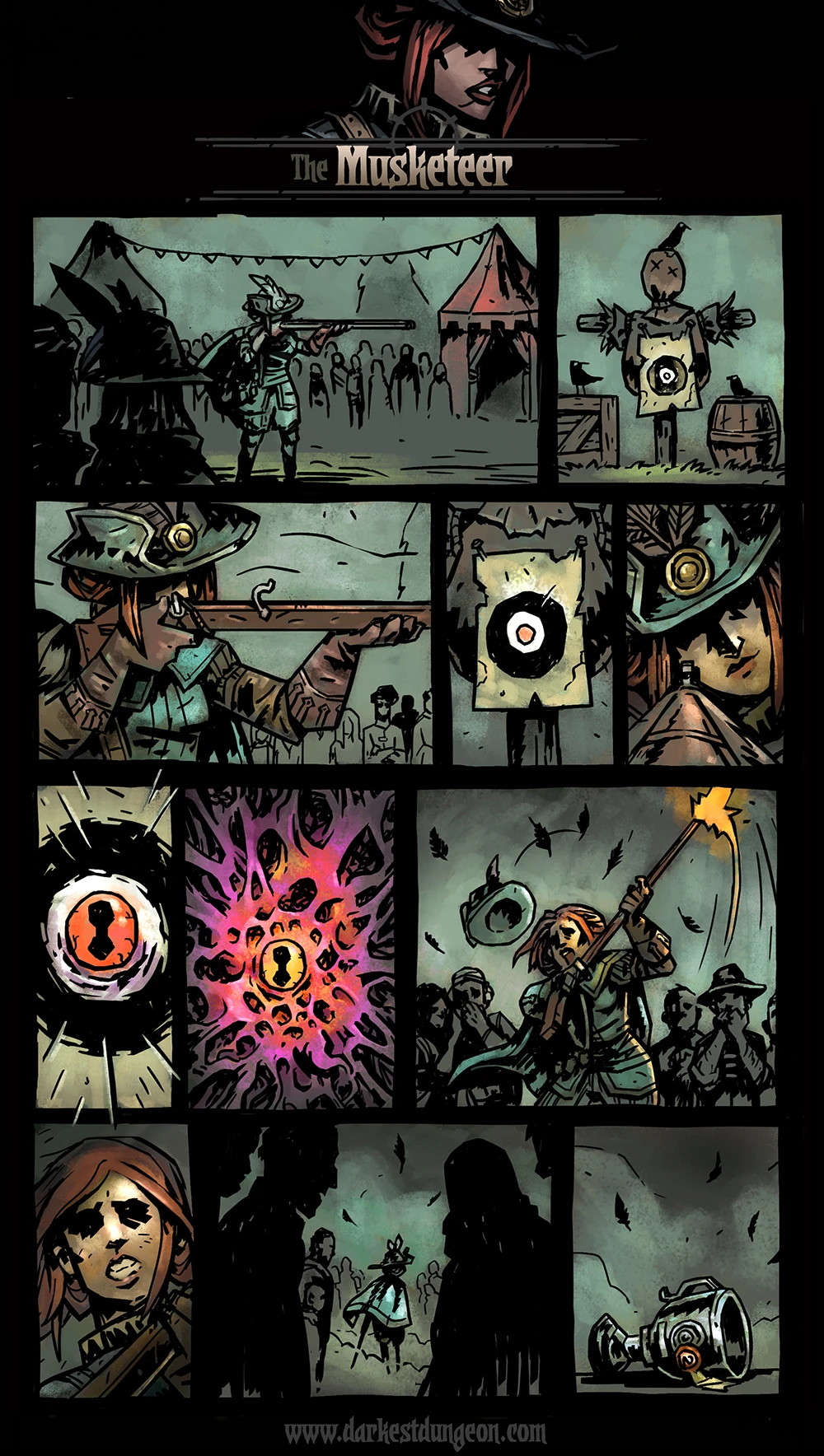
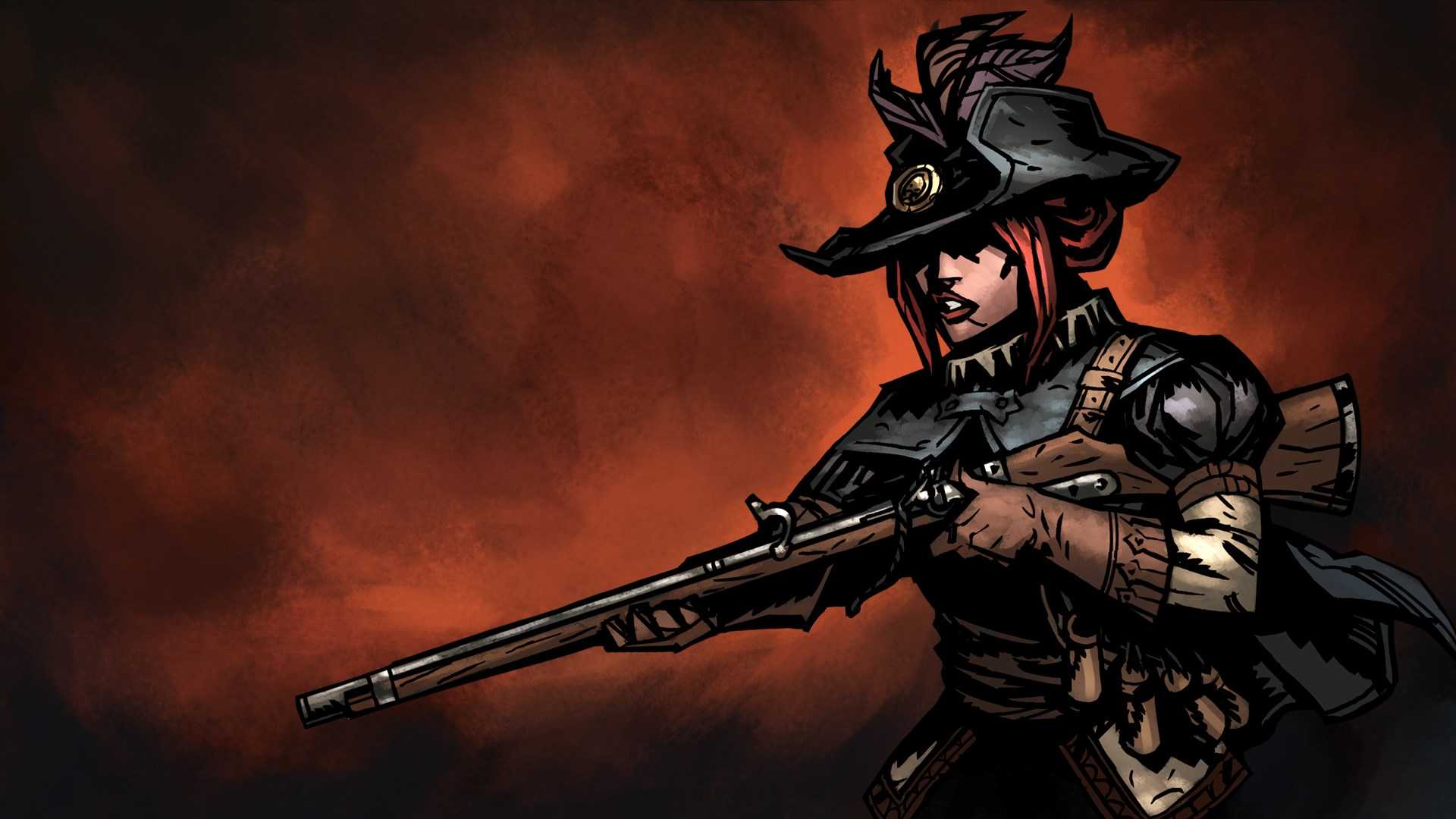
I decided to finally get on and pull The Cape of Four Pleasances into a PDF. You can find it on Itch.io, for free. There's some extra content compared with the original blog post; the only things I've cut are the introductory blog text referring to The Rest of All Possible Worlds and the pictures from Darkest Dungeon illustrating the crossbow/firearms connection.

Buy Darkest Dungeon®: The Musketeer - Xbox Store Checker
Musketeer and Arbalestof Darkest Dungeon.
Arbalest - Darkest Dungeon Guide - IGN
Admittedly, they have a somewhat different characterisation.

That aside, all other introductory material is in the PDF - and I may direct you to it here.

Saturday, 10 January 2026

Faufreluches: The Salvation of Nereus

You are a man out of time. You are yesterday's hero, and tomorrow's. 

You are of the Palace. You are a Paladin.

This is a treatment of Investigating Censor for this blog's Faufreluches setting. Consulting both before proceeding is recommended!

+++

The Scene

The Nereus system lays spinwards of Mencharo, on the verges of Regency territory. It sits in an odd plane of Curtmantle space, making it slow to access but necessary to pass through. Thirty-four planets, planetoids, and moons orbit a blue-ish but hospitable sun. 

These include...

  • Limnoreia, airless seat of a Mews waystation
  • Amphinome, where abundant pastures have been seeded under Stadtholder supervision
  • Maira, glistening with deadly volcanic activity
  • Kymothoe, a planet of vast oceans and swift winds
  • Galateia, blanketed in impenetrable cloud
  • Amatheia, a moon of grit deserts and grey chasms
  • Oreithyia, high-peaked planetoid with an erratic orbit
  • Speio, of the fertile caverns
Two Janissariat groups have set claims to these worlds. They are the Díarmuidapur Kin-Brigades and the Neo-Bactrian Peregrines.

The Díarmuidapur Kin-Brigades

The Díarmuidapuri are known as some of the foremost shock infantry in the Regency. Their main advantage is not merely the charge - though this is undeniably ferocious - but that they make their assaults through and in mortar fire from their support column. This is enabled by the short-burst energy-based 'shield umbrellas' that allow for carefully timed near-invulnerability from above. Trust between 'Pipes' and 'Drums' is essential, given the nature of their signature tactic - and they are reshaped by the structures of this Janissariat band to have bonds equal or surpassing the family bond. The desire for mortar-hefting Pipes to become broad-backed Drums covered by the taut cylindrical skein of the shield umbrella also leads to competition, reinforcing that bond in odd ways as Pipes try to both goad on and preserve Drums.

Recruitment 

The Díarmuidapur Kin-Brigades take only volunteers - but do spend their time boasting widely of their deeds and encouraging artwork in their honour. Their reputation is significant in their sector of the galaxy, and it is well-populated enough to provide an ample supply of young hotheads, would-be heroes and thick bastards. It helps that the Kin-Brigades look and act a lot more human that many Janissariat Bands. 

There are a scattering of Díarmuidapuri families, but never quite enough to repopulate their numbers. Former Drums (and invalid Pipes) will drift into assorted administrative roles.

Resources

The Kin-Brigades' characteristic shield units are now difficult to fabricate: force-flow circuit miniaturists are few and circuit miniaturists with access to precision-work machinists and ample resources are even scarcer. So shield umbrellas are passed on from a former Drum (who are never defeated, because when even when broken, they can't be beaten) to a battle-proven Pipe. Shield units are plugged between the shoulder blades of a Drum via spinal nerve-ports, to enable their flexible, nigh-instinctive use. 

Díarmuidapuri mortars are not altogether dissimilar from those used across the Regency by household armies and local defence forces. They are easier to carry and reposition, but the real advantage of a Pipe over any other bombardier is their single-minded practice and training. Kin-Brigades are also more willing to obtain exotic munitions. Pipes will carry compact solid-shot carbines and short, handy combat blades.

Drums are glad in robust armour (largely unpowered - the shield-umbrella requires a bulky power pack already), proof against most small arms fire. A tall helm is common. They typically carry a long two-handed sword, edged with molecule-baffling quasi-sharp Tonsori anomaly shards. Compact 'Saltshaker' hand cannons offer the possibility for harassing fire, clearing rooms and intimidation. 

The Kin-Brigades make use of a variety of muscle enhancements, dietary supplements and synth-sinews, and have a number of trailing surgical clans dedicated to supplying these. They also have access to an impressive array of construction tools and materials

Customs

The Díarmuidapuri encourage plenty to be said about them, and will offer patronage widely. But they have a few specific customs of their own. Firstly, there are lineages of Pipe and Drum that reproduce sensibilities, techniques and personal superstitions from master to apprentice. The term 'Kin-Brigade' often makes outsiders think of these as essentially father and son relationships - but the Díarmuidapuri are sufficiently egalitarian that it is better thought of as elder and younger brother (other than those Pipe and Drum combinations that have a father and son in them...).

Secondly, a Kin-Brigade raises up a feasting house in every even semi-successful campaign. These are towering affairs bearing a variety of stylised geometric forms - lines, diamonds, squares, carefully regular semi-circles. Glazed terracotta is often used, as are neolithiform blocks, along with chrome. Sometimes the local marmoreal will be used for floors or details. Several empty floors and vaults support an upper section that is a banqueting hall with the attitude of a penthouse. When the Kin-Brigade moves on to a new world, the feasting house is left. The vast buildings frequently become storehouses or government departments.

Campaigning

Kin-Brigades generally aim to bring their opponents into a fixed battle. Settlement of the dispute will happen one way or the other and the Kin-Brigade can move on. In the event that they cannot bring an opponent onto the field, they will sweep a region in a series of raids looking to flush their foe into the open. 

The Díarmuidapuri largely aim to enlarge their network of protectorates and obligated nobles and will move quite readily between systems to allow this. They take very little territory but a great deal of supplies and arms.


The Neo-Bactrian Peregrines

The Neo-Bactrians will go about anywhere a human being will go. They will go there carrying more, seeing more and coming back with more. They are also far more likely to survive. Peregrines are nomadic cybernetic warriors bound into mechanical walkers; typically Neo-Bactrian walkers have four legs (with a variety of foot and hoof options), a back bowser for fuel, a central pod for the pilot and an extended forward weapon and sensor mount. 

A world is given into their care for survey work: settlers will serve their needs for a generation - then the Peregrines will move on. If not gathered into a great expedition, Peregrines spend their time moving between settlements on Neo-Bactrian worlds, usually alone. 

Recruitment

The Neo-Bactrians are open to talent, but maintain their numbers largely through a slow but persistent breeding programme. Genetic material can be exchanged, surveyed and assessed at the meeting or two Peregrines. Offspring are deposited with the mobile creche-barracks run by a Secretariat-registered nursery guild. 

Resources

Neo-Bactrians walkers stand higher than the average Regency four-person automobile, but are generally narrower. A variety of hooves allow them to master different terrain. The flexible weapon and sensor mount can be raised and lowered to precise and surprising angles. Walkers are known to be armed with flame projectors, grenade launchers, flechette autorifles and microwave burst guns. 

Neo-Bactrian worlds will have settlements known as Oases (which are probably near a body of water, if not a literal oasis). A peregrine will call at these once a month or so: the helots in this village will provide the Three Types of Fuel, the Six Types of Filter, the Four Types of Projectile and an number of items from the Catalogue of Spare Parts. 

Customs

At an oasis, a Peregrine emerges from their walker. They report on the many miles they have travelled and the various sights around them in careful, objective tones. Peregrines cover their intrusive and extensive cybernetics when out of a walker in cloaks, veils and tight cloth bandages. 

Peregrines are essentially solitary, but will attend occasional moots for decision making and exchanges of goods and information. 

Neo-Bactrians are buried in upright pillar-sarcophagi made from the pods of their walkers. These are topped by an ornate capita carved by a Peregrine in their own lifetime. The wide plains of Neo-Bactrian worlds will often have an isolated and dramatic avenue or geometric web of these sarcophagi. 

Campaigning

Peregrines are gathered for propositions or expeditions by the hereditary functionaries of the Peregrine Delegation. They fight as mobile hordes, striking at will then withdrawing - often at startling speed over all manner of terrain. In the event that they encounter a fixed position, they will besiege it quite patiently.

+++

The Overture

Ramantai of the Díarmuidapuri has stolen a march on the Neo-Bactrians. Almost literally. Yelain de Lakedt is the Margravial Commissioner over the Star of Nereus, charged with the slow knitting of this border region into the fabric of the Regency and its transformation into a strongpoint against the machine-mind legions and the Empire of P'o L'u.

The Neo-Bactrian Peregrines were called on to survey the numerous planets; this was to give way in time to wider settlement under de Lakedt's oversight and the establishment of the Díarmuidapuri. But the Díarmuidapuri have arrived early. 

Ramantai's Kin-Brigade seized land in lieu of prompt payment from Polyclète, Baron Matamore the on the world of Toranius, which was an as-yet undeveloped holding of the Schematicians. The Baron objected, the Schematicians objected, the Secretariat produced a number of convincing document and the Glossatrices smoothed everything over. The Díarmuidapuri took an immediate payment in supplies and assorted Mint certificates and moved on - but felt they had given way all too easily to the high-handed Matamore. The Baron would admit that he finds the assorted representatives of the Pillars far easier to deal with than Janissariat half-humans. 

This solution was about agreeable to basically everyone on Toranius and nearly tolerable to the Díarmuidapuri. They went to Nereus - and promptly decided that they would not move again. In any event, the Mews carrier flotilla that might have been able to move them was called away by direct order of the Siegneuria, to aid in the excavation of a Stellar Regulatory complex under the eyes of the Pastorate. 

Upon reaching Nereus, the problem of supporting two Janissariat groups quickly became apparent. Hearing rumours that the Díarmuidapuri would be moved on again, Draupadraig, nephew of Ramantai seized Yelain de Lakedt in a desperate raid. It has been put about that she went willingly - and de Lakedt is willing to say as much, not only due to being in Díarmuidapuri hands, but also due to details Draupadraig uncovered of her sale and receipt of prohibited machine-mind designs and formulae. 

The Neo-Bactrians have not taken this lying down, and there have been siezures of Díarmuidapuri assets. Raid and counter-raid have lead to deaths, and more will no doubt follow. An entire star system could be lost from this folly.

+++

The Cast

But what do you know of this? You only woke up a week ago.

You are a man out of time. You are yesterday's hero, and tomorrow's. You are one of the first psychics. You are a fore-runner of humanity's destiny. You are the bearer of a grave responsibility. You are a great man, and sometimes a good one. You are of the Palace. You are a Paladin.
You have been preserved in the temporal suspension vaults in the Palace of the Massif for the best part of three thousand years, where your mind echoed with the whispers of the Regent and the background murmurs of the College of Martyrs.  

Why did you wake up now? The Regent won't emerge for another three years. He didn't tell you why last time, and he probably won't next time. You've gone along with this for three thousand years, for your own reasons. Another month or so won't hurt.
Everyone knows what a Paladin is. No-one recognises you, so far.
The Martyrs thought you should go to Nereus. They gave you a thick stack of briefings to read en route.

 What were you best known as, Paladin?

  1. A Warrior.
  2. A Commander.
  3. A Ballistician.
  4. An Artificer.
  5. A Counsellor.
  6. A Logistician.
  7. An Analyst.
  8. A Diplomat.
  9. An Orator.
  10. A Spy.
  11. A Poet.
  12. A Survivor.
What characteristic weapon or item do you possess?
  1. An antique automatic pistol.
  2. A thurible with thought-quickening incense.
  3. An advanced mechanical calculator.
  4. A spyglass with psychic filament lenses, allowing you to pick out targets with ease.
  5. A vademecum of selected law and precedent written in a personal private shorthand by you in ages past. 
  6. A hovering rostrum (incorporating dramatic lighting, speaker system, &c) of archaic design, beautifully preserved.
  7. A gauntlet incorporating numerous high-precision highly adjustable tools.
  8. A banner with the strange device. The strange device is a miniaturised shield projector.
  9. A cartographic drone, customised to your own particular needs and sculpted with your own personal heraldry (or by your own personal whim).
  10. A suit of armour hardened against every risk of the long-ago war agains the Machine-Minds.
  11. A concealable long-range communicator, silenced pistol and survival knife. Tales of your espionage exploits are so well-documented that it is assumed that anyone who has these is you, no matter how improbable that would be. (They are still a pretty good pistol, communicator and knife.)
  12. A fold-out box of psychic sand, which shifts according to your whim (while in the box, which can be extended to a metre square).

(The Palace will of course furnish you with numerous other weapons and supplies.)

The Martyrs and the Maiors of the Palace have provided a number of possible assistants for you.

  1. A Siegneuria-trained herald, very good at proving that you are who you say you are.
  2. A Mint transit conductor, who can find a way to pay for almost anything.
  3. A Pastor of the Beacon and Banner Circle, carefully recording everything you do (like it or not)- and with some excellent stories about what you have done.
  4. A winning, elegantly dressed Glossatrix. As willing to use existing culture for your benefit as to use you to engineer the culture of the future.
  5. The younger son of a Magnate household, with an eye on personal fame to set him above and beyond family repute. He is, alas, unwilling to make use of his family's resources. 
  6. A taciturn, near-mute Pyrokine.
  7. A Stadtholder Circuitrider: Has gun, will travel. Ability to do things which aren't involved with being a ranger or a marksman is mixed. Probably knows a lot about land use.
  8. A Secretariat Full Spectrum Archivist. Can create, utilise, disentangle or disrupt any record-keeping system in Regency space. Has lots of badges that say as much.
  9. A Mews Astrothete. Good not just at navigating the stars, but telling people why they have to be navigated in a certain way. A rare diplomat among those of the Mews.
  10. A Maioral Pharmacist. Makes just about any drug or medicine you could care to name. Due to the bodily effects of suspension, they work for you and only you: you are the Pharmacist's life's work. Arguably knows your body better than anyone else.
  11. A Janissariat Varangist: a hulking bodyguard who is professionally and deliberately foreign. Absolutely incorruptible, really quite lethal, frequently indecipherable. 
  12. A Frontiersman. Not remarkably good at anything, but the only person the Palace could find who actually knows the Nereus system personally. The story of why they ended up on Terra is a long and potentially quite thorny story.
  13. An Armourer of an unnamed house, who spent fifty years equipping a Magnate's forces to fight a particularly intransigent Janissariat band, only to see the whole thing diplomatically resolved. They are outwardly philosophical about this. 
  14. A Mobile Seneschal, perfect for organising quarters, victuals and supplies for an itinerant court - even your bijoux household.
  15. One of your descendants. The family line developed quite an interest in you over the centuries. No psychic powers, alas, but really well equipped to deal with what happened the last time you came out of the vaults.
  16. A Cryptologist, for the making and breaking of codes and ciphers.
  17. A Pastorate officer of the College of Martyrs. Perhaps the only person in the galaxy qualified to be your confidante.
  18. An Informer. Really good at blending in where you stand out. Won't tell you where they acquired their skills.
  19. A Researcher on the space-faring powers beyond the Regency. Slightly too keen on the Machine-Minds.
  20. A Mencherene Defence Force veteran. Knows the fraying social order of the frontier a little too well. Might even know something about the Empire of P'o L'u.
Two or three of these will go in your train to Nereus - where other allies - common or uncommon, virtuous or corrupt, loyal or disloyal - await you. 

+++
The Places

The inhabited worlds of Nereus fall into three main categories.
  • Unaffiliated - where the local Centre of Gravity (or, indeed, centres) may be a regional hetman, a Schematician First-Level Director, a wealthy businessman, an officer of the Margravial Commission, a charismatic Pastor or many other things. An unaffiliated world can still have a Díarmuidapuri or Neo-Bactrian presence. 
  • Janissariat-run - firmly controlled either by the Díarmuidapur Kin-Brigades and the Neo-Bactrian Peregrines. The Centre of Gravity will definitely be Janissariat. A Key Personality may be a figure like the Unaffiliated Centres of Gravity mentioned above, but the majority of Key Personalities will be Janissariat.
  • Contested - in which case, there are two Janissariat Centres of Gravity in direct conflict, be it open battle or Cold War.
Travel between the world of Nereus is frequent but irregular. There are a variety of craft in a variety of hands that cross between the assorted planets, planetoids, and moons. Getting passage isn't so very hard, given a Paladin's resources and clout - but getting a interplanetary craft of your own will be difficult, and pressing one into your service will not make the owner and/or pilot agreeable.
   Either way, it should take no more than twenty-four hours to find off-world travel as a Paladin.

Travel out-system is only by the permission of the Mews, who exact a fee. While the Mews will have representatives and cotnacts across the System, their centre is the airless moon Limnoreia, where the star-dromonds can rest. The nearest Regency system is Mencharo.

The seat of Yelain de Lakedt was in the high-walled city of Podarsopolis. She is still occasionally seen there, maintaining the vestiges of her legitimacy - but always with a robust Díarmuidapuri escort, and either Ramantai or Draupadraig with her. 
Ramantai and Draupadraig move between Kin-Bridgade holdings frequently: the former to keep the different Díarmuidapuri groups pointed in the same direction, and the latter to keep de Lakedt in his hands (and out of simple boredom).
Meanwhile, Podarsopolis stagnates as the Margravial Commission flounders in the absence of its leader. Plans are deferred, decisions delayed - and funds saved. Any plan to bring peace to Nereus will have to at some point involve de Lakedt, Ramantai and Draupadraig - and, most likely Podarsopolis.

The location of the Peregrine Delegation is as shifting as the Peregine's themselves.

+++
Other notes:
  • This is the long-hinted at Champion Narrative for Faufreluches. As a reminder 'Vorontsov at Bay' was roughly what a Retainer Narrative would be, and 'The Audubonian Breached' is the Scum narrative. 
  • Aside from the other inspirations of Faufreluches, part of idea behind this post was 'Jedi Knight parachuted into the Trojan War'. Make of that what you will.
  • Obviously, a little more fine-tuning would be needed to bring this to the level of Investigating Censor.

Wednesday, 8 October 2025

Another Return to Yoon-Suin

Yoon-Suin has a second edition. I chose to do a little retrospective work when this news was announced, as you may see here. Now the new edition has arrived, something comparable is in order.


The new edition is, like the shell of a superior Crab-Man fighter, thicker, harder and glossier. There is more content in it, as the initial Kickstarter page made clear - largely in the form of new appendices (including Weapons, Treasure Tables and Collectors of Rarities) and twelve mapped adventure sites. However, the bulk of the text is the same - Opium Plantations, Elephant Shrines, Psionic Gharials and all. 


So, we turn to differences in presentation. An obvious distinction is the artwork. The watercolour-like wavering lines of Matthew Adams have been replaced by harder, somewhat pixellated artwork...by Matt Adams. This is consistently inconsistent, if you will. The artwork of Y-S1 didn't make the book: it was secondary to the table and materials inside in a way that isn't the case in a way that - say - wasn't true of something like a Warhammer Codex. I feel about the same way with the artwork of Y-S2. It doesn't get in the way, and nor should it: if each version of the Purple Land generated by a user is meant to be unique, then setting this in stone with definitive, intrusive artwork will rather get in the way of that. Generated is a curiously appropriate word. The illustrations make me think of something that a long-forgotten video game might have produced - and there are touches that make me think back to MS Paint as lovingly provided by Windows 98. There is one piece - towards the end of the chapter on the Hundred Kingdoms - that stands out in a bad way (not ugly, just out of place). None of it feels like it could exist in the Yellow City itself, which (curiously) helps maintain that degree of separation. 

(Real Yellow-City art would have to be so much more vivid and densely detailed; a sort of Rococo characterised by abundant, even excessive, use of one or two materials - and almost certainly with some kind of patina or wear. Some of the interior maps approach this.)  

Far better about setting the scene or establishing tone are the adventure sites at the end. These take on a number of forms - bounded or open-ended, above ground or as part of a dungeon - and are intended for different regions. Each seems to have a tantalising mix of the social and the violent, which makes excellent sense for Yoon-Suin's blend of cruelty and opulence. There's also some effort being made to make sure they all feel like different places, with a different set of physical challenges and distinct terrains. In several, the weather feels like it could prove as great a threat as anything else. The Mad Sorceress's Blessed Retreat hooks best in my mind. 

What's also worth commenting on is the new form of the tables. In place of the curving sans-serif font and alternating grey-and-white tables rows is something sharper, somehow more vertical. It's not always as direct, to my eye - but the tables work in about the same fashion as before. 


Perhaps the most interesting thing that I've picked up from dipping back into Yoon-Suin is how I find myself diverging from it. I certainly still admire it, and the structure and restraint it shows were very useful in conceiving some aspects of Punth. But I find that what I've worked on or written or conceived recently tends to have some strong central pillars of a culture or an intellectual system or something of that kind to be played with. This put me sort of at odds with Y-S2 on reading it. Where are the Slug-man lawmakers? The great philosophers and prophets? The conquerors and kingmakers? Even resisting the urge of great man theories of history, movements have figureheads and exemplars. Would I try to work the Purple Land's own home-grown amethyst Napoleon into full realisation? Perhaps not, but I might be tempted to build a pantheon or a set of dynasties or to build resemblances between groups in the interests of knitting all things together. 
Of course, this bodes well for play. Can one group pull together the scattered threads of the Purple Land? Knit together magic and statecraft and courage to produce an enduring legacy? One might say that the Yellow City and the great God River have seen an thousand such before, and seen their every statue crumble. If so, then we will be the thousand and first, and none the more ashamed for it. 


Wednesday, 3 September 2025

July-August Miscellany 2025: France, Alabama, Estar, Little Gidding and the High Dreaming Citadel

The Heptameron, Marguerite of Navarre

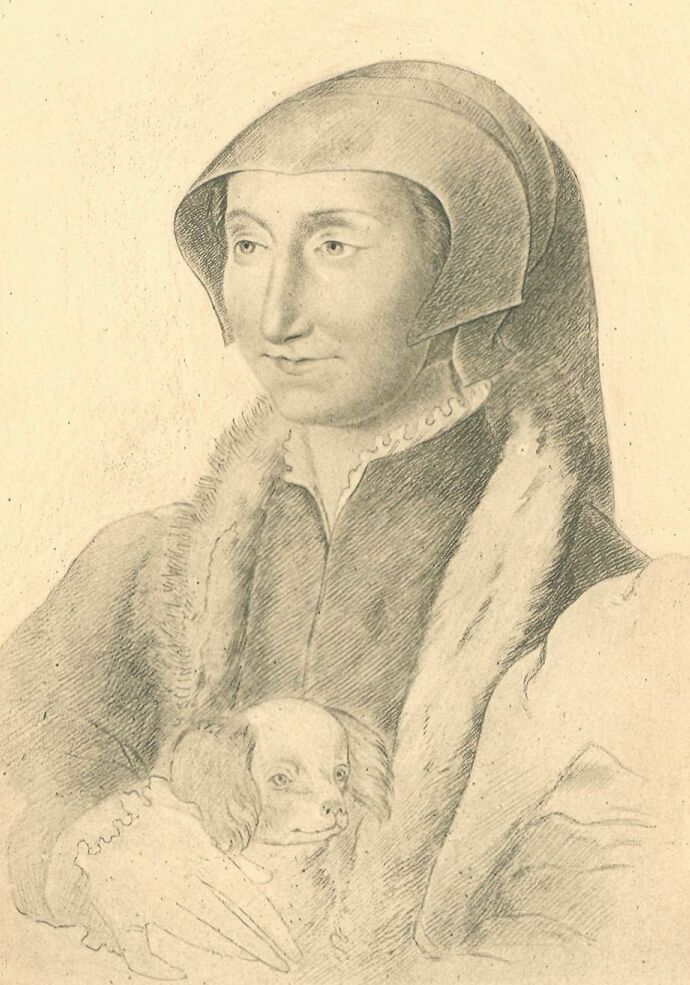
Frontispiece
Marguerite, from a drawing held at the Bibiotheque Nationale.

A sixteenth century collection of tales, written by a French princess and published after her death in one form or the other. Over seven days - Hepta/Emera - a collection of French nobles stranded by floods in a monastery tell each other tales. The Heptameron was unfinished on Marguerite's death: it was meant to last ten days - as Boccaccio's Decameron - and features ten storytellers. The Anglophone reader will automatically look to Chaucer, but there are a few essential differences. The storytellers are not travelling, there is no landlord of The Tabard to issue prizes and corral pilgrims (one of the French nobles is older and a sort of first among equals, but it's not the same), the story tellers are all of the same social rank (unlike Chaucer's mix: Knight, Reeve, Miller, Prioress, Cook, Pardoner...) and all the stories are of love and lust. 

It's also worth noting that all ten storytellers tell tales on each day. These run from two to fifteen pages long in a Penguin paperback edition (there is a version on Project Gutenberg), so they don't outstay their welcome. Each story is dissected and discussed by the listeners afterwards, and we get a growing sense of their characters - from the stories they tell, from how they react to the stories of others, from the rivalries and alliances made over the seven days. There are five men and five women among them. The ladies are Parlamente, Oisille, Longarine, Ennasuitte and Nomerfide; the gentlemen Hircan, Geburon, Simontault, Dagoucin and Saffredent. Some of them appear to be virtuous or vicious souls from the beginning - but all of them reveal something slightly further by being pushed and prodded by the exchange of ideas. High ideals begin to look a little shabby, or (eventually) naïve. Cynicism is revealed to be at least consistent and resolute, even when to a character's detriment. For characters who aren't actually doing much, they reveal a fair amount of themselves.

As for the stories themselves, they are a mix. There are tragic affairs, bedroom farces - and tales of adultery and betrayal. The sensibilities of the Early Modern reveal themselves, and interactions range from true love to seduction to coercion to deception to outright rape. Friars are especial targets for scorn and are held up as perilous to be around women. It's tempting to put this down to the Reformation - which Marguerite was around to see and take part in - but I would avoid doing so: firstly, because it is only Marguerite's daughter Jeanne III who becomes a Calvinist (and gives us Henri IV, who knows what Paris is worth) and secondly because the Decameron and Canterbury Tales alike have their share of less-than-pious monks, despite being a century or so before Luther. 

More vital are the clashes between male and female virtue - between the urge for conquest and the desire for purity - and all the consequences this has for devout Christians. The behaviour of monks is distressing because of the stated ideals of monks. Jacques Barzun's opinion is stated in From Dawn to Decadence.

It has been called "a masterwork of pornography" and it is certainly erotic: all are stories about the tricks and turns of love affairs, mostly illicit, But the porn-monger of today would look in vain for the physical exploits that have become commonplace in high and low fiction.

...her stories praise in all sincerity love and chastity. ... Toward the end of [the Heptameron] she verges on a sombre naturalism in which love is still a force but the erotic disappears. 

I suspect I would tell most people to read Chaucer first, but this is certainly something to pick through - especially if you like the ideas of the storytellers slowly revealing more of themselves. If you are after more information - or just comparing the jottings of a random blog with another source - then I would look to French Wikipedia before English. (Or just go to In Our Time.)

***

The Adventures of Telemachus, François Fénelon (as translated by Tobias Smollett)

A 1699 work of fiction about Bronze Age Greeks translated by an Englishman in 1776.

Telemachus, you may remember, is the son of Odysseus. He's a young man in the Odyssey, with a kingdom to save and a father to find. His teacher was Mentor - and yes, that does appear to be the origin of the word.

François Fénelon was, among other things, Archbishop of Cambrai and tutor to the Duc de Bourgogne. He had been made the latter rather unexpectedly by Louis XIV - for he had manifested Jansenist and Quietist sympathies for a good chunk of his career. As part of the young Duke's education he wrote The Adventures of Telemachus (hereafter Télémaque to distinguish character and book). This fits neatly into the gaps of the Odyssey, and shows Telemachus on several journey (Crete, Cyprus, Tyre, Egypt, southern Italy) seeking his father - in the company of Mentor, who is in fact Athena in disguise. Telemachus assists in several campaigns, is frequently praised, is taken as a slave, condescended to by Egyptians, rejects vice and learns many important lessons. 

Télémaque is unashamedly didactic. This is part of the appeal: it is being very obvious indeed about what it wants you to think. Even considering Smollett's translation work, this drips of the Baroque. The leafy Sylvan settings, the long speeches, the Classical figures put to Christian moralising - it feels like every chapter could be painted on a palace ceiling. Of course, this probably doesn't recommend itself much to a modern audience as literature. The 'first novel' is one of those things that can be debated to death, but this feels oddly unlike a novel for something written after Don Quixote

It's also worth noting that Télémaque was remarkable popular, in part for how often Mentor goes on about the need for a King to make firm allies, not embark on wars of conquest, heed advisors and be faithful to his wife. Barzun (again!) refers to the 

'picture of the government [Fénelon] thought France should have: a limited monarchy with a written constitution, representative assemblies, and a strong aristocracy discharging important duties. There should be equality before the law, public education, the mutual independence of church and state: the liberation of agriculture and trade from oppressive burdens.'

He also mentions that 'Télémaque is a classic, which until lately French children made to read.' One can see why: it's a perfect work for introducing the period, it's apparently quite good French prose, there's a good obvious story of the author managing to vex the king, and the lessons Fénelon imparts probably fit quite well with a vision of French Republican virtue. 

Should you read this if you are not one of the (presumably very many) French schoolchildren that read this blog? If you are interested in the period, you might care to read a few chapters. It fits well with the Rest of All Possible Worlds.  However, this may be a work more of France than of 'the Republic of Letters'. 

***

Crimson Tide (1995, dir. Tony Scott)

Rewatched after many years, having first caught it on my grandmother's television. Turns out I remember it pretty well!

Anyway, it's a submarine drama. Have they received the orders to launch a pre-emptive nuclear strike, or haven't they? Aboard the USS Alabama, Gene Hackman ('Captain Frank Ramsey') and Denzel Washington (his XO, 'Lt. Cmdr. Ron Hunter') will dispute this fact.

This uses the enclosed spaces and social structures of military life really well. The repetition of the missile drill scenes and the confirmations of codes works to lay out the mechanics and areas where tension can build. The fact that all the officers have to mess together regardless of how much they like one another helps; that everyone shuts up while Gene Hackman is talking - even just socially - helps. 

Gene Hackman's quite fun in this. As a rare combat veteran in the US Navy of the 1990s (no idea how true that is to life) he's apparently given a lot of leeway by his commanders, and is so is given a fairly free, ungrudging obedience by his men. He smiles, he carries a little dog around, he spouts bombast and knows he's spouting it - he grins crookedly in Denzel Washington's face. He's no Bligh or Queeg, but clearly he's not so many inches from a tinpot tyrant. But more to the point, he thinks that he needs to be - baiting and drawing on his XO in conversation, testing the line in order to reinforce it. Hackman could feel on the verge of caricature, but it's more a matter of a man twisting ever more and more to fit his chosen social niche.

It makes him a good foil for Washington, and (to some degree) a more interesting person than pillar of morality Ron Hunter. Fragments of Tarantino's comic book trivia in his dialogue only goes so far. 

***

Worldbuilding & Woolgathering and
The Wizards & the Warriors (1986) and 
The Wordsmiths & the Warguild (1987)

I recall the names of Hugh Cook's series from the back pages of other Corgi Paperbacks. The W__ & W___ format of the titles probably made me roll my eyes a bit even then, but I can vaguely recall wondering what a Weaponmaster would be, and how a coherent work of fiction with twenty protagonists could (The Wormlord, the Wazir, the Weaponmaster....) could reliably function. As far as I know, there was no conscious influence on the name of this blog (the above subtitle was irresistible).

Anyway, in the wake of the False Machine two-part review of all ten of the Chronicles of an Age of Darkness - and with a lucky second-hand find - I elected to record some thoughts on the first two, The Wizards & the Warriors (1986) and The Wordsmiths & the Warguild (1987).

For those after a fairly quick introduction to the series, I could do worse than point you towards these two summaries with a smattering of comment by Adrian Tchaikovsky.


>>LANGUAGE AND LAUGHTER

Wizards... feels like the most familiar territory. Evil wizard steals dangerous mystical artefact, good wizards and assorted fighters pursue him. The book starts fairly abruptly, with brief profiles of the main characters in the first few chapters to bring you up to speed. There are ancient wizards with significant powers, mystically named orders, castles vaster than even the Romantic dreams of the 19th century could produce, lots of slightly baggy detail about trade languages and nations. It feels a lot like you're stepping into any instance of Tolkien-imitating material from the late 20th century. (The second paragraph on Wikipedia denies that the Chronicles are High Fantasy; true enough, but they pretty clearly want to be taken for it initially - although I stop short of calling them parody or satire). 

I think this is to some degree deliberate. First, because Cook wanted to sell fantasy novels in the 1980s - and we have his own account that Wordsmiths... at least was written at the request of the publishers. Second, he probably quite liked coming up with words and deploying them in long flowing passages - or indeed, short ones. (The sun, naturally, says "Zaan." Injured legs go Balder-shalder-tok.) Third, there are these long passages of trade goods or instruments or what have you which keep knocking you off balance and away from any assumption that this is your world.

Fourth, he's being comic. This passage is from Wordsmiths...; it is situated at a party with young lovers, which is a fairly traditional topic for comedies. 

...the music escalated to a stormburst crescendo. A thrum began to gallop, a kloo honked harshly, a krympol crashed and scattered, a skittling nook began to campaign against the skavamareen and a plea whistle hooted. 

This sounds silly, and invites us to laugh - softly - at the young couple and the situation around them.  

Fifth, Cook knew he was walking into stereotypical waters (if the above passage was in a Star Trek novelisation, you wouldn't blink. If it was in a parody of a fantasy novel, you wouldn't blink). This XKCD comic sums up the attitude.


Cook obviously never saw that, but I think he would have recognised the view, and elected to just walk right through it. This is weird and offputting and you should feel weird here.  This aside from the constant narrator - Chronicler - who might well be willing to just use terminology you have no familiarity with. 

[From that same page of Wordsmiths...
"Don't laugh, gamos,' said the old man, naming Day with the Galish word for a female horse, which was unpardonably vulgar.

Clumsy? Deliberately so?]

>>TOO MANY COOKS

After finishing Wizards.... something crept into my mind from 1984. The Black Company, a dark fantasy series by the American author Glen Cook. I've seen it called or associated with the beginnings of Grimdark; I've only read the first book (The Black Company). A mercenary unit takes on service for a dark empire, that feels quite Mordor-ish (minus orcs-proper, but with plenty of Nazgul types). They are a fairly brutal and unpleasant lot, but there's a vein of loyalty and camaraderie - especially against the internal politicking of the empire that leavens this. The glimpses of ruthlessness by the resistance against them complicates matters further. It is occasionally observed at this point that Glen Cook was a veteran of the Vietnam War.

Anyway, Wizards... felt bleaker than The Black Company - or, rather, as bleak as I expected The Black Company to be. I think this is largely because everyone hates each other. That's a slight exaggeration, but are introduced in the first few chapters to to a wizarding master and apprentice who hate each other and a pair of warriors who hate the Prince they serve and are becoming increasingly caustic to one another. Memorable later is the sheep-rearing father who takes in his sons (a priest whose temple has been burnt down and a mercenary). He shelters them and feeds them, but really thinks very little indeed of them, and isn't shy of showing it.

Even the humble, practical wizard Miphon presumably spends the first half of Wizards... really frustrated with his magical colleagues (and knows that he can't fulfil the mission without them - he might not be frustrated by his own powerlessness to a point of mania, but it isn't a comfortable state of affairs. The Miphon who helps win the day is a different man to the Miphon of the first half-dozen chapters). The hunter Blackwood may love his wife Mystrel dearly, but hates his rulers and is horrified by the warriors around him. 

This changes slowly by the end - after much death, and harrowing journeys, and war. 

>>BRITISHISMS

There are at least two on-the-nose (at least, on my nose) T.S. Eliot references in Wizards... and Wordsmiths... . Mystrel, wife of Blackwood comes from Little Gidding. At one point in Wordsmiths... the thunder says 'Gronnammadammadamyata', almost as in The Waste Land.

There is a reference to Ashmolean jade being traded on the Salt Road in Wizards.... . A character in Wordsmiths... is named Cromarty. There is a city called Runcorn. This sort of thing apparently doesn't stop (click the following link if you are unfamiliar with Liverpool). 

Hugh Cook spent his first few years in England, but soon went to live around the Pacific - where he seems to have spent most of the rest of his live, living in Kiribati, New Zealand and Japan. What are we to make of these uses of British place names? Not too much, I think. The Little Gidding thing certainly doesn't apply that much thematically. I would just observe it as on of Cook's peculiarities.

>>WORDSMITHS GONE BEFORE

Wordsmiths.... traces the bumbling, occasionally heroic journey of the young man Togura Poulaan, son of the leader of the Warguild. A series of events leads to him losing his young love and being thrown into a quest on behalf of the Wordsmiths, who have a mysterious and highly unpredictable device of the ancient world that responds to language. 

Togura goes through any number of distressing events, sometimes intersecting with the plot of Wizards..... until he returns home, to meet with further shocks and misadventures. The whole narrative, with the rube of a protagonist, manipulative scholars, unyielding patriarchs and episodes in remote communities feels rather like Jack Vance's Dying Earth in places - though Togura is a more charming prospect than Cugel ever was. Voltaire's Candide is probably another great comparison, though there's no real Pangloss equivalent. 

[There is a passage attacking a certain flavour of anthropology that Voltaire might well back, of course.]

Though there are other influences. The image of a petty king obsessed by breeding pigs and his obese, terrifyingly strong daughter with her vast appetites might come right out of Rabelais. Though if it were ever accurately put to screen, it would only bring to mind South Park. (Conceivably, Pasolini in full-bore Decameron mode could also successfully portray it).

There's also a few lines of pure bureaucratic legalese that might have come out of any number of British comedies - and contrast the squalor of the town with the political ambitions of its rulers. The line about 'a special tax on Barons' might have come out of the mouth of an Oliver Postgate character. 

As you may have gathered, there's something frothier and lighter in Wordsmiths... than Wizards.... (with some notable exceptions - the cult in the ruined city, for instance). I certainly read it quicker.  

>>AM I GOING TO CONTINUE WITH COOK?

Well, I think I'd like to read The Women and the Warlords as Cook's planned second book. I would definitely like to read The Worshippers and the Way for comparison purposes with Punth. But that may take a while. 

***

Last year I reviewed and praised Dave Greggs's Investigating Censor. There is a new edition - the 'Steppe Cataphract Edition' available (hot off the digital presses!) on Itch.io. This incorporates some of the extra adventures he wrote after the first edition, as well as acknowledging my review work and feedback. If you think this makes anything I write on the subject now tainted by proximity......well, maybe, but that's been the case since I wrote The Cape of Four Pleasances (which I ought to compile into a PDF sometime soon).

Anyway, there's also a new adventure, titled Impermanence

This is a useful new adventure - largely, I should say because it offers an example of a different tone. The opulent splendour and violence of general IC fades a bit into the background in Impermanence. Indeed, there's an extent to which it feels more - well - hardcore. 

The Investigating Censors are deployed to a section of the coast called the Fringe of Moments. They are given a sumptuous welcome, intended to deploy them against the current rulers' enemies. There's an element of paranoia that develops from this, with not only hidden (and distressing) Ultracarcerist dens, but also human-puppeteering parasites. (Perhaps I've been thinking too much on Alien.) Environmental touches - like a silk palace suspended over a pitch-black mysterious chasm - add to this. 

Certain elements - as the parasites and the chasm - are carefully left unexplained. There's a predicted order of events (which is very carefully not a railroad) which laves out any dead ends or potential backwater encounters - but that's easy enough to pull together from the base game. 

In any case, the atmosphere and imagery, especially the Jade Sword Saint and the Cargo Labyrinth, work beautifully. There's a sense that even the supernatural powers on your side, or that oppose the Cult of Protection, won't quite heal the Fringe of Moments. It may even harm. (There's some slight alteration to the details of the High Dreaming Citadel that helps this.) This brings to mind - in a good way - Qelong

***

Garamondia have just put out an index after 150 posts. It's quite a collection for a little over a year's work and an excellent place to start an archive binge.