Showing posts with label Far Too Long. Show all posts

Saturday, 10 January 2026

Faufreluches: The Salvation of Nereus

You are a man out of time. You are yesterday's hero, and tomorrow's. 

You are of the Palace. You are a Paladin.

This is a treatment of Investigating Censor for this blog's Faufreluches setting. Consulting both before proceeding is recommended!

+++

The Scene

The Nereus system lays spinwards of Mencharo, on the verges of Regency territory. It sits in an odd plane of Curtmantle space, making it slow to access but necessary to pass through. Thirty-four planets, planetoids, and moons orbit a blue-ish but hospitable sun. 

These include...

  • Limnoreia, airless seat of a Mews waystation
  • Amphinome, where abundant pastures have been seeded under Stadtholder supervision
  • Maira, glistening with deadly volcanic activity
  • Kymothoe, a planet of vast oceans and swift winds
  • Galateia, blanketed in impenetrable cloud
  • Amatheia, a moon of grit deserts and grey chasms
  • Oreithyia, high-peaked planetoid with an erratic orbit
  • Speio, of the fertile caverns
Two Janissariat groups have set claims to these worlds. They are the Díarmuidapur Kin-Brigades and the Neo-Bactrian Peregrines.

The Díarmuidapur Kin-Brigades

The Díarmuidapuri are known as some of the foremost shock infantry in the Regency. Their main advantage is not merely the charge - though this is undeniably ferocious - but that they make their assaults through and in mortar fire from their support column. This is enabled by the short-burst energy-based 'shield umbrellas' that allow for carefully timed near-invulnerability from above. Trust between 'Pipes' and 'Drums' is essential, given the nature of their signature tactic - and they are reshaped by the structures of this Janissariat band to have bonds equal or surpassing the family bond. The desire for mortar-hefting Pipes to become broad-backed Drums covered by the taut cylindrical skein of the shield umbrella also leads to competition, reinforcing that bond in odd ways as Pipes try to both goad on and preserve Drums.

Recruitment 

The Díarmuidapur Kin-Brigades take only volunteers - but do spend their time boasting widely of their deeds and encouraging artwork in their honour. Their reputation is significant in their sector of the galaxy, and it is well-populated enough to provide an ample supply of young hotheads, would-be heroes and thick bastards. It helps that the Kin-Brigades look and act a lot more human that many Janissariat Bands. 

There are a scattering of Díarmuidapuri families, but never quite enough to repopulate their numbers. Former Drums (and invalid Pipes) will drift into assorted administrative roles.

Resources

The Kin-Brigades' characteristic shield units are now difficult to fabricate: force-flow circuit miniaturists are few and circuit miniaturists with access to precision-work machinists and ample resources are even scarcer. So shield umbrellas are passed on from a former Drum (who are never defeated, because when even when broken, they can't be beaten) to a battle-proven Pipe. Shield units are plugged between the shoulder blades of a Drum via spinal nerve-ports, to enable their flexible, nigh-instinctive use. 

Díarmuidapuri mortars are not altogether dissimilar from those used across the Regency by household armies and local defence forces. They are easier to carry and reposition, but the real advantage of a Pipe over any other bombardier is their single-minded practice and training. Kin-Brigades are also more willing to obtain exotic munitions. Pipes will carry compact solid-shot carbines and short, handy combat blades.

Drums are glad in robust armour (largely unpowered - the shield-umbrella requires a bulky power pack already), proof against most small arms fire. A tall helm is common. They typically carry a long two-handed sword, edged with molecule-baffling quasi-sharp Tonsori anomaly shards. Compact 'Saltshaker' hand cannons offer the possibility for harassing fire, clearing rooms and intimidation. 

The Kin-Brigades make use of a variety of muscle enhancements, dietary supplements and synth-sinews, and have a number of trailing surgical clans dedicated to supplying these. They also have access to an impressive array of construction tools and materials

Customs

The Díarmuidapuri encourage plenty to be said about them, and will offer patronage widely. But they have a few specific customs of their own. Firstly, there are lineages of Pipe and Drum that reproduce sensibilities, techniques and personal superstitions from master to apprentice. The term 'Kin-Brigade' often makes outsiders think of these as essentially father and son relationships - but the Díarmuidapuri are sufficiently egalitarian that it is better thought of as elder and younger brother (other than those Pipe and Drum combinations that have a father and son in them...).

Secondly, a Kin-Brigade raises up a feasting house in every even semi-successful campaign. These are towering affairs bearing a variety of stylised geometric forms - lines, diamonds, squares, carefully regular semi-circles. Glazed terracotta is often used, as are neolithiform blocks, along with chrome. Sometimes the local marmoreal will be used for floors or details. Several empty floors and vaults support an upper section that is a banqueting hall with the attitude of a penthouse. When the Kin-Brigade moves on to a new world, the feasting house is left. The vast buildings frequently become storehouses or government departments.

Campaigning

Kin-Brigades generally aim to bring their opponents into a fixed battle. Settlement of the dispute will happen one way or the other and the Kin-Brigade can move on. In the event that they cannot bring an opponent onto the field, they will sweep a region in a series of raids looking to flush their foe into the open. 

The Díarmuidapuri largely aim to enlarge their network of protectorates and obligated nobles and will move quite readily between systems to allow this. They take very little territory but a great deal of supplies and arms.


The Neo-Bactrian Peregrines

The Neo-Bactrians will go about anywhere a human being will go. They will go there carrying more, seeing more and coming back with more. They are also far more likely to survive. Peregrines are nomadic cybernetic warriors bound into mechanical walkers; typically Neo-Bactrian walkers have four legs (with a variety of foot and hoof options), a back bowser for fuel, a central pod for the pilot and an extended forward weapon and sensor mount. 

A world is given into their care for survey work: settlers will serve their needs for a generation - then the Peregrines will move on. If not gathered into a great expedition, Peregrines spend their time moving between settlements on Neo-Bactrian worlds, usually alone. 

Recruitment

The Neo-Bactrians are open to talent, but maintain their numbers largely through a slow but persistent breeding programme. Genetic material can be exchanged, surveyed and assessed at the meeting or two Peregrines. Offspring are deposited with the mobile creche-barracks run by a Secretariat-registered nursery guild. 

Resources

Neo-Bactrians walkers stand higher than the average Regency four-person automobile, but are generally narrower. A variety of hooves allow them to master different terrain. The flexible weapon and sensor mount can be raised and lowered to precise and surprising angles. Walkers are known to be armed with flame projectors, grenade launchers, flechette autorifles and microwave burst guns. 

Neo-Bactrian worlds will have settlements known as Oases (which are probably near a body of water, if not a literal oasis). A peregrine will call at these once a month or so: the helots in this village will provide the Three Types of Fuel, the Six Types of Filter, the Four Types of Projectile and an number of items from the Catalogue of Spare Parts. 

Customs

At an oasis, a Peregrine emerges from their walker. They report on the many miles they have travelled and the various sights around them in careful, objective tones. Peregrines cover their intrusive and extensive cybernetics when out of a walker in cloaks, veils and tight cloth bandages. 

Peregrines are essentially solitary, but will attend occasional moots for decision making and exchanges of goods and information. 

Neo-Bactrians are buried in upright pillar-sarcophagi made from the pods of their walkers. These are topped by an ornate capita carved by a Peregrine in their own lifetime. The wide plains of Neo-Bactrian worlds will often have an isolated and dramatic avenue or geometric web of these sarcophagi. 

Campaigning

Peregrines are gathered for propositions or expeditions by the hereditary functionaries of the Peregrine Delegation. They fight as mobile hordes, striking at will then withdrawing - often at startling speed over all manner of terrain. In the event that they encounter a fixed position, they will besiege it quite patiently.

+++

The Overture

Ramantai of the Díarmuidapuri has stolen a march on the Neo-Bactrians. Almost literally. Yelain de Lakedt is the Margravial Commissioner over the Star of Nereus, charged with the slow knitting of this border region into the fabric of the Regency and its transformation into a strongpoint against the machine-mind legions and the Empire of P'o L'u.

The Neo-Bactrian Peregrines were called on to survey the numerous planets; this was to give way in time to wider settlement under de Lakedt's oversight and the establishment of the Díarmuidapuri. But the Díarmuidapuri have arrived early. 

Ramantai's Kin-Brigade seized land in lieu of prompt payment from Polyclète, Baron Matamore the on the world of Toranius, which was an as-yet undeveloped holding of the Schematicians. The Baron objected, the Schematicians objected, the Secretariat produced a number of convincing document and the Glossatrices smoothed everything over. The Díarmuidapuri took an immediate payment in supplies and assorted Mint certificates and moved on - but felt they had given way all too easily to the high-handed Matamore. The Baron would admit that he finds the assorted representatives of the Pillars far easier to deal with than Janissariat half-humans. 

This solution was about agreeable to basically everyone on Toranius and nearly tolerable to the Díarmuidapuri. They went to Nereus - and promptly decided that they would not move again. In any event, the Mews carrier flotilla that might have been able to move them was called away by direct order of the Siegneuria, to aid in the excavation of a Stellar Regulatory complex under the eyes of the Pastorate. 

Upon reaching Nereus, the problem of supporting two Janissariat groups quickly became apparent. Hearing rumours that the Díarmuidapuri would be moved on again, Draupadraig, nephew of Ramantai seized Yelain de Lakedt in a desperate raid. It has been put about that she went willingly - and de Lakedt is willing to say as much, not only due to being in Díarmuidapuri hands, but also due to details Draupadraig uncovered of her sale and receipt of prohibited machine-mind designs and formulae. 

The Neo-Bactrians have not taken this lying down, and there have been siezures of Díarmuidapuri assets. Raid and counter-raid have lead to deaths, and more will no doubt follow. An entire star system could be lost from this folly.

+++

The Cast

But what do you know of this? You only woke up a week ago.

You are a man out of time. You are yesterday's hero, and tomorrow's. You are one of the first psychics. You are a fore-runner of humanity's destiny. You are the bearer of a grave responsibility. You are a great man, and sometimes a good one. You are of the Palace. You are a Paladin.
You have been preserved in the temporal suspension vaults in the Palace of the Massif for the best part of three thousand years, where your mind echoed with the whispers of the Regent and the background murmurs of the College of Martyrs.  

Why did you wake up now? The Regent won't emerge for another three years. He didn't tell you why last time, and he probably won't next time. You've gone along with this for three thousand years, for your own reasons. Another month or so won't hurt.
Everyone knows what a Paladin is. No-one recognises you, so far.
The Martyrs thought you should go to Nereus. They gave you a thick stack of briefings to read en route.

 What were you best known as, Paladin?

  1. A Warrior.
  2. A Commander.
  3. A Ballistician.
  4. An Artificer.
  5. A Counsellor.
  6. A Logistician.
  7. An Analyst.
  8. A Diplomat.
  9. An Orator.
  10. A Spy.
  11. A Poet.
  12. A Survivor.
What characteristic weapon or item do you possess?
  1. An antique automatic pistol.
  2. A thurible with thought-quickening incense.
  3. An advanced mechanical calculator.
  4. A spyglass with psychic filament lenses, allowing you to pick out targets with ease.
  5. A vademecum of selected law and precedent written in a personal private shorthand by you in ages past. 
  6. A hovering rostrum (incorporating dramatic lighting, speaker system, &c) of archaic design, beautifully preserved.
  7. A gauntlet incorporating numerous high-precision highly adjustable tools.
  8. A banner with the strange device. The strange device is a miniaturised shield projector.
  9. A cartographic drone, customised to your own particular needs and sculpted with your own personal heraldry (or by your own personal whim).
  10. A suit of armour hardened against every risk of the long-ago war agains the Machine-Minds.
  11. A concealable long-range communicator, silenced pistol and survival knife. Tales of your espionage exploits are so well-documented that it is assumed that anyone who has these is you, no matter how improbable that would be. (They are still a pretty good pistol, communicator and knife.)
  12. A fold-out box of psychic sand, which shifts according to your whim (while in the box, which can be extended to a metre square).

(The Palace will of course furnish you with numerous other weapons and supplies.)

The Martyrs and the Maiors of the Palace have provided a number of possible assistants for you.

  1. A Siegneuria-trained herald, very good at proving that you are who you say you are.
  2. A Mint transit conductor, who can find a way to pay for almost anything.
  3. A Pastor of the Beacon and Banner Circle, carefully recording everything you do (like it or not)- and with some excellent stories about what you have done.
  4. A winning, elegantly dressed Glossatrix. As willing to use existing culture for your benefit as to use you to engineer the culture of the future.
  5. The younger son of a Magnate household, with an eye on personal fame to set him above and beyond family repute. He is, alas, unwilling to make use of his family's resources. 
  6. A taciturn, near-mute Pyrokine.
  7. A Stadtholder Circuitrider: Has gun, will travel. Ability to do things which aren't involved with being a ranger or a marksman is mixed. Probably knows a lot about land use.
  8. A Secretariat Full Spectrum Archivist. Can create, utilise, disentangle or disrupt any record-keeping system in Regency space. Has lots of badges that say as much.
  9. A Mews Astrothete. Good not just at navigating the stars, but telling people why they have to be navigated in a certain way. A rare diplomat among those of the Mews.
  10. A Maioral Pharmacist. Makes just about any drug or medicine you could care to name. Due to the bodily effects of suspension, they work for you and only you: you are the Pharmacist's life's work. Arguably knows your body better than anyone else.
  11. A Janissariat Varangist: a hulking bodyguard who is professionally and deliberately foreign. Absolutely incorruptible, really quite lethal, frequently indecipherable. 
  12. A Frontiersman. Not remarkably good at anything, but the only person the Palace could find who actually knows the Nereus system personally. The story of why they ended up on Terra is a long and potentially quite thorny story.
  13. An Armourer of an unnamed house, who spent fifty years equipping a Magnate's forces to fight a particularly intransigent Janissariat band, only to see the whole thing diplomatically resolved. They are outwardly philosophical about this. 
  14. A Mobile Seneschal, perfect for organising quarters, victuals and supplies for an itinerant court - even your bijoux household.
  15. One of your descendants. The family line developed quite an interest in you over the centuries. No psychic powers, alas, but really well equipped to deal with what happened the last time you came out of the vaults.
  16. A Cryptologist, for the making and breaking of codes and ciphers.
  17. A Pastorate officer of the College of Martyrs. Perhaps the only person in the galaxy qualified to be your confidante.
  18. An Informer. Really good at blending in where you stand out. Won't tell you where they acquired their skills.
  19. A Researcher on the space-faring powers beyond the Regency. Slightly too keen on the Machine-Minds.
  20. A Mencherene Defence Force veteran. Knows the fraying social order of the frontier a little too well. Might even know something about the Empire of P'o L'u.
Two or three of these will go in your train to Nereus - where other allies - common or uncommon, virtuous or corrupt, loyal or disloyal - await you. 

+++
The Places

The inhabited worlds of Nereus fall into three main categories.
  • Unaffiliated - where the local Centre of Gravity (or, indeed, centres) may be a regional hetman, a Schematician First-Level Director, a wealthy businessman, an officer of the Margravial Commission, a charismatic Pastor or many other things. An unaffiliated world can still have a Díarmuidapuri or Neo-Bactrian presence. 
  • Janissariat-run - firmly controlled either by the Díarmuidapur Kin-Brigades and the Neo-Bactrian Peregrines. The Centre of Gravity will definitely be Janissariat. A Key Personality may be a figure like the Unaffiliated Centres of Gravity mentioned above, but the majority of Key Personalities will be Janissariat.
  • Contested - in which case, there are two Janissariat Centres of Gravity in direct conflict, be it open battle or Cold War.
Travel between the world of Nereus is frequent but irregular. There are a variety of craft in a variety of hands that cross between the assorted planets, planetoids, and moons. Getting passage isn't so very hard, given a Paladin's resources and clout - but getting a interplanetary craft of your own will be difficult, and pressing one into your service will not make the owner and/or pilot agreeable.
   Either way, it should take no more than twenty-four hours to find off-world travel as a Paladin.

Travel out-system is only by the permission of the Mews, who exact a fee. While the Mews will have representatives and cotnacts across the System, their centre is the airless moon Limnoreia, where the star-dromonds can rest. The nearest Regency system is Mencharo.

The seat of Yelain de Lakedt was in the high-walled city of Podarsopolis. She is still occasionally seen there, maintaining the vestiges of her legitimacy - but always with a robust Díarmuidapuri escort, and either Ramantai or Draupadraig with her. 
Ramantai and Draupadraig move between Kin-Bridgade holdings frequently: the former to keep the different Díarmuidapuri groups pointed in the same direction, and the latter to keep de Lakedt in his hands (and out of simple boredom).
Meanwhile, Podarsopolis stagnates as the Margravial Commission flounders in the absence of its leader. Plans are deferred, decisions delayed - and funds saved. Any plan to bring peace to Nereus will have to at some point involve de Lakedt, Ramantai and Draupadraig - and, most likely Podarsopolis.

The location of the Peregrine Delegation is as shifting as the Peregine's themselves.

+++
Other notes:
  • This is the long-hinted at Champion Narrative for Faufreluches. As a reminder 'Vorontsov at Bay' was roughly what a Retainer Narrative would be, and 'The Audubonian Breached' is the Scum narrative. 
  • Aside from the other inspirations of Faufreluches, part of idea behind this post was 'Jedi Knight parachuted into the Trojan War'. Make of that what you will.
  • Obviously, a little more fine-tuning would be needed to bring this to the level of Investigating Censor.

Tuesday, 8 August 2023

GW's Jackson's Tolkien's Middle-Earth

In a post over at Tales of the Lunar Lands I threatened to put together a grouchy nostalgia-fuelled comparison of Middle-Earth designs made by Games Workshop. Well, this is it - although I don't want this blog to become my Bespoke Whinge Manufactory. So the aim here is, if you'll pardon the phrase, ad astra per nostalgia

A note on my relationship with Tolkien: I am of an age to have seen and enjoyed the Peter Jackson Lord of the Rings films during their first release into cinemas. However, even then I was in a position to recognise the problems of adaptation. I had read The Hobbit and The Lord of the Rings, and portions of The Silmarillion. I had leafed pretty thoroughly through a copy of David Day's Tolkien Dictionary and seen the variety of illustrations there - Ian Miller, Jaroslav Bradac, Victor Ambrus and others. I had also found, in the local library, a copy of the BBC Radio adaptation of Lord of the Rings on CD (Ian Holm as Frodo, Bill Nighy as Samwise, John Le Mesurier as Bilbo. Music composed by Stephen Oliver).

All that is to say that I was capable (as a callow youth) of recognising the deficiencies of and gaps in Jackson's films - beyond the simple 'They left out Tom Bombadil!' approach. The use as broad comic relief of Merry, Pippin and Gimli. A skateboarding Legolas (however briefly). There was something off, to my youthful image of the Medieval world, for the armies of Minas Tirith to be clad in complete plate armour.

But they still had something to recommend them. And I am inclined to believe this still: they could have been considerably worse. A few years on, 'Good with Distinctive Flaws' seems like a near miracle.

I saw The Hobbit films. Even for research into this post, I have chosen not to see them again. If you are reading this blog, it is more than likely that you have seen them yourselves and have well-developed opinions on them.

At the same time as the Jackson LoTR films were being released, Games Workshop started putting out a range of miniatures and rules for the Lord of the Rings Strategy Battle Game. There was cooperation with Jackson and New Line for this: the GW LoTR SBG Frodo looks like Elijah Wood, their Uruk-Hai are painted with the purply-red skin tones of the films. Designers Alan Perry, Michael Perry and Alessio Cavatore got cameos in The Return of the King as Rohirrim. My friend group got interested, as did I. We were apparently not alone - according to White Dwarf, the Fighting Uruk-Hai box outsold Space Marine Tactical Squads that year. 

The production of miniatures is easier than that of cinema. So GW delved deeper into Tolkien's world than the films could. Here we return to my initial post in the Lunar Lands - accordingly, there are designs from GW that would later be contradicted by The Hobbit films. 

So, on the left is GW's Radagast. Perhaps a bit basic, a rather simple 'nature wizard' - but quite logical as an explicitly rustic, nature-orientated version of Ian McKellan's Gandalf. On the right is a model of Radagast as portrayed by Sylvester McCoy. I rather think there is something off about portraying an Istari with Ragged Trousers.

Here, into the bargain is an interior illustration from Shadow and Flame showing Radagast.

Who looks like he wants you to get off not just his lawn,
but his entire damn forest. Perhaps he could be played by Clint Eastwood?

This is Thranduil, looking nothing like Lee Pace. I'm not terribly fond of the miniature - sword and bow and staff looks a trifle indecisive, but the background inspiration of 'regal, mature version of Orlando Bloom's Legolas' makes sense.


The Elves of Mirkwood are in evidence as well: these were designed as Wood Elf troops to go with Thranduil, along with these musical sentinels. Compare the stripped-down, sparse look - Jackson LoTR elves minus the armour - with The Hobbit-derived rangers and household guard

***

By the way, I'm not intending to list every such point of comparison. You may peruse a catalogue from before The Hobbit films here. In a quick overview Wikipedia lists the material published - including rules for Tom Bombadil, the Scouring of the Shire, an extended Harad. But there are a few more things I want to touch on. 

Incidentally, the memorable characters of Lord of the Rings and recognisable actors in the Jackson films means that there are a great many character models for the Strategy Battle Game - as displayed to greatest effect in this post.

***

Gondor's fiefdoms would get attention from GW that the Jackson films could never offer. Firstly, in the form of an article detailing suggested conversions, and then in miniatures for Prince Imrahil of Dol Amroth (Middle-Earth's resident Lohengrin impersonator and the real hero behind the Defence of Minas Tirith) and his men. I'm not too fond of these Clansmen of Lamedon ('Clans? Mountains? They must be Highland Scots, give them kilts and claymores.')

Better is Arnor, which would get their own short-lived range, who strike me as a sort of 'Arthurian Gondor' with their helmet torses and green, fringed, banners. See also King Arvedui's fur-trimmed robe and general affect. 

The Variags of Khand are Mongols with Axes and Sometimes Chariots - linking them to the Wainriders defeated by Gondor in the Third Age. (That's a lot of Central Asian peoples GW has skipped over: as ever, The Wicked City is a blessed alternative). Easterlings are all of the scale-armoured exotic look shown in The Two Towers film, but I have some appreciation for the palanquin.  

Some of the Haradrim expansions are sensible enough: cavalry and an elite guard (who look as if they've stepped right out of the Hyperborean Age). The appearance of assassins, desert ninjas and (for want of a better term) thickset Harem wardens we will pass over swiftly. From Far Harad, we have Mahud camelry.

Who make me ask vexed questions about the price of ivory south of Gondor.


In addition to the strange 'mounted Maasai' look, I am reminded of a comment by Fitzgerald of Middenmurk about how 'the Osprey Men-at-Arms series of books will interpret everything in the fightingest way possible'.

Speaking of the Kingdoms of Men, GW would eventually produce unique models for the Nazgul. These were first produced as the black-robed spectres of The Fellowship of the Ring: in time, the Witch-King and Khamûl the Easterling (the only ones that Tolkien identifies, if I recall correctly) would receive models. The rest followed


I don't care for the names ('The Betrayer', 'The Shadow Lord', 'The Dark Marshall') but I prefer these relatively mild designs to the inhuman animate armours of Dol Guldur shown in The Hobbit films (here's a longer break-down by another chap). GW also did a 'Sauron as the Necromancer' model before The Hobbit films, which works well as an 'incorporeal presence' Dark Lord.

***

All this aside, there is one productive comparison I think can be made between GW's Middle-Earth and Jackson's. Let us look to the Dwarves. 

In the Jackson LoTR films, we don't really see the Dwarves. We get Gimli and the other members of the Dwarven delegation at Rivendell, the desiccated remains in Moria, the 'Dwarf kings' of the opening sequence. The Dwarves were one of the first principally-designed-by-GW factions in 2003's Shadow and Flame

So: GW had relatively limited room to work. The Dwarves have to look like part of the world shown by the Jackson films. The Dwarves also can't look too like the Dwarfs of Warhammer Fantasy (I don't know that Cavatore or either Perry or someone actually stood up and ever said or wrote that, but I think that has to have been on their minds). It's an interesting set of limitations on a creative project, and an almost comic situation - we made a wargame with significant reference to Tolkien, now we have to make a Tolkien wargame without diluting either of these products.

I think they accomplished this. Here are the first few miniatures of LoTR-Dwarves; here are several images of WHF-Dwarfs. Aside from the obvious differences - ranks of square-based miniatures vs scattered round-based, no helicopters, no gunpowder, no crossbows, no mohawks - there's a few deliberate touches. Less ornament and figurative designs on the LoTR-Dwarves, smaller axes (frequently skeletonised), more exposed areas of cloth. No cartoonish touches - as the WHF-Dwarf Miners, or horned helmets, or vast runes. 


We have Dwarven heroes not shown by the films: Dain Ironfoot and Balin (Shadow and Flame contained a series of scenarios set during the reclamation of Moria). Dain looks like an ornamented version of John Rhys-Davies's Gimli, in a commanding static pose. Balin has a different approach - he is pointing onward, inward and wears a sort of crown with angular cheekpieces which looks (in a fashion) very Dwarven. 'He's so much a Dwarf that he has armour-plated his cheekbones.'

Later LoTR-Dwarf miniatures follow in this line. A more extensive range of Dwarf Warriors - shown painted with plain wooden shields, quite unlike any WHF-Dwarfs. The Rangers would make a good base for Thorin et al in The Hobbit and are an excellent contrast to WHF-Dwarfs in their lack of ironmongery. 

(If I say 'war games need more civilians' it will sound terribly strange, but I rather think that there should be some designs in miniature war gaming that refer to civilian life, rather than ONLY WAR. The profession of arms is not necessarily a common one, even if it has a distinctive costume - a pre-modern state should have few if any walking tanks. Anyway, the Rangers linked above look like they could have been working in the smithy half an hour ago.)

The Iron Guard are slightly ludicrous - how does dual-wielding help you protect trade routes? - but aren't out of place among their peers. The Vault Warden team seems to have derived solely from that cave troll wielding a trident in the film of The Fellowship of the Ring. Given that they must fight underground, direct fire is of more use than indirect, so LoTR-Dwarves have a ballista not a catapult. It hurls stones, which is at least fitting.

I trust you get the point: GW managed to balance things out fairly well. A variety of new Dwarven units in new but not unfitting designs. Then came along The Hobbit movies. Dain and Balin receive brand new designs. We see whole regiments of Dwarves pouring out of the Iron Hills or fighting at Azanulbizar. And they aren't remotely the same as those that have come before. 

Jackson and the team filming The Hobbit did not (of course) feel bound to copy GW's designs. Nor do I think they should have been compelled to do so - there is a difference in tone between The Hobbit and The Lord of the Rings, there is a difference in forms between a tabletop miniature and a costume for a film, and in any case I would prefer to err on the side of artistic freedom rather than constraint. None of this means I like the armies of Dwarves shown in The Hobbit films.

Designs become more complex and aggressive. There are greater layers of armour, to a dehumanising degree. There is an unmistakably industrial look to it all - where the LoTR films fairly obviously pointed towards an anti-industrial theme. These chaps with mattocks aren't too bad, but seem to be entirely clad in oily-looking gun-metal grey armour. GW has shown masked Dwarves from the beginning, but these chaps are practically identical next to the Khazad Guard. Perhaps it would help if the beards were different colours. Likewise, contrast these Warriors with the Rangers. Why do they all have the same colour jerkin? I'm also not quite certain about those flanges below the spearhead - which in any case is suddenly quite large. 

I'm equally less than enchanted by these crossbow-carrying Dwarves. How the hell is that supposed to work? Where's the string? Moreover, it is so stripped down and vicious it looks like something an Orc would carry. Had we forgotten - 'Now goblins are cruel, wicked, and bad-hearted. They make no beautiful things, but they make many clever ones.' As I recall, the only ones in the LoTR films with crossbows are the Uruk-Hai.

***

You take my point. Dwarves go from being akin to the other folk of Middle-Earth to suddenly and dramatically different. There's a few things I would suggest this illustrates.

Firstly, the change in what the LoTR films did to what The Hobbit films did. A different look, a different impression. There is the problem of the success of the LoTR films: battle scenes had to be equalled, martial ingenuity matched. Perhaps there is the effect of success: entering production of the first films with trepidation and the second set of films with swaggering confidence.

I don't know enough about the use of CGI to meaningfully compare the LoTR films and The Hobbit films, but the latter struck me as that much more egregious. Not merely bulking out battle scenes, but creating them. I know this will sound terribly rose-tinted (The films from my youth got it right! The films of the same series from my maturity got it wrong!) but I am going to stand by it. CGI is very useful for when you don't have thousands of Soviet troops to dress up as redcoats and grognards, but shouldn't dictate your art, in the same fashion that one doesn't plan a meal of any great worth around the capabilities of the microwave.  

I also invite a comparison between the audience receiving (and the people making) the LoTR films in the early 2000s and the The Hobbit films in the early 2010s. How many artists and designers in the 2010s had a set of cues from internet nerddom; from complex digital art, from video games? The Neal Stephenson novel Reamde refers to a conflict in a MMORPG between groups of players: the Forces of Brightness set against the Earthtone Coalition. Designs in The Hobbit films are hardly literally as bright as a World of Warcraft avatar, but if one adjusts for a notion of 'conceptual brightness', it applies. I don't know how life changed at (say) Weta Workshop between those two times, but it would be interesting to know. How many of them had encountered GW products, or things inspired by GW products? It's at least tempting to make the poetic suggestion that GW's success in one set of products utterly and unpredictably warped another set of their products.

Be this true or not, we see the strange intertwined and distorting nature of these franchise juggernauts. There's something unpleasant - even presuming a lack of malevolence on the part of all involved - of designing a piece of (near-original) art only to have it memory-holed not a generation later.

So, yes: Bennett of the Lunar Lands has it correct. There should be many, many interpretations of Tolkien's work at your fingertips. Even if I like or liked the consistency of GW's extension to Jackson's vision of Middle-Earth, Jackson's Middle-Earth should not be the only starting point. 

Friday, 3 March 2023

Diplomacy, Protagonists, Macbeth, Tully and Caithness

A recent post at Monsters and Manuals set my mind going. I don't watch a great deal of television and would likely endorse the moral of the story that no-one reaches up from their deathbed to say 'I wish I'd watched more TV'. But more to the point: I grew up with - possibly even to a greater degree than television - games (and books more than either, but this was a jumping-off point). The early 2000s had their share of real-time strategy games, but I suspect that Age of Empires (and sequels/derivatives) loomed highest in my mind. There's two things that these do or did to my developing preferences and understanding of (faintly realist) fiction (in a variety of media). The notion of multiple players who may succeed and the process of organisation and resource management. 

Firstly, there is the notion that anyone can win. However advantageous it may be to start as the Julii in Rome: Total War the notion of an entirely Carthaginian Balkans or a Seleucid Iberia is not implausible. I've not played the Paradox grand strategy games (Europa Universalis, Victoria, Hearts of Iron) but they at least allow this to an even greater degree. There is not always a protagonist, no-one chosen for victory. The mind goes to the board game Diplomacy, with its particularly obvious balance of forces: every player starts with three armies or fleets - except Russia, whose size is as much hindrance as help. 

Hence, I suppose, the light scorn I thrust in the direction of the Song of Ice and Fire Tabletop Miniatures Game here (the paragraph beginning 'Even if...'). Eight nominal or near equals on Westeros: the notion that Tully interests are permanently shackled to Stark is irritating. You have to cultivate and maintain allies - you don't just plug their troops into your command structure and keep fighting. Am I really so incensed that I can't bring about GLORIOUS TULLY HEGEMONY? 

I take it this has activated some neurones.
(Found here, the best and clearest Westeros Diplomacy map I found online.)


Which brings one back round to television: I watched Game of Thrones for long enough to A) be aware of its flaws and B) Give up on it. Fun while at Uni and able to chat it over with housemates, but not worth revisiting. The finale has been dissected at length in a variety of forms, but a recurring theme is that it got to attached to big showy character moments, and neglected the underlying logic and social structures of its setting (EG, people writing here, here and here). Teleporting armies, curiously obedient subordinates, religion with no grip on the hearts of the faithful. 

Time is limited in an episode of television. Special effects are limited. Books have the room to put this stuff in; games demand it, as the price of moving an army north is part of the challenge. The cost of logistics, even if only sketched in, can be displayed. There are cheap jokes about all the walking in The Lord of the Rings, but footslogging is a reality of campaigning! 

More to the point, the treatment of non-protagonists. You're either the commander, the champion, or nobody. A butt of jokes, a burden. Costuming reinforces this: I accept that the Freys have an unenviable family resemblance, that their patriarch is a disagreeable fellow, that the rest of the nobility don't much care for them. But they are wealthy and use their leverage to the best of their ability: they should be near as armoured and colourful as any lord rather than dressing in leather the colour of mud and wearing unflattering coifs. They're nouveau riche, not swamp-dwellers - and 'Betrayed by Unappealing but Vital Ally' is more interesting than 'Stabbed in the back by a bunch of Obviously Shifty Bastards'.

Specifics aside, if you've opened a broadsheet's Arts and Culture section in the last decade, you've probably read something about the importance of who we make protagonists, or representation, or similar questions. It's the sort of idea discussed here by Palmer and Walton, who extend it to the question of protagonists and chart the decline of Tapestry books (do read that link!). It's something I've speculated on before, and Noisms moots in the post that started this all off 'it is almost as though [Television] were designed to destroy our capacity to develop a fully-fledged theory of mind.' Terrifying if true. 

Well, that's all wonderful. But do I want a literal 'World without Extras' in my fiction? I approvingly cited Diplomacy above, but only the great powers get a say there (and depending on how many can make it for a game, we might kick Italy out of that club. Guess the Risorgimento went down in flames!). I still have to acknowledge that there are limits to the size of a novel or the processing power of software. 

My mind goes to Macbeth. I have no particular objections to Macbeth and, frankly, it would mean very little indeed if I did. Macbeth starts the play as Thane of Glamis, he becomes Thane of Cawdor also. Macduff is Thane of Fife. Banquo is clearly a peer of Macbeth: I don't believe he is referred to as Thane in the text of the play, but both Holinshed's Chronicles (Volume 2 of the 1577 Edition) and Hector Boece's earlier History of Scotland (Book Twelve) a source for Holinshed, refer to him as Thane of Lochaber. The Thanes of Angus, Ross, Caithness, Mentieth and Lennox appear, with or without lines. 

Do I really suppose that Macduff would as willingly usurp Duncan I as Macbeth? Well, that's a question for the philosophers and theologians. Who, other than Orson Welles, knows what evil lurks in the hearts of men? Do I want a play which plausibly might end with GLORIOUS CAITHNESS HEGEMONY?

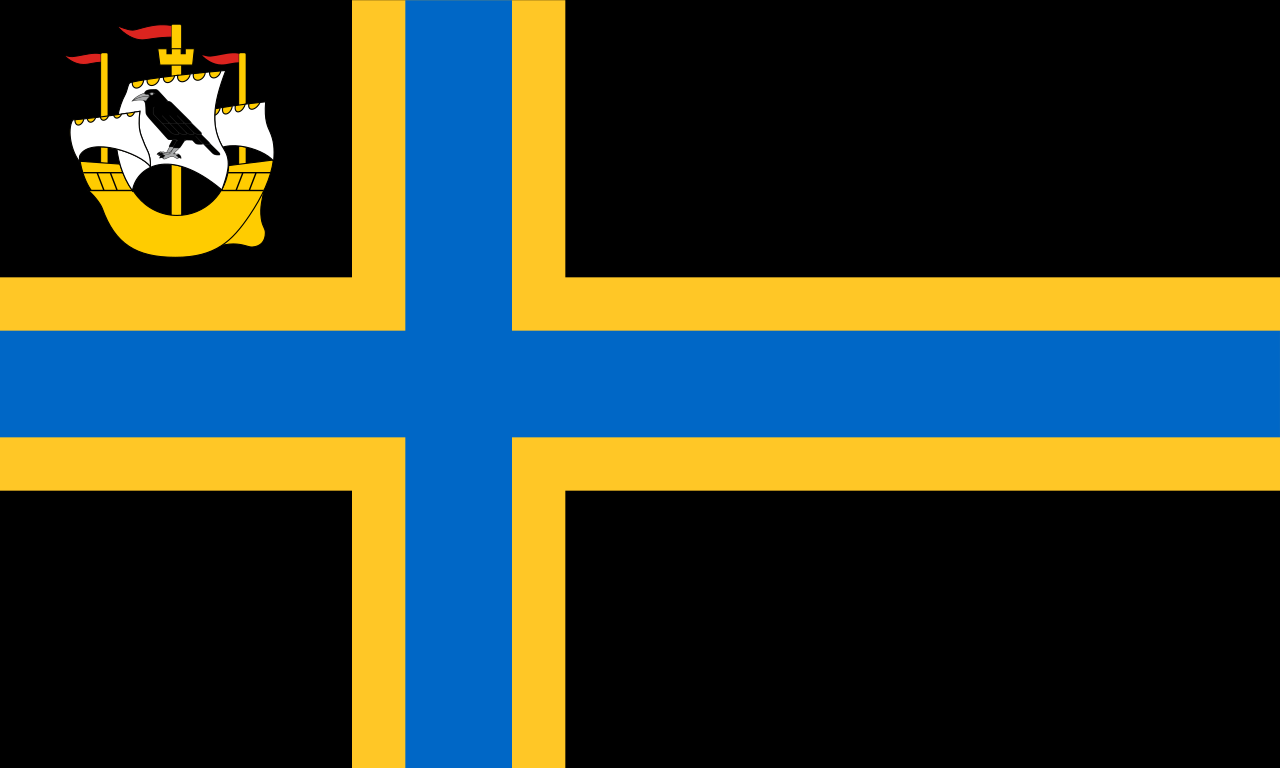
Flag of Caithness.svg
They do have a pretty cool flag these days.

I know full well that that wouldn't be Macbeth. But I would hope that the Thane of Glamis is dressed and staged in a comparable fashion to his peers. The rest of Scotland's nobility are not yet cowed by him*, driven into embarrassing spectacles - and useful or useless, you can't ignore Drunken Incompetent Regional Magnates. I'm leaving out much here - the world view of Shakespeare's England, to say the least. 

So, Macbeth may not be something that needs the above 'Diplomacy-perspective.' But there's room in my library for Portraits and Tapestries alike. The possibility that society will only start making (or praising, or honouring, or writing about, or otherwise considering to the exclusion of others) is a little unnerving. Compare this extended basketball analogy.

Perhaps we need some sort of Rawlsian Original Position. You might end up as any of these characters, so you should write something that at least considers any of these characters. Of course, the veil of ignorance doesn't always work quite as intended


*You thought that The Death of Stalin invented tense dinners of horseplay with moustachioed Dictators?


2026: A new copy was required....

Sunday, 5 February 2023

Dynasties: The History Plays of Mike Walker

As referenced, both directly and thematically in recent posts, I have an interest in the history radio play sequences of Mike Walker (discussed somewhat previously). These chart the descent of a family line or an office; each play is either an hour or an hour and half long and each was first broadcast on BBC Radio 4. Details of each sequence and date of first broadcast will be shown below in the individual discussions of each sequence.

Why am I treating these as parts of one whole? Well, they come (sort of) from the same pen, were commissioned and distributed by the same company, deal with similar themes and topics in similar ways and contain a few cross-connecting references (Marcus Aurelius on cheese, 'Nettle tea with the stings still in', pigs not looking up...).

Why am I interested in these? What worth do they have? Well, firstly, I grew up listening to the radio. I'm fairly certain I heard The Hitchhiker's Guide to the Galaxy repeated on Radio 4 before I picked up one of Adams's novels. You can listen to the Radio while doing household tasks or exercising: audio material is ideal for travel - who wants to watch a good film on a tiny smartphone? Tons of decent creators of varying kinds got their start on the radio and some forms of comedy flourish better there. Certainly, the special effects are cheaper. 

Secondly, and as hinted in my Lazarus review, learning history seems to require these icons and images, however broadly drawn (see also Skerples on this). Grammar and Vocabulary come before Dialectic and Rhetoric, to employ the language of the Trivium (Cf. Dorothy L Sayers, 'The Three Tools of Learning'). The pupil learns names and dates and places as a scaffolding for a more complex building. The relatively low cost of radio allows Walker to do cover stuff that would be less likely to get money for television. These plays cover a fair amount of ground, ground that history lessons likely would not have the time to cover (we don't get The Bloody Tudors Again). In that sense, this is exactly the sort of thing a public broadcaster should be doing! 

(In the unlikely event that anyone reading this is doing so for educational advice, I would give these to a child of twelve and up - there's a certain amount of sex and violence, though it doesn't quite revel in it and by the nature of the medium it's not all that explicit.)

Thirdly, I enjoy these. It's that sweet spot of personal interaction and sweeping wider events, generally with a pretty decent cast. All dialogue, very little battle, sometimes with an odd framing device. Think of it as the award-winning bits of Game of Thrones, with a little connective tissue. Anton Lesser also makes a number of appearances, and because this is my blog and I wish to add some leaven of wit to proceedings, each entry below will discuss this.

Where can you find these? The BBC repeats them every so often, but given the international audience I get, that may not be so useful. I've found some of them for sale on Google Play's Books section for about the same price as a glossy new paperback. Audible also has them.

Caesar! 

First broadcast 2003 - 2007. Subject matter - Rome from 48 BC to AD 476.

Series 1: 'Meeting at Formiae' [On Julius Caesar, circa 48 BC], 'The Arena' [Augustus - lived 63 BC -AD 14], 'Peeling Figs for Julius' [Caligula, lived 12-41]

Series 2: 'The Best of Mothers' [Nero, 37-68], 'The Glass Ball Game' [Hadrian, 76-138], 'Citizens in a Great City' [Marcus Aurelius, 121-180 and Septimus Severus, 145-211]

Series 3: 'Empress in the West' [Victoria, c.231 – c.271], 'The Maker of All Things' [Constantine the Great, 272-337], 'An Empire without End' [Romulus Augustulus, c.461-511]

(I shan't list here the missing links - there's an awful lot of Emperors unaccounted for!)

The first four episodes are based on Suetonius's Lives of the Caesars. Suetonius himself actually appears in 'The Glass Ball Game' - as an imperial secretary under Hadrian, a role he really filled. 

'Meeting at Formiae' is wonderful. A fictional meeting between Julius Caesar, Cato the Younger and Cicero at Cicero's villa, allowing them to attempt to thrash out their differences before civil war begins. There are occasional interjections from wives and daughters. Anton Lesser plays Marcus Tullius Cicero, Big Daddy Chickpea himself, with the correct level of wry humour and inner steel. Some suitably melancholy elements to the ending: I couldn't quite tell you why, but this has a quality of comfort food to it for me.

'The Arena' is the account of a young Augustus by the old Augustus, emphasising his callowness and vision - a deliberate contrast to the elder statesman we see in I, Claudius (et al.). The lives of Caligula and Nero are as violent and extravagant and decadent as you probably imagined (David Tennant plays Caligula). 

There's a few semi-magical elements (as well as an interpersonal emphasis) to 'The Glass Ball Game' which make it fall a little flat for me, but the slow circling of a problem in 'Citizens in a Great City' works rather well. I don't know enough about the period portrayed by 'Empress in the West', but it serves as a sort of snapshot of the time and the problems it faced rather neatly, if with a little high melodrama.

Constantine will always be overshadowed by Christianity, but 'The Maker of All Things' functions as an account of his political struggles with rival Emperors in the East and his own family. There's obviously an element of religious reference in there, but it's subtly woven in. 'An Empire without End' portrays Attila the Hun and the last Emperors in the West - the last being Romulus Augustulus (played by Tom Hiddleston). The portrayal of a stagnant and dwindling Rome is at least arresting, if brief.

Anyway, Caesar! was very good at covering ground - the foundation of Empire, the problems of maintaining it, the splintering and rebuilding. 


Plantagenet

First broadcast 2010 - 2012. Subject matter - England (and much of France) 1154 to 1485.

Series 1: 'Henry II: What is a Man?', 'Richard I: Lionheart', 'John, by the Grace of God' [Skips Henry III]

Series 2: 'Edward I: Old Soldiers', 'Edward II: The Greatest Traitor', [Skips Edward III] 'Richard II: And All Our Dreams will End in Death'.

Series 3: [Skips/glosses: Henry IV] 'Henry V: True Believers', 'Henry VI: A Simple Man', [Skips/glosses over Edward IV and Edward V - like Shakespeare] 'Richard III: The Three Brothers'

Based in part on Holinshed's Chronicles - which also inspired Shakespeare.

Walker sensibly doesn't try and tread on The Lion in Winter's toes (claws?). 'What is a Man?' deals with Henry II's conflict with his eldest son, Henry 'the Young King'. It's a powerful setup for the rest of Series 1, with chest-beating competition and boar-hunting metaphors. The late David Warner plays Henry II, in a fine sarcastic mode. Richard I and John then cover some fairly familiar ground - brash Lionheart and cringing, ineffectual Lackland. Decent, but not exceptional - and doesn't turn into paens about Magna Carta. 

David Warner in a role rather different to Henry II.

The strong father - weak son pairing of Edward I and II is then repeated with Richard II, son of The Black Prince. This is kept from being too obviously repetitive story-wise by the framing: Roger Mortimer serves as protagonist of 'The Greatest Traitor', and the Richard II - Henry Bolingbroke contrast fills much of 'And All Our Dreams....'

Series 3 is stronger than Series 2. Luke Treadaway's Henry V is a calculating, cold type, manufacturing the heroism of Agincourt - in contrast to the Prince Hal of Shakespeare, whose colder elements are there (turning his back on Falstaff, hanging Bardolph) but even in (say) Branagh's initially cold 1989 portrayal he warms up by the St Crispin's Day speech. I haven't seen the recent The King with Timothée Chalamet, but the young Treadaway (later to play Richmond) is possibly in that same casting type.

Henry VI is married and championed Margaret of Anjou, played with awkward resolve and urgency by Aimee-Ffion Edwards. Carl Prekopp, with his distinctive voice appears in minor roles in 'True Believers' and 'A Simple Man' before emerging as Richard III.  I shall take this to be deliberate, rather than simply who was in the building on a particular day. Shakespeare's Richard is constantly with the audience, addressing them and winning them - is this a variant of that? In any case, Walker's Richard is less of a villain, circumstances (and the Duke of Buckingham) leading him into the throne (Cf. The Daughter of Time and The Dragon Waiting). Clarence's betrayal is far better contextualised than in Shakespeare - Cf. the section here entitled 'George, Duke of Clarence'. 

No Anton Lesser, I fear - he was off playing the Duke of Exeter.


The Stuarts

First broadcast 2013 - 2015. Subject matter - Scotland, then all the British Isles, then exile 1542 - 1789.

Series 1: [Skips the Stuart Kings Robert II, Robert III, James I through V] 'It came in with a Lass' [Mary, Queen of Scots], 'To Make the Plough Go Before the Horse' [James VI and I], 'A World of Fools and Knaves' [Charles I], 'This War without an Enemy' [Charles I].

Series 2: 'Charles II, Part One: Through the World in Various Fortune', 'Charles II, Part Two: The Long Lease of Pleasant Days', 'James II: The Storms of this Deceitful World'.

Series 3: 'William III and Mary II: To Have and to Hold', 'Queen Anne: Myself Alone', [Skips James Francis Edward Stuart, son of James II and VII, 'The Old Pretender', father of Bonnie Prince Charlie, 'the Young Pretender'.], 'Bonnie Prince Charlie: Who Dares to Be Free', 'Charlotte Stuart: The Last Stuart'.

Well, we already had the Henriad and The Lion in Winter. Time to do something new. The Stuarts is pretty bloody good, really. There's a decent account of Mary Queen of Scots's struggles with a Reformed Scotland while trying to be a Catholic monarch (Brian Cox plays John Knox). The standout element of the first series is likely Charles I - covering his personal rule and the Wars of the Three Kingdoms that followed it. Anton Lesser is on rare form as Thomas Wentworth, First Earl of Strafford - whose trial accords him excellent opportunities for nervy, righteous anger. 

Charles II's reign is broken into accounts of his life in exile and the success of the Restoration, leading to the reign of his brother and the Glorious Revolution. We get James II's view of things before William of Orange's - and you'll never listen to Lilliburlero the same way again. It's a sympathetic view of James II, coloured by his attempt at religious toleration. William III deliberately gets the Dutch perspective before the English, though one could do with a deal more of his rivalry with Louis XIV. 

The relationship between Queen Anne and Sarah Churchill goes on display - a few years before The Favourite was released, but I'm told Deborah Davis wrote her script in the late 90s (not sure if the episode was broadcast before or after the 2015 play). In any case, Walker tends to write his favourites as 'Close, but Not Necessarily Sexual' - which has the ring of truth about it to me: intimacy may be a rarer thing than sex for a monarch.

Bonnie Prince Charlie gets an entire hour and a half to himself - necessary to cover the '45 rising and the misery of exile. It works fairly well, but it makes Cumberland's army look too English (Highlanders backed the Stuarts; Protestant Lowlanders were less enthusiastic). Cumberland's Germanic efficiency is a little cliched for my taste, but contrasts well with the Romantic Charlie. I haven't really encountered Charlotte Stuart outside this series, but in any case her episode serves as a headstone for the Stuarts as a whole (and Bonnie Prince Charlie in particular).


Tsar

First broadcast 2017. Subject matter - Russia, 1547 - 2017

Series 1: 'Ivan the Terrible: Absolute Power' (Ivan the Terrible was Ivan IV), [Skips: Feodor I] 'Boris Godunov: Ghosts', [Glosses: False Dimitry I, Skips: Feodor II, Vasily VI, Vladislav, Michael, Alexis, Feodor III, Glosses: Ivan V], 'Peter the Great: The Gamblers', 'Peter the Great: Queen of Spades' (Peter the Great was Peter I). [Skips/Glosses: Catherine I, Skips: Peter II, Anna, Ivan VI, Elizabeth, Glosses: Peter III]

Series 2: 'Catherine the Great: Husbands, Lovers and Sons' (Catherine the Great was Catherine II), [Glosses: Paul I], 'Alexander I: Into the Woods', [Skips: Nicholas I], 'Alexander II: The People’s Will', [Skips: Alexander III].

Series 3: 'Nikolai II: Three Hundred Years', [Glosses: Alexander Kerensky], 'Lenin: Tears', 'Joseph Stalin: The Last Bolshevik', [Skips: Malenkov, Khrushchev, Brezhnev, Andropov, Cherenko, Gorbachev, Glosses: Boris Yeltsin, Dmitri Medvedev] 'The Shield and the Sword' [About 'VV'.]

'The Bear has Seven Dreams, and they are all of Bears.' Best get used to that expression, you'll be hearing it a lot [incidentally, you get some bloody odd results if you put that in Google].

Good strong first series here: Ivan the Terrible setting the model of a Tsar in a mix of brutal authority and religious charisma. It's pretty overbearing, honestly - and has at least one very well used sound effect. David Threllfall plays Ivan, and apparently possessed appropriate facial hair for the occasion. Jerome Horsey makes an appearance to tie in England to proceedings - that Ivan proposed marriage to Elizabeth I is interesting, if hardly a vital part of the story. Boris Godunov is introduced here before his own episode. Both episodes set up a backwards, vast and somewhat mystical Russia with Horsey as the outsider able to comment occasionally on things - but it never quite lets this become a point of attack, I think. The focus is on the Russian nobility and their clashes and the deaths of their families - all bad, to be sure, but not used as weapons against some idea of Russia (Cf. the Coda of this blog post).

All that gives way to Peter the Great who is (correctly) portrayed as a reformer, but he's also someone who can only make those reforms because he is a Tsar and happy to take power when the time comes (eg, from the Streltsy). Energetic, capable and possessed of vast appetites - this is unlikely a portrait of Peter the Great that you haven't seen before. Still, there is the wisdom of spacing out over two episodes his rise and his zenith - that second episode telling of the startling rise of Catherine I, his second wife, who would reign for two years after his death. That's a rather interesting contrast between the nature of Peter, his court and the woman Menshikov cultivates to influence him.

From one Catherine to another, Catherine the Great's story is of a woman married at an early age to Tsar Peter III - as played by Anton Lesser in spiteful vein. The title 'Husbands, Lovers, Sons' is apt: it is an account of Catherine II sandwiched between a series of relationships with men - those she despises, those she cooperates with and those she must rely on. As with Peter, there's an emphasis on reform - tempered towards the end by news of the French Revolution: so much for Voltaire. 

Napoleon follows on the French Revolution - but before then, Catherine's resentful son Paul I and her uncertain grandson Alexander I. French invasion is the final peril for Alexander - before then, he must confront the increasing instability of his father. Tying into the wider idea of a growing Russia is the nationalist bent of Alexander's resistance to Napoleon - eventually successful, of course. 

Which leads into 'The People's Will' - dealing with the assassination of Alexander II by the left-wing group of the same name in 1881. The liberation of the serfs by that very Tsar is both indicative of a changing Russia - and not enough for some. Contrast is made with the American Civil War.  A blend of procedural and flashback detail the fateful day in question, with points of view from the Tsar, the assassins, a visiting peasant and the investigating policeman.

Moving past Alexander III, we meet Nicholas II and the familiar events of the Russian Revolution. Agitation is suppressed at a cost by a diffident Tsar - then World War One breaks out. (The focus stays domestic - no scenes with Kaiser Wilhelm II). All familiar territory, but well-executed, and perhaps the most convincing portrayal of Rasputin I've encountered. Almost instantly, we cross over to Vladimir Ilyich Ulyanov - that is, Lenin. Who, returned to Russia by the Germans must struggle against the provisional government, division in his own party and his own personal relationships in order to bring about the Revolution. That very Revolution is the cause of his taking up more and more power to himself - Tsar-like in scope, if not manner. 

That is less so than 'The Last Bolshevik', Joseph Stalin. The framing of his episode is identical to that of Ivan the Terrible's. However, the difference is the threat Russia faces: this episode is set in 1941 shortly after the Nazi invasion of the USSR. Stalin hides in his Dacha as the country cries out for leadership in response. We track back through Stalin's rivalry with Trotsky, his unhappy marriage with Nadezhda Alliluyeva, his relations with the inner party - and, crucially, the Molotov-Ribbentrop Pact. 

Brian McCardie plays Stalin - Georgian is to Russian as Scottish is to English, apparently. Well, it works to illustrate the ethnic background of characters in a fashion a trifle more focused than The Death of Stalin. The presence of World War Two makes the whole business rather frantic - beating the Nazis is of some importance! All that said, I am a trifle queasy at something that makes itself look somewhat redemptive for Joseph Stalin, of all people: it ends on a note of stern resistance - 'Party and Army made One!' Now, purges, the assassination of Trotsky and the unnerving presence of Lavrenty Beria (The horror of the last largely unspoken - but perhaps known to the informed listener. The scene with Stalin's daughter Svetlana is particularly unnerving.) have been features of the episode, but the end still is rather triumphal.

No reference is made to the USSR under Stalin after that, really. We go straight from Uncle Joe to 'VV'. Now, readers of this blog are attentive, intelligent and highly attractive - and thus will have worked out who that is: yes, we skip right over Khrushchev and Gorbachov to meet Vladimir Putin. This feels a little odd, if not strictly out of place in a media landscape that can include TV dramas on Dominic Cummings or Boris Johnson and a radio drama on Donald Trump.

Accordingly, the final episode is a series of brief stories, the fictional element of which is emphasised by a female narrator. In a scattered order, we see Putin's childhood, life in the KGB, apprenticeship under Yeltsin, early presidency and ascendancy. Now, this was episode was broadcast in 2017 - after the Annexation of Crimea, but before the Invasion of Ukraine. (And before the Poisoning in Salisbury, which would have made this episode rather different: espionage high-jinks only look jolly at a distance). Naturally, territorial ambitions receive less attention than grappling with oligarchs and the conditions of post-Soviet Russia that allowed Putin's rise. 

Which is valuable information, to be sure - if, as we now know, incomplete. But Walker damn well knew that this was going to be an episode without straight answers. The nameless narrator asks VV about 'hacking the US election' and receives a none-answer - fittingly, frankly. 'Ah, President Trump. Hmm.', says VV - does Nicholas Murchie add the hint of a smile to his voice performance? 

If I say that this episode wouldn't get made today, I don't mean that to imply some imposed censorship. It would not get made in this manner, certainly - 'The Shield and the Sword' is somewhat more lighthearted than 'The Last Bolshevik' - and it would likely not get made at all: there is still too much to answer about Putin's life and decisions. A playwright would have to be quite a Kremlinwatcher to even attempt it. 


Castle of the Hawk

First broadcast 2021. Subject matter - Central Europe 1280 - 1913.

Series 1: 'Hawk Rising', 'Hawk Hunting', 'Hawk Wounded' [Rudolf I, Adolf of Nassau, Albert I - 1280-1310], 'Wallenstein' [Ferdinand II, 1618], 'Redl' [Franz-Joseph, 1913]

(Like Caesar! above, this skips an awful lot of both Habsburg monarchs, Holy Roman Emperors and rulers of Germany).

Castle of the Hawk is, I fear, the most disappointing of these. For one thing, it has no Anton Lesser. For another, there's a lot of ground uncovered, and not uncovered in the Caesar! sense where each episode sketches out a block of imperial history in the reign of one man. I can understand not wanting to cover Charles V and the great unity of Spain, Austria, Holland and much of Italy - that almost might demand a series in itself. But leaving out Maria Theresa is pretty strange - that would have made an excellent middle ground between the Thirty Years War and the First World War. 

The initial Hawk trio is about the rise of Albert I, called Albert the One-Eyed, full of suitable medieval intrigue and belligerence. It is largely told from the perspective of a Turkish advisor and spymaster to the Habsburgs - which feels like a slightly off-kilter decision. Such a person existing is not impossible; the final reveal that his true purpose was to keep Europe disunited for the Sultan seems like a more modern form of espionage than could be adequately expressed or maintained in the period. There's also a degree of cynicism about religion more reminiscent of Game of Thrones (and not in a good way) than Medieval Germany. 

Also, someone felt it necessary to rename Adolf of Nassau to Norbert of Nassau. Norbert, in the series, is portrayed as a pitiable, ineffectual dupe. Did they think we would somehow transfer a remote pity of Adolf of Nassau onto Adolf Hitler? Listeners are capable of telling apart Adolf of Nassau, Adolf Hitler and Adolphe Sax if needed, in the same fashion they can tell apart George III, George Washington and George H.W. Bush.

There have been a few other character meldings and meddlings, especially among Albert's sisters. But we leave that aside for now.

'Wallenstein' is pretty good, on the whole. The life and death of an ambitious mercenary general, used and using the Hapsburgs in turn. Count Tilly gets used as an awkward mouthpiece for prejudice and ignorance, which may or may not be true of the man, but certainly doesn't flow well. Everyone else is relatively subtle, and then he enters brash as anything and is still supposed to be a major player in the court and army. The odd musical sting using electric guitars is out of place but frankly the Thirty Years War needs the odd moment of swagger.

'Redl' is based on Colonel Alfred Redl's life, with an admixture of the Meyerling Incident. It's a treatment of the division and secrecy of the late Austro-Hungarian Empire. Redl himself committed suicide after passing information to the Russians, and the revelation of his treason - and his homosexuality. There's some related material abut the many nationalities of the Habsburg empire in the 1910s, but it doesn't quite go far enough - one tastes the sauce, not the entire dish. 


Medici: Gangsters, Bankers, Popes

First broadcast January 2023. Subject Matter - the Florentine Republic and Italy, 1434 - 1492

Series 1: 'Cosimo' [Cosimo de' Medici], [Skips: Piero de' Medici] 'Lorenzo the Magnificent' [Lorenzo de' Medici], 'Bonfire of the Vanities'.

['Bonfire of the Vanities' is listed as being written by Sian Ejiwunmi Le-Berre - but everything else is by Walker, and I assume the two discussed the overall shape of the series together. Can't recall other writers in the other series, but Walker has been willing to collaborate before - see Tumanbey.]

One series, and from the looks of 'Bonfire of the Vanities', that's all there will be: in that, a dying Lorenzo has a vision of future well-placed Medici scions (Pope Leo X, Catherine de' Medici, &c). Perhaps I'll be proven wrong - though I suspect that episodes on the French Crown or Papacy would be unlikely. Something on the end of Medici rule in the 18th century would be interesting.

Anyway, if you know anything about the Medici, you have an image of what this is. The subtitle gives it away. A blending of financial and political power, leading into the wealthy patronage of the Renaissance. The regular montage sequences with the ledgers work quite well. 

There's two elements that could be drawn out a little more - firstly, the sin of usury. Even if the prohibition against money-lending at interest was honour more in the breach than the observance, some element of personal grappling with the religious ideals of the time would have been interesting. This gets touched on to some degree in 'Bonfire of the Vanities', with Lorenzo outright calling himself a new sort of person to his wife, who remains 'Medieval', freer of religious custom. 

The transition also of 'influential banker' to 'ruler' is also smoothed over. I don't necessarily need a guide to the signoria, but I'd like a little hint that the nature of day-to-day responsibilities are changing, rather than another joke about this funny but talented rustic from Vinci.

Readers may wish to follow this series with these posts on Machiavelli.


Where to next?

Not for me to say, of course. Certainly, there are plenty of dynasties one could examine. If sticking in England, something on the successors of William the Conquerer - William Rufus, Henry I, Stephen and Matilda - would be good.

I should be interested in one on the Bonapartes. The life of Napoleon is fairly well covered, of course, but one can imagine a First Series doing 1) The Early Career of Napoleon, up to becoming Emperor, 2) The presence of his family during the zenith of his power - placing Joseph on the throne of Spain, for instance, or Jerome on the throne of Westphalia, 3) The Fall of Napoleon - playing the well known hits of Moscow, Leipzig, Elba, Waterloo, St Helena. A Second Series would presumably do 1) The brief life of the brief Emperor Napoleon II, contrasting with 2) The Childhood, rise, election as President and coup of Napoleon III finishing up with 3) The Second Empire and the Franco-Prussian War (and exile). Tsar has furnished us with a Napoleon I and a Talleyrand - Charlie Anson and Robert Blythe, respectively. Anton Lesser can play the Duke of Wellington, if you can't get Christopher Plummer.

"Welcome, gentlemen, to the Council of Lessers...."

Friday, 22 April 2022

A Double Century and Noisy Sheep Shearing

This is post number two hundred, so something different from usual: you shall hear me speak, interviewing noisms of Monsters and Manuals - the occasion being the Kickstarter for In The Hall of the Third Blue Wizard, a brand new 'zine with a variety of contributors.  


Things discussed include: 
I hope the above will be of some interest, and look forward to another hundred such posts!

Monday, 14 February 2022

The Names of the Stars

I've used the geocentric or Ptolemaic model of the Solar System, (with the planets visible to the naked eye) as the basis for a few posts.  

This understanding of the cosmos is also employed, with variations, by C.S. Lewis, in one place or the other (Planet Narnia was a revelation). He's not alone. Dante models his Paradise after the Solar System, though this may be less well-remembered than the layers of the Inferno. Closer to home are the crystal spheres of Spelljammer. The classes of Sidereal Exalted derive from the visible planets and their associations; the list is completed by the Lunar and Solar Exalted. The esoteric panoply of astrological and alchemical symbols are a connected part of fantasy aesthetics; e.g, the cover of A Most Thoroughly Pernicious Pamphlet

While the Signs of the Zodiac as we know them seem to be out of the running, astrological conventions are not unknown in fantasy. To chose a fairly mainstream example, the Birthsigns of The Elder Scrolls series of video games (which strike me as, well, thuddingly obvious - 'You were born under the Sign of the Thief, guess what you're good at'). Where Capricorn, Scorpio et al appear it tends to be in the form of a somewhat arbitrary decision; see the Twelve Colonies of Kobol. They're a 'complete set' of images and can thus be used as an (uncontroversial?) artistic motif - as in the Wisconsin State Capitol, for one. The combination of completeness and variation associated with the Zodiac when taken as a whole perhaps explains their use on the dust jackets of The Reprint Society in the 1950s (see below), unconnected to the content of the book.

Image found here. Other variations on the theme are available.

But let's set all that aside. This isn't the time to discuss the planets - or the Zodiac, or indeed any given constellation. To give the bounds of my discussion, I am looking at the names of the stars that reach us out of the distant past. As interesting as the recent decisions of the IAU may be, I shall be considering the list of names below, found in an old copy of Norton's Star Atlas (the below being the 17th Edition from 1978).


The various naming conventions of star catalogues that give us, say, α Leonis, are useful but do not concern us here. 

Where, then, do the names of the stars appear? An obvious place to start is with science fiction. The (nominally) harder sort of science fiction uses them; witness the use of Rigel, Algol or Alnitak in Star Trek, Deneb in Blake's 7, Altair in Forbidden Planet, or Sid Meier's Alpha Centauri. Of course, the rather looser Hitchhiker's Guide to the Galaxy will also happily refer to Barnard's Star, Betelgeuse or 'an Arcturan megadonkey'. 

The use of such names is perhaps to be expected in a future history of mankind among the stars - though, in the case of sentient alien life emerging on the planets of one of these stars, the question of what name is used to refer to it would be a matter of dispute. It would be a suitable characteristic for an expansionist human star empire to apply the old Terran names of the stars - whatever the native population or a breakaway human colony think of that. 

You would expect this to come up in Warhammer 40,000. It doesn't; on second thought unsurprisingly, given the years of decay and ruin. The names of the stars do appear but as part of the lexicon of history and myth from which authors can draw names of people, places, organisations, &c: Vega, Antares, Arcturus, Sirius, Polaris, Polaris (duplication should not surprise us). A number of planets have been named for stars: AlgolDeneb - can one witness a sunset if one is standing on a star? Altair VII - presumably the seventh planet to orbit Altair - is a pleasing exception. The Imperial Stars don't have much more that a name and a colour scheme, but if anyone is going to make an army of them, I think we have a few names they can use. [Edit: Oct 2022. In Rath's Assassinorum: Kingmaker, an assassin without any particular astronomical or artistic education recognises Ursa Major from the ceilings of cathedrals, portraying the sky as seen from Holy Terra. Of course the old constellations would be a religious-artistic motif.]

Star Wars is, of course, set in a galaxy far far away, but one can't help thinking that Alderaan and Aldebaran share a certain kinship as names. Besides this, the very nature of the names of the stars gives the model of proper names - the majority of planets in Star Wars appear to have these rather than codes or catalogue-type names; Yavin 4 being an honourable exception. 

To shift genres briefly, fantasy gives us an entirely different use of the names of the stars. A number of names in Harry Potter are taken directly from the above list: Sirius, Regulus, Bellatrix - all members of the same family (names derived from constellations are among the wider family as well: Cygnus, Orion, Andromeda, Draco). The Blacks are among the older and richer families of wizarding Britain: the aristocratic pretensions of stellar, Latinate names are presumably to be contrasted with earthier, more typical names - further, these snobby, prejudiced people with the strange names aren't a bit like us and the protagonists. This isn't the sole reasons for such names, of course: Sirius is the Dog Star and, if you did not know it already, you can guess what sort of animal Sirius Black can turn into.

Weird fiction has a number of uses of the names of the stars; Carcosa, famously, is among the Hyades. Lovecraft wrote a story called 'Polaris', featuring the remote gaze of the stars on an ancient polar civilisation (as well as the sort of racial prejudice that is absolutely text rather than sub-text). More pertinent is A Voyage to Arcturus. This describes Arcturus as a double star, but it is no such thing - though this is hardly the limt of the novel's strangeness. It almost needn't have been set on Arcturus at all. However, I would note that the use of the stars as ancient (hence the deliberate use of the older names) and distant is the point. 

Martian canals were being charted by Schiaperelli in 1877 and in 1897 H.G. Wells revealed to us that Martians were blood-sucking machine-using imperialists who are vulnerable to disease (that is to say, just like Human Beings). Edison conquered Mars soon after. Later sword-and-planet fantasies like A Princess of Mars (1912) or the Northwest Smith stories of C.L. Moore (1933 onward) don't just involve journies through space but time as well. Therefore, in order to get distant, alien Weird Fiction, David Lindsay has to portray an interstellar journey, not merely an interplanetary one. 

You may be aware that A Voyage to Arcturus was an inspiration for C.S. Lewis's Cosmic Trilogy - but that these take place on the planets of our own Solar System. In such this case, the nearness of Mars (Malacandra) to Earth (Thulcandra) is no handicap: it is part of the revelations of that series that space is by no means as dark and unfriendly as the denizens of fallen, sinful Earth - the titular Silent Planet - would believe. 

Speaking of Lewis, I have highlighted above the use of Medieval cosmology in his work. As for stars, I would note the astronomy lesson of the half-dwarf tutor Doctor Cornelius given to Prince Caspian (in Chapter Four of Prince Caspian). Here they watch as 'Tarva, the Lord of Victory, salutes Alambil, the Lady of Peace.' The epithets 'Lord of Victory' and 'Lady of Peace' seems more apt for planets than the stars ('Mars, the Bringer of War', 'Mercury, the Winged Messenger') but a planet is, after all, a wandering star. (This neglects the stars in human form like Coriakin or Ramandu encountered on The Voyage of the Dawn Treader, but neither are currently being a star so I shan't discuss them).

Tolkien would place among his Valar Varda, Queen of the Stars (the subject of all those Elven songs invoking Elbereth Gilthoniel). The stars of Middle-Earth come in to being before the Sun and Moon with dews of the Silver Tree Telperion (vitally, the Elves awaken under the stars) and form Constellations similar to our own. 'Wilwarin, Telumendil, Soronúmë and Anarríma' are named by the Silmarillion. 'Menelmacar with his shining belt' is presumably Orion. Valacirca, the Sickle of the Valar, is the Plough rotated ninety degrees.'Carnil and Luinil, Nénar and Lumbar, Alcarinquë and Elemmírë' are named as individual stars, some with distinct colours. The Tolkien Gateway cites The History of Middle-Earth to indicate that these are the planets of the Solar System, but more named stars exist: Borgil, for one - which appears to be the Red Giant Aldebaran.

The Valar have as their responsibility Middle-Earth and indeed are based there for many ages before Valinor is lifted from Arda. In this regard, Varda's stars are not (cosmically) distant and unfeeling, but rather visible and amiable markers. One might compare them to the weathercock atop a Church spire in a nearby village: you will never touch it, but in returning from a long journey you may see it and be comforted. 

Fritz Lieber has Fafhrd and the Grey Mouser directed as to timing by their wizardly patrons in 'The Bazaar of the Bizarre' using the green star Akul - which is apparently visible even in the night sky of Lankhmar, City of Sevenscore Thousand Smokes. Perhaps it is made visible to the pair - the story does make use of wizardly enhancements of sight. 

That's been something of a digression, but I shall return to the subject at hand. Historical fiction will of course use the names of the stars, but one particular use stands out. This is the association of the people of Arabia with the stars. An early example is Lew Wallace's 1880 Ben-Hur (A Tale of the Christ). The horses of Sheik Ilderim (i.e, those used for the famous chariot race) are named for the stars: Mira, Sirius, Rigel, Antares, Aldebaran, Atair. The associations between the Arab World and astronomy can be as plain and superficial as the star and crescent symbol of Islam. A goodly number of the above names of the stars derive from Arabic - one thinks of Alnitak (al-nitaq), Megrez, or Algol (al-ghul) and the practice of Arab astronomy is witnessed by star catalogues like the Book of Fixed Stars. Ilderim in Ben-Hur explains this as the result of being in the desert at night, an explanation I recall from my schooldays (if with no firmer source than that). 

Of course, another explanation (also brought up by Ben-Hur) is the Magi of the Christmas Story, perhaps the most famous of astronomers royal. The Gospel of Matthew has them as 'wise men from the east' (μάγοι ἀπὸ ἀνατολῶν) in its Second Chapter. The Persian origin of the word 'Magi' aside, they are clearly not of Judea and the Near East, but from further off - the Middle East.  Later tradition would bring in the 'Three Kings' portion (echoing Old Testament prophecy about Kings worshipping the Messiah) and give them names (Balthasar, Caspar, Melchior) and countries of origin. Despite the precise countries varying, they do seem to stay between Ethiopia and India (there's the occasional Greek). Balthasar appears in Ben-Hur as an Egyptian. 

I note that a title as mainstream as the first Assassin's Creed video game had its Arab protagonist named Altaïr Ibn-La'Ahad. The name Altair may be as much in reference to the Aquiline characteristics of the game's order of asssassins as the star α Aquilae - but Assassin's Creed was made by Ubisoft Montreal and had what appears to be a group of Canadian and American writers, artists and designers. It would not suprise me if one of them encountered the name of the star (and its derivation) first.

Aside from fiction, there are many military uses of the names of the stars. Ships take names like HMS Sirius, HMS CastorUSS Mizar, USS Bellatrix.  Italian military aviation units are named for Antares or Vega. Star names are safe, aspirational, classical, respectable - and pay homage to the connection between astronomy and seamanship (they aren't as in-your-face as HMS Venomous or HMS Antagonist). One sees why they were used in cases like that of the USS Mizar (see Merak and Tarazed) in wartime expansions of a fleet; preferred, I should imagine, to the names that were given to the Flower-Class corvettes and sloops. Consider also the Polaris missile, not only safe, aspirational, &c but also conveying ideas of pre-eminence (literally at the top of the world), coldness, leadership and perhaps polarisation. A perfect name for Cold War American hegemonic efforts. 

[I feel compelled to include the USS Cor Caroli. Cor Caroli was a relatively recent star to be catalogued, being most firmly mapped in England in 1673 and named 'Cor Caroli', the Heart of Charles -  Restoration loyalties praising the heart of Charles I, King Charles the Martyr (Cf. Georgium Sidus). The USS Cor Caroli was built and launched under similar conditions to the USS Mizar and I take it the name was chosen for similar reasons - but it is still a cause of amusement to think that a ship of the United States Navy in the twentieth century was cruising round called 'The Heart of Charles I'!]

That may conclude an eclectic survey. You might start further investigation here. My thoughts above may also answer the question What is it to use the Real-World Names of the Stars in my work?

[An absence of the Names of the Stars - any stars - that catches my eye is in the Stormcast Eternals of Warhammer: Age of Sigmar. Sigmar himself might be God-King of the Celestial Realm, but this only seems to manifest in the ubiquitous comet and lightning motifs. The very names of the Eternals tend to the 'Lucius Skywalker' pattern - Latinate first name, second name noun-noun or adjective-noun (though there is some Punic representation in the shape of Hamilcar Bear-Eater). And yet the names of the stars make for great colourful High Fantasy names - as well as having a Warhammer-suitable thudding obviousness. Consider: Saiph Lionpuncher. Mizar Cometcrafter. Vindemiatrix Bronzehawk. Procyon Refeshingbeveragemaker.]

Two questions also occur: What is it to have named stars in your secondary world? What is it to have named stars be of consequence?

Well, Tolkien's named stars are right in the same mould as the stars of our world: they are named for similar reasons and organised in similar ways. Even if one imagines that the Elves when the world was young named and catalogued the stars in a very different fashion to the stargazers of (say) Bronze-Age Babylon. 

At any rate, it implies a measure of peace, security and scholarship to be able to track and name (say) around fifty stars - as well as, perhaps, permanent settlement. No doubt a nomadic people could recognise and track different stars, but the nature of star catalogues is such that I suspect they would be more likely to appear in a fixed community. (And if there aren't star catalogues but names of stars are acknowledged sufficiently widely, it means that this society is putting a quantity of work into transmitting those names). It also implies the preeminence of one set of star catalogues in a given culture: that red star is the Crimson Jewel, not the Scarlet Cross. Well, if everyone is speaking 'Common' no doubt they refer to the same stars and involve themselves in fewer disagreements over the names of nations.

What, then, is it for these stars to be of consequence? What if each School of Wizardry or Religious Figure or Blood-Oath Sorority of Magical Warriors is connected with a star? It's the difference between working in a office with ten people and working in an office of fifty. The dynamics and the feel of working and being in that group differ. A worshipper that has to answer to the various commands of the Twelve Olympians is someone with a different religious life to one answering the commands of the Fifty Star Archons (though that's still under Dunbar's Number). Those connotations of distance return once again.

I'm not certain those are very firm or very sound conclusions. And I've been in plenty of campaigns where I didn't have to refer to the stars at all to bring about the completion of a quest. But I hope this indicates some of the ways the Names of the Stars have enhanced or could enhance a work.


My thanks to the Three Mile Tree Brain Trust for their contributions in this matter.