Showing posts with label Tabletop Gaming. Show all posts

Wednesday, 3 September 2025

July-August Miscellany 2025: France, Alabama, Estar, Little Gidding and the High Dreaming Citadel

The Heptameron, Marguerite of Navarre
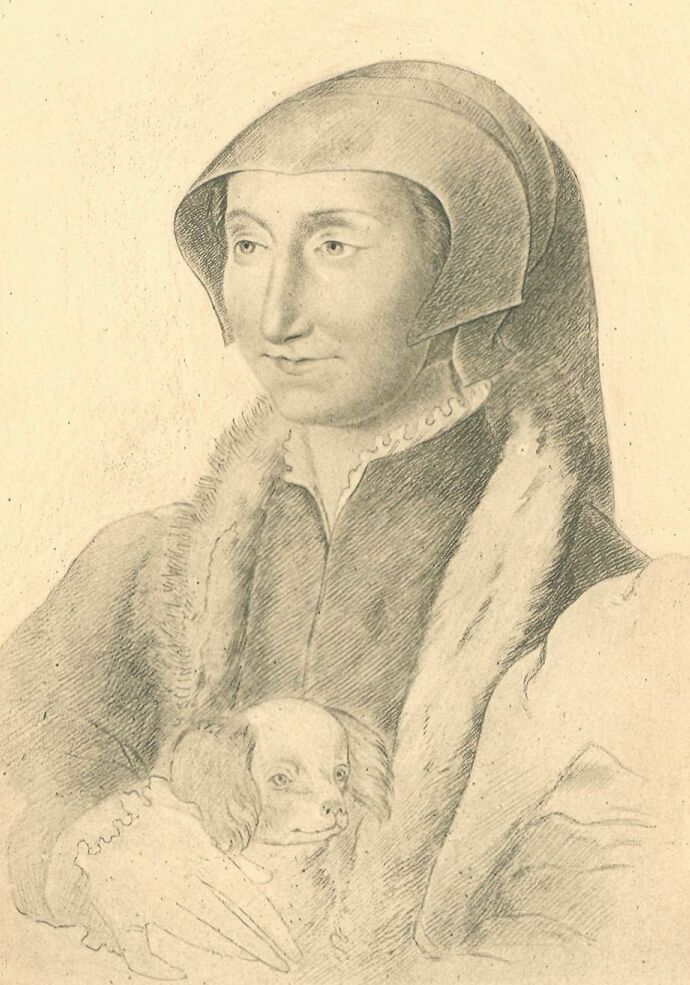
Frontispiece
Marguerite, from a drawing held at the Bibiotheque Nationale.

A sixteenth century collection of tales, written by a French princess and published after her death in one form or the other. Over seven days - Hepta/Emera - a collection of French nobles stranded by floods in a monastery tell each other tales. The Heptameron was unfinished on Marguerite's death: it was meant to last ten days - as Boccaccio's Decameron - and features ten storytellers. The Anglophone reader will automatically look to Chaucer, but there are a few essential differences. The storytellers are not travelling, there is no landlord of The Tabard to issue prizes and corral pilgrims (one of the French nobles is older and a sort of first among equals, but it's not the same), the story tellers are all of the same social rank (unlike Chaucer's mix: Knight, Reeve, Miller, Prioress, Cook, Pardoner...) and all the stories are of love and lust. 

It's also worth noting that all ten storytellers tell tales on each day. These run from two to fifteen pages long in a Penguin paperback edition (there is a version on Project Gutenberg), so they don't outstay their welcome. Each story is dissected and discussed by the listeners afterwards, and we get a growing sense of their characters - from the stories they tell, from how they react to the stories of others, from the rivalries and alliances made over the seven days. There are five men and five women among them. The ladies are Parlamente, Oisille, Longarine, Ennasuitte and Nomerfide; the gentlemen Hircan, Geburon, Simontault, Dagoucin and Saffredent. Some of them appear to be virtuous or vicious souls from the beginning - but all of them reveal something slightly further by being pushed and prodded by the exchange of ideas. High ideals begin to look a little shabby, or (eventually) naïve. Cynicism is revealed to be at least consistent and resolute, even when to a character's detriment. For characters who aren't actually doing much, they reveal a fair amount of themselves.

As for the stories themselves, they are a mix. There are tragic affairs, bedroom farces - and tales of adultery and betrayal. The sensibilities of the Early Modern reveal themselves, and interactions range from true love to seduction to coercion to deception to outright rape. Friars are especial targets for scorn and are held up as perilous to be around women. It's tempting to put this down to the Reformation - which Marguerite was around to see and take part in - but I would avoid doing so: firstly, because it is only Marguerite's daughter Jeanne III who becomes a Calvinist (and gives us Henri IV, who knows what Paris is worth) and secondly because the Decameron and Canterbury Tales alike have their share of less-than-pious monks, despite being a century or so before Luther. 

More vital are the clashes between male and female virtue - between the urge for conquest and the desire for purity - and all the consequences this has for devout Christians. The behaviour of monks is distressing because of the stated ideals of monks. Jacques Barzun's opinion is stated in From Dawn to Decadence.

It has been called "a masterwork of pornography" and it is certainly erotic: all are stories about the tricks and turns of love affairs, mostly illicit, But the porn-monger of today would look in vain for the physical exploits that have become commonplace in high and low fiction.

...her stories praise in all sincerity love and chastity. ... Toward the end of [the Heptameron] she verges on a sombre naturalism in which love is still a force but the erotic disappears. 

I suspect I would tell most people to read Chaucer first, but this is certainly something to pick through - especially if you like the ideas of the storytellers slowly revealing more of themselves. If you are after more information - or just comparing the jottings of a random blog with another source - then I would look to French Wikipedia before English. (Or just go to In Our Time.)

***

The Adventures of Telemachus, François Fénelon (as translated by Tobias Smollett)

A 1699 work of fiction about Bronze Age Greeks translated by an Englishman in 1776.

Telemachus, you may remember, is the son of Odysseus. He's a young man in the Odyssey, with a kingdom to save and a father to find. His teacher was Mentor - and yes, that does appear to be the origin of the word.

François Fénelon was, among other things, Archbishop of Cambrai and tutor to the Duc de Bourgogne. He had been made the latter rather unexpectedly by Louis XIV - for he had manifested Jansenist and Quietist sympathies for a good chunk of his career. As part of the young Duke's education he wrote The Adventures of Telemachus (hereafter Télémaque to distinguish character and book). This fits neatly into the gaps of the Odyssey, and shows Telemachus on several journey (Crete, Cyprus, Tyre, Egypt, southern Italy) seeking his father - in the company of Mentor, who is in fact Athena in disguise. Telemachus assists in several campaigns, is frequently praised, is taken as a slave, condescended to by Egyptians, rejects vice and learns many important lessons. 

Télémaque is unashamedly didactic. This is part of the appeal: it is being very obvious indeed about what it wants you to think. Even considering Smollett's translation work, this drips of the Baroque. The leafy Sylvan settings, the long speeches, the Classical figures put to Christian moralising - it feels like every chapter could be painted on a palace ceiling. Of course, this probably doesn't recommend itself much to a modern audience as literature. The 'first novel' is one of those things that can be debated to death, but this feels oddly unlike a novel for something written after Don Quixote

It's also worth noting that Télémaque was remarkable popular, in part for how often Mentor goes on about the need for a King to make firm allies, not embark on wars of conquest, heed advisors and be faithful to his wife. Barzun (again!) refers to the 

'picture of the government [Fénelon] thought France should have: a limited monarchy with a written constitution, representative assemblies, and a strong aristocracy discharging important duties. There should be equality before the law, public education, the mutual independence of church and state: the liberation of agriculture and trade from oppressive burdens.'

He also mentions that 'Télémaque is a classic, which until lately French children made to read.' One can see why: it's a perfect work for introducing the period, it's apparently quite good French prose, there's a good obvious story of the author managing to vex the king, and the lessons Fénelon imparts probably fit quite well with a vision of French Republican virtue. 

Should you read this if you are not one of the (presumably very many) French schoolchildren that read this blog? If you are interested in the period, you might care to read a few chapters. It fits well with the Rest of All Possible Worlds.  However, this may be a work more of France than of 'the Republic of Letters'. 

***

Crimson Tide (1995, dir. Tony Scott)

Rewatched after many years, having first caught it on my grandmother's television. Turns out I remember it pretty well!

Anyway, it's a submarine drama. Have they received the orders to launch a pre-emptive nuclear strike, or haven't they? Aboard the USS Alabama, Gene Hackman ('Captain Frank Ramsey') and Denzel Washington (his XO, 'Lt. Cmdr. Ron Hunter') will dispute this fact.

This uses the enclosed spaces and social structures of military life really well. The repetition of the missile drill scenes and the confirmations of codes works to lay out the mechanics and areas where tension can build. The fact that all the officers have to mess together regardless of how much they like one another helps; that everyone shuts up while Gene Hackman is talking - even just socially - helps. 

Gene Hackman's quite fun in this. As a rare combat veteran in the US Navy of the 1990s (no idea how true that is to life) he's apparently given a lot of leeway by his commanders, and is so is given a fairly free, ungrudging obedience by his men. He smiles, he carries a little dog around, he spouts bombast and knows he's spouting it - he grins crookedly in Denzel Washington's face. He's no Bligh or Queeg, but clearly he's not so many inches from a tinpot tyrant. But more to the point, he thinks that he needs to be - baiting and drawing on his XO in conversation, testing the line in order to reinforce it. Hackman could feel on the verge of caricature, but it's more a matter of a man twisting ever more and more to fit his chosen social niche.

It makes him a good foil for Washington, and (to some degree) a more interesting person than pillar of morality Ron Hunter. Fragments of Tarantino's comic book trivia in his dialogue only goes so far. 

***

Worldbuilding & Woolgathering and
The Wizards & the Warriors (1986) and 
The Wordsmiths & the Warguild (1987)

I recall the names of Hugh Cook's series from the back pages of other Corgi Paperbacks. The W__ & W___ format of the titles probably made me roll my eyes a bit even then, but I can vaguely recall wondering what a Weaponmaster would be, and how a coherent work of fiction with twenty protagonists could (The Wormlord, the Wazir, the Weaponmaster....) could reliably function. As far as I know, there was no conscious influence on the name of this blog (the above subtitle was irresistible).

Anyway, in the wake of the False Machine two-part review of all ten of the Chronicles of an Age of Darkness - and with a lucky second-hand find - I elected to record some thoughts on the first two, The Wizards & the Warriors (1986) and The Wordsmiths & the Warguild (1987).

For those after a fairly quick introduction to the series, I could do worse than point you towards these two summaries with a smattering of comment by Adrian Tchaikovsky.


>>LANGUAGE AND LAUGHTER

Wizards... feels like the most familiar territory. Evil wizard steals dangerous mystical artefact, good wizards and assorted fighters pursue him. The book starts fairly abruptly, with brief profiles of the main characters in the first few chapters to bring you up to speed. There are ancient wizards with significant powers, mystically named orders, castles vaster than even the Romantic dreams of the 19th century could produce, lots of slightly baggy detail about trade languages and nations. It feels a lot like you're stepping into any instance of Tolkien-imitating material from the late 20th century. (The second paragraph on Wikipedia denies that the Chronicles are High Fantasy; true enough, but they pretty clearly want to be taken for it initially - although I stop short of calling them parody or satire). 

I think this is to some degree deliberate. First, because Cook wanted to sell fantasy novels in the 1980s - and we have his own account that Wordsmiths... at least was written at the request of the publishers. Second, he probably quite liked coming up with words and deploying them in long flowing passages - or indeed, short ones. (The sun, naturally, says "Zaan." Injured legs go Balder-shalder-tok.) Third, there are these long passages of trade goods or instruments or what have you which keep knocking you off balance and away from any assumption that this is your world.

Fourth, he's being comic. This passage is from Wordsmiths...; it is situated at a party with young lovers, which is a fairly traditional topic for comedies. 

...the music escalated to a stormburst crescendo. A thrum began to gallop, a kloo honked harshly, a krympol crashed and scattered, a skittling nook began to campaign against the skavamareen and a plea whistle hooted. 

This sounds silly, and invites us to laugh - softly - at the young couple and the situation around them.  

Fifth, Cook knew he was walking into stereotypical waters (if the above passage was in a Star Trek novelisation, you wouldn't blink. If it was in a parody of a fantasy novel, you wouldn't blink). This XKCD comic sums up the attitude.


Cook obviously never saw that, but I think he would have recognised the view, and elected to just walk right through it. This is weird and offputting and you should feel weird here.  This aside from the constant narrator - Chronicler - who might well be willing to just use terminology you have no familiarity with. 

[From that same page of Wordsmiths...
"Don't laugh, gamos,' said the old man, naming Day with the Galish word for a female horse, which was unpardonably vulgar.

Clumsy? Deliberately so?]

>>TOO MANY COOKS

After finishing Wizards.... something crept into my mind from 1984. The Black Company, a dark fantasy series by the American author Glen Cook. I've seen it called or associated with the beginnings of Grimdark; I've only read the first book (The Black Company). A mercenary unit takes on service for a dark empire, that feels quite Mordor-ish (minus orcs-proper, but with plenty of Nazgul types). They are a fairly brutal and unpleasant lot, but there's a vein of loyalty and camaraderie - especially against the internal politicking of the empire that leavens this. The glimpses of ruthlessness by the resistance against them complicates matters further. It is occasionally observed at this point that Glen Cook was a veteran of the Vietnam War.

Anyway, Wizards... felt bleaker than The Black Company - or, rather, as bleak as I expected The Black Company to be. I think this is largely because everyone hates each other. That's a slight exaggeration, but are introduced in the first few chapters to to a wizarding master and apprentice who hate each other and a pair of warriors who hate the Prince they serve and are becoming increasingly caustic to one another. Memorable later is the sheep-rearing father who takes in his sons (a priest whose temple has been burnt down and a mercenary). He shelters them and feeds them, but really thinks very little indeed of them, and isn't shy of showing it.

Even the humble, practical wizard Miphon presumably spends the first half of Wizards... really frustrated with his magical colleagues (and knows that he can't fulfil the mission without them - he might not be frustrated by his own powerlessness to a point of mania, but it isn't a comfortable state of affairs. The Miphon who helps win the day is a different man to the Miphon of the first half-dozen chapters). The hunter Blackwood may love his wife Mystrel dearly, but hates his rulers and is horrified by the warriors around him. 

This changes slowly by the end - after much death, and harrowing journeys, and war. 

>>BRITISHISMS

There are at least two on-the-nose (at least, on my nose) T.S. Eliot references in Wizards... and Wordsmiths... . Mystrel, wife of Blackwood comes from Little Gidding. At one point in Wordsmiths... the thunder says 'Gronnammadammadamyata', almost as in The Waste Land.

There is a reference to Ashmolean jade being traded on the Salt Road in Wizards.... . A character in Wordsmiths... is named Cromarty. There is a city called Runcorn. This sort of thing apparently doesn't stop (click the following link if you are unfamiliar with Liverpool). 

Hugh Cook spent his first few years in England, but soon went to live around the Pacific - where he seems to have spent most of the rest of his live, living in Kiribati, New Zealand and Japan. What are we to make of these uses of British place names? Not too much, I think. The Little Gidding thing certainly doesn't apply that much thematically. I would just observe it as on of Cook's peculiarities.

>>WORDSMITHS GONE BEFORE

Wordsmiths.... traces the bumbling, occasionally heroic journey of the young man Togura Poulaan, son of the leader of the Warguild. A series of events leads to him losing his young love and being thrown into a quest on behalf of the Wordsmiths, who have a mysterious and highly unpredictable device of the ancient world that responds to language. 

Togura goes through any number of distressing events, sometimes intersecting with the plot of Wizards..... until he returns home, to meet with further shocks and misadventures. The whole narrative, with the rube of a protagonist, manipulative scholars, unyielding patriarchs and episodes in remote communities feels rather like Jack Vance's Dying Earth in places - though Togura is a more charming prospect than Cugel ever was. Voltaire's Candide is probably another great comparison, though there's no real Pangloss equivalent. 

[There is a passage attacking a certain flavour of anthropology that Voltaire might well back, of course.]

Though there are other influences. The image of a petty king obsessed by breeding pigs and his obese, terrifyingly strong daughter with her vast appetites might come right out of Rabelais. Though if it were ever accurately put to screen, it would only bring to mind South Park. (Conceivably, Pasolini in full-bore Decameron mode could also successfully portray it).

There's also a few lines of pure bureaucratic legalese that might have come out of any number of British comedies - and contrast the squalor of the town with the political ambitions of its rulers. The line about 'a special tax on Barons' might have come out of the mouth of an Oliver Postgate character. 

As you may have gathered, there's something frothier and lighter in Wordsmiths... than Wizards.... (with some notable exceptions - the cult in the ruined city, for instance). I certainly read it quicker.  

>>AM I GOING TO CONTINUE WITH COOK?

Well, I think I'd like to read The Women and the Warlords as Cook's planned second book. I would definitely like to read The Worshippers and the Way for comparison purposes with Punth. But that may take a while. 

***

Last year I reviewed and praised Dave Greggs's Investigating Censor. There is a new edition - the 'Steppe Cataphract Edition' available (hot off the digital presses!) on Itch.io. This incorporates some of the extra adventures he wrote after the first edition, as well as acknowledging my review work and feedback. If you think this makes anything I write on the subject now tainted by proximity......well, maybe, but that's been the case since I wrote The Cape of Four Pleasances (which I ought to compile into a PDF sometime soon).

Anyway, there's also a new adventure, titled Impermanence

This is a useful new adventure - largely, I should say because it offers an example of a different tone. The opulent splendour and violence of general IC fades a bit into the background in Impermanence. Indeed, there's an extent to which it feels more - well - hardcore. 

The Investigating Censors are deployed to a section of the coast called the Fringe of Moments. They are given a sumptuous welcome, intended to deploy them against the current rulers' enemies. There's an element of paranoia that develops from this, with not only hidden (and distressing) Ultracarcerist dens, but also human-puppeteering parasites. (Perhaps I've been thinking too much on Alien.) Environmental touches - like a silk palace suspended over a pitch-black mysterious chasm - add to this. 

Certain elements - as the parasites and the chasm - are carefully left unexplained. There's a predicted order of events (which is very carefully not a railroad) which laves out any dead ends or potential backwater encounters - but that's easy enough to pull together from the base game. 

In any case, the atmosphere and imagery, especially the Jade Sword Saint and the Cargo Labyrinth, work beautifully. There's a sense that even the supernatural powers on your side, or that oppose the Cult of Protection, won't quite heal the Fringe of Moments. It may even harm. (There's some slight alteration to the details of the High Dreaming Citadel that helps this.) This brings to mind - in a good way - Qelong

***

Garamondia have just put out an index after 150 posts. It's quite a collection for a little over a year's work and an excellent place to start an archive binge.

Sunday, 30 June 2024

May-June Miscellany 2024

Naomi Mitchison,  The Corn King and Spring Queen

Can't say I was as taken by this as False Patrick, but still very good. It's an interesting comparison with (say) some of the character work of Rose Macaulay or the pre-occupations of some of C.S. Lewis's lesser known stuff. There's also probably a big wedge of Bloomsbury Group in there that I'm too uptight and square to properly grok. 

Comparisons aside, this thing is rich. Rich interior lives, rich in its extensive cast, generous in the scope of the plot, rich in description: it reads as the work of someone who has done things with their hands often enough to know about sewing or ploughing or hunting or dancing what have you - rather than the perspective of someone who only knows plate armour through a video game. 

***

Eamon Duffy, The Stripping of the Altars

I've had this for ages, but only just got round to reading it. Well worth it, and quite digestible. The photographic plates help. It's clearly a standout work in its field - Cf. what Wikipedia says as a general assessment - and I see why it was referenced in my university courses. 

Should you read it? Well, I think that if you're an Anglosphere type with an interest (academic or practical) in your history and culture, reading a few chapters from the first half would be very worthwhile - for religious ignorance reasons gestured at in some of my recent work. If you've read any proper history you can spot Duffy's focus and/or agenda, but that's not necessarily important. 

***

Lucan's Civil War or Pharsalia

Almost finished this at time of writing. Not one of the more prominent classical epics, but an interesting read all the same. Part of this is the subject matter: the clash of Julius Caesar and Pompey the Great after the former crosses the Rubicon. Familiar territory, even fictionalised - but not in the conventions of the epic. The civil war angle is not neglected, and the tragedy of events is clear. Added to this is the fact that it is describing real battles and troop movements, and largely leaves out Divine intervention, makes it rather interesting to compare with Virgil or Homer.

All that said, there are some thoroughly sensational moments. A carefully described reading of the entrails in Book One, a consultation of a Thessalian witch, Cato's army harassed by snakes. Is this the B-Movie of Classical epics? (Probably not.)

Another consideration is that Lucan was writing in the early days of the Emperor Nero. There's some praise for his ancestor Julius, though however potent Caesar is, Pompey gets the more enduring praise. 

'Pharsalia', incidentally, is the name of a battle between Caesar and Pompey in northern Greece, in the region around the town of Pharsalus (now Farsala). So I suppose you could call Lucan's Civil War something like The Battle of Pharsal County (which sounds rather American) or The Clash of Farsalmark (for something faintly Nordic). 

I read the translation by Susan H. Braund, but I've been comparing material elsewhere - including the Early Modern rhyming version by Sir Arthur Gorges, which may be found here.

***

Celine and Julie go Boating, dir. Jacques Rivette, 1974

Have you ever wanted to see what would happen if someone took late-period Tim Powers and made it significantly more French? Well, here's a good place to start. The mix of a contemporary setting and a supernatural house is arresting and well-executed - once you've got into the groove of the film.

***

Metropolitan, dir. Whit Stillman, 1990

Utterly unseasonal, though I didn't know that when I picked it up. A curiously touching film, though this is in part perhaps the result of living in a young city while being less than aged myself. There's some interesting currents in it - and I suspect the use of the tune to Luther's hymn Ein feste Burg ist unser Gott is no mistake.

***

The Mark of Zorro, dir. Rouben Mamoulian, 1940

Starring Tyrone Power. You don't need me to tell you this is good or influential and I won't try to comment on the sword fights. Other people can do that. 

What I think makes this worthy of note - and it's something I don't see discussed to the same degree - is the elements of disguise and secret identity. Don Diego Vega - the man they call Zorro - is deliberately concealing his motives and character, making himself into a ridiculous, useless fop. There are good reasons to do this, and Vega clearly has or had some frivolous facets to his character - but unlike Robin Hood concealing himself or the various versions of Bruce Wayne that have appeared on the screen, this is painful or costly in ways that aren't seen elsewhere. His father is openly contemptuous of him, his mother loves him but in a somewhat disinterested way, his old teacher barks at him and he must humiliate himself in front of his love interest and the villain. High literature this isn't, but the willingness to put a distinct social (psychological?) cost on his subterfuge gives this a bit more weight (Cf. Christian Bale getting to have his cake and eat it too as both playboy and vigilante).

Dr Syn dealt with this from time to time as well, though there things are complicated by the Vicar of Dymchurch's dark past. 

***

There's a poem of C.S. Lewis I encountered recently. It doesn't really apply to my post on Saturn, but it's certainly adjacent to the whole matter.

Anyway, from 'La Roi S'Amuse':

Jove gazed
On woven mazes
Of patterned movement as the atoms whirled.
His glance turned
Into dancing, burning
Colour-gods who rushed upon that sullen world,
Waking, re-making, exalting it anew –
Silver and purple, shrill-voiced yellow, turgid crimson, and virgin blue.

(Cue for music.)

It's a complex bit of rhyming, tricky to read aloud. Find the rest here

***

Sinjin - a new piece of work by Mateo Diaz Torres, who did Pilgrim. Again, available on Itch.io. Black and white artwork from a variety of artists.

Quote:

A century ago, the Black Heron College performed an experiment into the nature of Death and caused a great disaster. The site of this catastrophe came to be known as The Saint John Forbidden Territory.   

A hundred by hundred yawning miles of sawgrass, palmetto hammock, winding river, and overrun industry—all reclaimed by the Dead. In the territory, the land forgets itself, geography flexing and twisting like a straining muscle, the progression of days stuttering and jumping like a broken zoetrope.  

You are a freelance exorcist, compelled or driven to enter the Territory. You wield the remnants of Death's instruments: arts and tools left over from Her now-unfinished work. It is your duty to carry on against the growing disaster. The depths spread, and the Dead stand against you.  Put them back in their graves.

No Appendix N provided, but I would agree with other reviewers in detecting the influence of Garth Nix's Old Kingdom books and Annihilation. Though the overgrown sprawling abandoned Louisiana buildings of season 1 of True Detective kept springing to mind. Southern Gothic abounds. 

The territory itself is a limited space that keeps changing. As a region, it's probably no bigger than a county - but, as above, it contorts. The fixed landmarks are the same, but the connecting elements will shift - as will the climate. There's something of Darkest Dungeon in this, in which an opulent and imperial mansion has an improbable number of rooms. Indeed, it would be interesting to have something like a quartet of Sinjin-esque regions one could enter.

Sinjin is worth your time - though there's something that caught my eye. The setting is '19th century pastiche not-Florida' - there's the implication of a state outside it, and several regions are mentioned, including the San Serafin of Torres's New Barbary setting. This has the side effect of making me think of what lies outside Sinjin. The organisations that send you into the territory are these slightly-too parallel groups of exorcists. 

Part of me itches for...well, A) a sketch of geopolitics and cultural shockwaves and B) asymmetry. To explain on the latter - the differences and clashes between groups and styles in the territory: professional and amateur, government and private, religious and secular, cautious and imprudent. But this is a very particular issue and should not put anyone else off.

Friday, 21 June 2024

Lewis and Saturn in the 41st Millennium

If at the height of heaven Saturn's
cold and harmful star were lighting his black fires.....

Pharsalia, Bk 1, Lucan, trans. Susan H. Braund

....at length old Saturn lifted up 
His faded eyes, and saw his kingdom gone,
And all the gloom and sorrow of the place....

Hyperion, Keats

I made a long comment on this post on Monsters and Manuals. noisms invited me to expand on it. 

1) noisms suggests an approach to Warhammer 40,000 - at least as far as roleplay is concerned - rooted in the theology of Christian speculative fiction authors as Lewis, Tolkien and Gene Wolfe. This wouldn't necessarily be apologetics, but would round out some of the ideas suggested by the setting. A 40k roleplaying game in which the PCs 'try to do good'. Wolfe (not unreasonably) is suggested as the most obvious point of comparison.

2)  It's tempting, taking that 'try to do good' remark, to imagine levering Pollyanna into the Grim Darkness of the Far Future. I would say noisms doesn't mean this, and further that the proposed 40k RPG would want to be of a tone with existing 40k. Further, I would suggest that there is a degree of material that can be found in the work of C.S. Lewis that fits this rather well. 

3) For completeness, I shall mention that Lewis did write about dystopian future states - notably in the lecture series collected as The Abolition of Man. As interesting as that might be, the future state of controlling pallid intelligences and hollowed-out underlings is a poor match with the Medievalism and decay of the 41st Millennium. An age of chains, not an age of rot; a panopticon-world, not a dungeon-world. 

Now, there's a quiet tendency to talk about the Chronicles of Narnia in terms of The Lion, the Witch and the Wardrobe. The events, tone and theme of that work are (relatively) bright. The instantly recognisable scene of Mr Tumnus contributes to this, as does the inclusion of Father Christmas and the repeated phrase of  'Always Winter, Never Christmas'. Narnia is peopled by talking animals, not human beings. While this tone isn't consistent through the entirety of LWW, this has a touch more of the childlike in it than later Chronicles. Where we might look is to that final work, The Last Battle.*

4) The theologian and literary critic Michael Ward wrote a book in 2008 called Planet Narnia: The Seven Heavens in the Imagination of C.S. Lewis. This is not an entirely obscure work - I'm not revealing anything very special here - the BBC made a documentary based on it and Ward himself is moderately prominent. 

Anyway, Planet Narnia lays out much of Lewis's writings on the seven heavens** of Medieval Cosmology - the Moon, Sun, Mercury, Venus, Mars, Jupiter and Saturn. Certainly Lewis (as one who taught Medieval and Renaissance literature) knew of these and wrote about them in non-fiction - see Ch. 3 of The Discarded Image. He wrote poetry on them - in part, it seems, as an intellectual exercise. The Cosmic or Ransom Trilogy was written in the 1940s, after the discovery of Uranus, Neptune and Pluto but focuses on the Medieval planets (the one reference seemingly to them makes it appear that they are older and have ceased to support life or relevance). The various planetary geniuses that go by the term Oyéresu (singular Oyarsa) have in them a resemblance to the Classical deities as rendered by Medieval minds.

Ward's thesis is that the varying tones in the Chronicles of Narnia are attributable to each book being connected to one of the seven heavens. 

--At this point, some of you may be wondering which book is connected with which planet. Well, if I may - please don't look that up now! Even granted that I've given the game away regarding Saturn in my original comment and in this post, I would be fascinated to know what your guesses would be. Answers in the comments.

I don't propose to lay out his full argument here, but it's a fascinating lens to examine them through. Some of you may be mulling over at this point 'Does this mean Lewis believed in astrology?' - Ward, of course, answers this. I might compress his response and my own thus: more than someone who refers to a person or thing as 'Lawful Evil', 'Chaotic Good', &c, but less than he did in the Trinity or Newton's Laws of Motion.

5) So, The Last Battle is Saturnine. What does that mean?

Myn is the ruine of the hye halles, 
The falling of the toures and of the walles
(Incidentally, thanks to the Middle English in Traitor General and the presence of a pardoner in The Armour of Contempt I'm pretty certain that Abnett knows his Chaucer.)

Quoting Lewis in The Discarded Image, we get : 'In the earth his influence produces lead; in men, the melancholy complexion; in history, disastrous events....He is connected with sickness and old age.....A good account of his promoting fatal accidents, pestilence, treacheries and ill luck in general occurs in [Chaucer's] The Knight's Tale....sometimes called The Greater Infortune, Infortuna Major'

'My dere doghter Venus,' quod Saturne, 
'My cours, that hath so wyde for to turne, 
Hath more power than wot any man. 
Myn is the drenching in the see so wan; 
Myn is the prison in the derke cote; 
Myn is the strangling and hanging by the throte; 
The murmure, and the cherles rebelling, 
The groyning, and the pryvee empoysoning: 
I do vengeance and pleyn correccioun 
Whyl I dwelle in the signe of the leoun. 
Myn is the ruine of the hye halles, 
The falling of the toures and of the walles 
Up-on the mynour or the carpenter. 
I slow Sampsoun in shaking the piler; 
And myne be the maladyes colde, 
The derke tresons, and the castes olde; 
My loking is the fader of pestilence.

The Knight's Tale, Chaucer
(Try reading it aloud.)

But Saturn is not Satan. Exactly. (Likewise, Jove is not God). See Bernardus Silvestris.

...the Usiarch Saturn, an ancient to be most strongly condemned, cruel and detestable in his wickedness savagely inclined to harsh and bloody acts. As many sons as his most fertile wife had borne him he had devoured newly born, cutting short the beginning of life....how destructive a threat he would pose to the future race of men by the poisonous and deadly property of his planet. While Nature, after observing his labours, judged him harsh and treacherous, yet she believed that the old man must be respected, as it was said that Chronos was the son of eternity and the father of time.

Cosmographia, Bernardus Silvestris, (Microcosmus 5.5-6),  trans. Winthrop Wetherbee

There is no avoiding Saturn, though one may escape the grasp of the Devil. His influence is more woeful than foul. 

Of course, this picture is complicated by Virgil - the Aeneid in Book VIII has a passage describing a Golden Age brought about by Saturn, as does Eclogue 4. These appear to be images that pre-date the melding of Roman and Greek myth. On a practical note, the Temple of Saturn in the Roman Forum was the state treasury - one doesn't place one's treasure in the keeping of a loathsome god. See also the Saturnalia, the festival with a brief return to an age of plenty and equality.

To turn (naturally) from Virgil to Dante, we ascend to the Paradiso. Dante and Beatrice pass through the spheres of Paradise, each associated with a Planet. Saturn is not named - Longfellow refers to the 'Seventh Splendour' in his translation (Canto XXI). His sphere is that of contemplatives - Dante meets with St Benedict and St Peter Damian.

There are also some fascinating extracts on Saturn from the astrologers/astronomers of the Islamic world (as Abu Ma'shar al-Balkhi), that were transmitted into Christian Europe. Some of these are familiar enough in terms of their content (melancholy, misfortune, cold, plague), though the level of detail is different to the literary uses of Saturn.*** Book Three of the Picatrix or Ghāyat al-Ḥakīm, however, (in addition to the claim that the image of Saturn is 'the shape of a black man wrapped in a green cloak with a dog-like head and a sickle in his hand') makes the claim that his is the 'retentive virtue' (Cf. Mars and the 'attractive virtue', or Jupiter and the 'augmentative virtue'). This is interesting as a Saturnine neutral quality, and applies itself equally to Time gnawing away at men, and to the holding or maintaining of wealth.

6) I doubt Lewis read the Picatrix - literature, not magic was his field - but it's an interesting contrast and part of the wider scheme. Either way, let's talk about Lewis's Saturn. 

By his own account, Lewis's own generation - who fought in the Great War and then wrote an awful lot about it - were born under Saturn. However, he denied the final authority of Saturn, the claim of the universe to be 'Saturnocentric'. Quoting Ward, that quality which Lewis called Saturnocentric 'means astringent, stern, tough, unmerry, uncomfortable, unconciliatory, and serious, though not necessarily profound or virtuous.' 

40k has of course, been quite willing to make reference to the Great War.

That Hideous Strength features a scene with the decent of the planetary influences into the manor at St Anne's. The introduction to Saturn goes like this:

All thought of that [the cold outside]: of stiff grass, hen-roosts, darks places in the middle of woods, graves. Then of the sun's dying, the Earth gripped, suffocated, in airless cold, the black sky lit only with stars. And then, not even stars: the heat-death of the universe, utter and final blackness of nonentity from which Nature knows no return.

Meanwhile, at the focus of Saturn's descent, things are different.

Saturn, whose name in the heavens is Lurga, stood in the Blue Room. His spirit lay upon the house, or even on the whole Earth, with a cold pressure such as might flatten the very orb of Tellus to a wafer. Matched against the lead-like burden of his antiquity the other gods themselves felt young and ephemeral. It was a mountain of centuries sloping up from the highest antiquity we can conceive, up and up like a mountain whose summit never comes into sight, not to eternity where the thought can rest, but into more and still more time, into freezing wastes and silence of unnameable numbers. It was also strong like a mountain; its age was no mere morass of time where imagination can sink in reverie, but a living, self-remembering duration which repelled lighter intelligences from its structure as granite flings back waves, itself unwithered and undecayed but able to wither any who approach it unadvised. [Characters] suffered a sensation of unendurable cold; and all that was strength in Lurga became sorrow as it entered them.

Ward mentions at this stage the 'godly sorrow' of St Paul in 2 Corinthians 7.8-11. If there is a Saturnine human character in That Hideous Strength, it is the Ulster scientist and rationalist Andrew MacPhee - a serious-minded type, sceptical of some of Ransom's wilder claims, apparently a happily unattached bachelor. By the conclusion, he is dressed in an 'ash-coloured and slightly monastic looking robe' - once again, note the reference to contemplatives. He may be a rough tribute to Lewis's tutor William Kirkpatrick.

An adaptation of Ward's chapter in Planet Narnia on Saturn may be found here. Those who recall that work will remember the scenes of darkness and despair, the leaden weight, the deceptions, the appearance of Father Time - to say nothing of the death of so many of its characters. The Last Battle, as he notes, ends with the return of the Jovial. We may compare Aeneid VIII here - Saturn's golden age comes after his displacement by Jupiter.

7) Fine: of the Seven Heavens, Saturn may be most apt for 40k. But how do we have a virtuous struggle - and even a victory - under Saturn?

First of all, to be Saturnine is different than to be Martial. This is not just a matter of degree - Infortuna Major and Minor - but also of quality. The bracing contest and clash of arms under Mars is different to the crushing weight of years under Saturn. This also means, I would say, less chance of an ongoing series. The regiment going on to another world, another battle. The contest must be final.

The protagonists must, I suspect, be on the defensive - or a 'best defence is a good offence' endeavour. But that which it preserves must be consistent with the Saturnine. A lonely outpost of survivors, a hospital of the maimed, a hermetically sealed library or a depopulated mega-structure, its furnaces and power plants finally cooling. Player Characters should be (as in the Saturnocentric quote above) stern and unconciliatory, though for 'Let justice be done though the heavens fall' reasons. Contest of arms should be costly and uncertain. 

"I tell you naught for your comfort,
Yea, naught for your desire,
Save that the sky grows darker yet
And the sea rises higher.

"Night shall be thrice night over you,
And heaven an iron cope.
Do you have joy without a cause,
Yea, faith without a hope?"

The Ballad of the White Horse, Bk. 1, GK Chesterton

I said before that this would this would involve 'a bitter struggle, despair, trudging, misfortune'. Trudging and footslogging is often rather neglected by 40k, at least when it comes to Space Marines; but for our purposes, an emphasis on fatigue and becoming overwhelmed is necessary - which takes the fun out of being a muscular super soldier. (Admittedly, the later Horus Heresy books had good moments of this.)

To repeat myself again, 'the triumph is in some distant preservation for a coming dawn (...a New Sun). Resting on the association with contemplatives and monasticism, perhaps we see an iteration of [the conclusion to] A Canticle for Liebowitz.' Interestingly, while the Imperium of Man is the natural fit for all the above, it strikes me that the Eldar would also fit quite well. Their tragedy and decline is as pronounced, of course, but we have not the short lives and brutal deaths of humanity, but the slow dwindling, like the space elves they are. 

Coupled to this is their method of preservation, the spiritstones. An Eldar soul may be retained in one of these rather than falling to Slaanesh in the Warp. They are gathered into the Infinity Circuits of their space-faring craftworlds. This does not appear to be much of a paradise, in so much as we know much of it. Death, but deliverance from damnation; an eternity of contemplation. Life for survivors among depopulated cities or amidst distant echoes of old friends - who must still be preserved. Of the craftworlds, Iyanden may express this best.

Anyway, I think that indicates ample scope for the Saturnine as a theme or mode in 40k. 


*Please assume, as in the original comment, that I am aware of some of the discourse and criticisms of The Last Battle and that I can add nothing the informed would find relevant or interesting to that here.

**Discussed and employed here before!

***See this article for some extracts. Also, the association of Saturn and the Jews, which may be the result of the connection between Saturn's day and the Sabbath. 

Monday, 17 June 2024

Faufreluches: O Sister, where art thou?

The eye-catching, vaguely-uncharitable and banally-provocative title of this post being something like 'Your Sisters of Battle suck - HERE is why!'

The Sisters of Battle - the Adepta Soriatas - are one of the more characteristic factions within Warhammer 40,000. A militant order of space nuns, zealous enforcers of the Imperial Creed, simultaneously the strong right arm of the Ecclesiarchy and those who once purged its overlord. 40k being the size it is, they seem to have leaked over into other properties, influencing things in the same fashion as the wider Warhammer look and approach did. I doubt, for one, that the Vestal of Darkest Dungeon (ostensibly more of a piece with Warhammer Fantasy) has quite such a confrontational look without the Sisters of Battle.

Behold, said Vestal.

This extends, of course, to other GW properties - Mordenheim's Sisters of Sigmar appear after the introduction of the Sisters of Battle, and serve as a localised fantasy pastiche of their Far-Future predecessors. I don't mean to suggest that the Sisters of Battle are somehow unique, mind you. They stake out a corner of the ground within which lies Paladin Girl. Indeed, they aren't even the only Pulpy Battle Nun creation of the 1990s. Other forerunners are the Fish Speakers of the later Dune books and the Vestal Vampires of Termight in Nemesis the Warlock.

Of course, the icon of the 41st Millennium is (for better or worse) that horrifying merger of rifleman, astronaut and templar, the Space Marine. The Sisters were left rather adrift for many years. No new models, no new rules, far few books. Yet they kept making an appearance, and it's difficult to imagine the Grim Darkness of the Far Future without them. 

But, while you may have an image of a Sister of Battle in your mind right now - and it may be a detailed and characterful image - it may well be the only image. Further: how many of their characters can you name? How many can you tell apart? Certainly, the various fan projects, art and discussions one encounters (that is, those trying to not to drift too far from the canon...) seem to stick to a fairly narrow stereotype. Even if their miniatures line may have been expanded, I would suggest that we don't have enough models of the Sisters.

Nothing but Joans of Arc, as far as the eye can see.

Why is this? Well, we might point to the mantle of zealous enforcers given to the Sisters. If they are in that role for (quote) 'the cruellest and most bloody regime imaginable' it should be no surprise that they are rigid and unvarying. Further, the Ecclesiarchy has more obvious centralising, uniform cultural tendencies that other Imperial factions - both as a matter of in-universe lore and in the wider parodic-satiric aspects it bears. (This overview of an old Sisters codex rather concludes that the Ecclesiarchy-themes and material rather dominate any separate identity the Sisters might have.)

The answer of 'Misogyny' is a little pat, but not necessarily untrue. I don't have the background or knowledge base to properly consider that, but I'd feel foolish not mentioning it. 

There's another aspect, which requires a bit of explaining. I'm going to propose three types of variation for a group principally portrayed as tabletop miniatures, as the Sisters. 

  • Football-Strip Variation
  • Plurality Variation
  • Top-to-bottom - or, more aptly - Cap-à-Pie Variation
Football-Strip Variation is easily explained. Different paint schemes, as developed by individual modellers or suggested by the publishers of the model line. This can even by facilitated by things like transfers with different symbols on.

Plurality Variation is where many but not a majority of elements of the model - and the character represented - are changed. A distinct likeness to the original remains. A sub-faction would be well-represented by this, but a sub-faction can exist with only a few additional models being Plurality-Varied. Both individual modellers or the publishers of the model line could create this.

Cap-à-Pie Variation is top-to-bottom transformation. If we are producing a Chapter of Inca-inspired Space Marines, there will be significant sculpting to add Incan details to their armour. This is really something only individual modellers could do: if the publishers of the model line do this, then the something new has like as not been created. Grey Knights are no longer Space Marines. (Shut up, you know what I mean.) 

All these forms of variation can be seen on (say) fan art as well as in modelling. 

(Incidentally, if a passing semiotician or theorist of aesthetics wants to tell me that there are existing terms for all this, I'd love to hear them.)

Football-Strip Variation is always very likely. A different colour scheme is a simple process. Likewise, I think that there will always be a sprinkling of people who want to go all in on customisation and will produce Cap-à-Pie Variation. 

But I think that Plurality Variation is harder to produce, and is more important for producing a broad range of images for a given line of models. Smith painting Space Marines teal and burnt umber is just teal-and-umber Space Marines. Smith painstakingly converting Samurai Orks or Tau using Necron weapons is just Smith's Samurai Orks. There's a certain point between the two necessary for breadth.

Hence, for instance, the Space Marines. This portion of an interview with Gav Thorpe details the core theme of four Chapters who received Plurality Variation - who could then be taken as a model of (EG) the Unorthodox going forward.

And this ties into something greater. Let's go over some Imperial factions. 

  • Our Plurality Variations of Space Marines are those of Warriors - Vikings, Mongols, Arthurian Knights, Plains Indians. Easy to gasp, easy to add to.

(If you encounter a Plurality or Cap-à-Pie Variation which is very clearly drawing from 20th or 21st century military looks, then it's almost certainly resting on 'Special Forces imagery' - which hits the individual and self-directed elements of the Warrior concept . Cf. The various remarkably code-named characters of Metal Gear Solid, et al.)

  • Similarly, our Plurality Variations of the Imperial Guard are Soldiers - generic Western NATO types, the Red Army of WWII, Desert Rats, Redcoats, a deliberate mix of everyone in the Vietnam War (except the French). 
  • Inquisitors and their followers are, as discussed elsewhere, to some degree professional PCs. Variation is in-built. 
  • The tech-priests of the Adeptus Mechanicus are relatively new to having their own faction. But we have multiple instances of characterful, varied tech-priests over the years. They are, to put not too fine a point on it, Nerds (their basic Skitarii infantry are even goggle-eyed and stick-limbed!) and Mad Scientists of which there are variations a-plenty. A whole cult of Victor Frankensteins.

But when it comes to the Sisters - there, we falter. A majority of players/fans/[other] can't provide Plurality Variations of clergy. Our images of religious life are far too limited.

At this point, you might be saying to yourself 'I can imagine all sorts of priests and monks! Haughty Bishops, serene Buddhist monks, Hellenic pagans reading the entrails, ranting Televangelists, mild Vicars, knowing melancholic Rabbis, gold-sickled druids, Hindu ascetics...' 
    Or, for that matter 'I can conjure up a Sister with inner doubts, a Sister who is hiding a bitter loss, a Sister who rejoices in slaughter, a Sister who is enthusiastic about a particular period of poetry....'

This doesn't quite work, of course. The former is far too broad for Plurality Variation; the latter is perfectly good, but off the peg rather than tailored to fit. Compare the proposed Dwarves in Paras 4-6 here. It also runs the risk of the wrong emphasis: consider those adaptations of Chesterton's Father Brown that make him a detective who sometimes says a Mass, rather than a Priest who solves crimes.

I recognise that this is not a new complaint. Neal Stephenson was writing about a lack of religious knowledge and empathy in the aftermath of the Waco siege in the essay 'Blind Secularism'. Less loftily, my praise for Fading Suns had some of this in it. But I will maintain it all the same.

"That's some lovely Polymorphonic Carbon there, be a shame is something happened to it."
Image found in this article on Emperor of the Fading Suns.

[Incidentally, what would this a comparable Plurality Variation look like for Sisters? Well, to point to the Imperial Guard, we have standard khaki-and-rifles army men, scrappy irregulars, heavy-coated gas-masked trenchfighters, troopers for various environments and troopers in dress uniforms.  One would seek at least this level of visual difference, whatever the extent of different characterisation.

Thus, we might suggest Sisters in very plain, functional wargear. Perhaps this Order frequently serves as missionaries, cut off from the normal supply lines. Their devotion to the Emperor is that of loyal servants: ornament and honour is reserved for the altars and reliquaries.

(This is, to be clear, an outline of a sort of order, that a player can tailor closer to fit their preferences. And, of course, they likely aren't only missionaries.)

An obvious contrast is found with a highly ornamental Order, dripping with devotional iconography and decorative elements, drawing heavily on the familiar work of John Blanche. There may be a sense of affective piety among them, stressing a sense of emotional connection to the Emperor - and a willingness to endure his pains. Cue the hairshirt, and other forms of mortification of the flesh. Conspicuous piety of this kind makes them a natural fit for the centre rather than the fringes of the Imperium.

There is also the Sister as enforcer and observer - a Praetorian Guard at the side of a Cardinal, as ready to defend them as to purge them. There's a stress on formality, purity and observation. Think of them drawing from the iconography of the black-and white wimpled and veiled nun - and the black-suited white-shirted secret service agent. Starched white veils concealing high-tech surveillance gear. Gleaming bolter muzzles peaking from under broad black cloaks.

Finally, we might consider an image of the witchfinder. An up-armoured, imposing figure, with exotic weaponry - to both even the odds against the rogue Psyker and, possibly, to take them alive. We might see touches of the SWAT team in them. The inclusion of some in Capotain 'Puritan' hats would be a familiar touch; some of the ferocious elements in the design of the Sisters of Silence might also be apt.

Missionary, Celebrant, Enforcer, Witchfinder. Two outward-facing, two inward. Two plainer, two ornamented. One practical, one passionate, one reserved, one pugnacious. Perhaps this works.]

All very well, though it's unlikely that Games Workshop will come knocking at my door any time soon. So how do I apply all this in my own feudal future  - faufreluchaen* - setting?

+++

Quote:  The Regent knew that Mankind was Changing. The Pastorate are there to make sure that Mankind knows it too. Teachers, counsellors, ritualists - bearers of the vision for all mankind.

As that suggests, the Regent isn't quite viewed as a deity. But a mediator? A prophet? An intercessor? Well, he's managed to be all of those things. Then panegyrics of his own life - and half-life - positioned him as a tool of destiny - undeniably blessed - chosen by chance, by fate - by the universe - by existence itself. This isn't damnable, or even strictly wrongheaded. It may be a misconception, but the Pastorate would rather work with misconceptions that not work at all. 

Established terminology: Ministers as the base representative of the Pastorate, headquartered in temples. Training to occur in seminaries. Witchfinders ('The Office of Detection') and Wardens are among the Pastorate's paramilitary arms. Arch-Pastors to oversee large cities (and their hinterlands), Metropolites to oversee star systems. Typically 'black-clad'. The name of the Regent is repeated once a terrestrial year in the ceremony of the Perennial Obituary

So far, so loosely sketched. How do we draw this out into Plurality Variation? 

Well, as Fading Suns, we might have sects still roughly bound together. We should avoid, however, an idea of castes or specialised departments. What we have are circles and networks. Ministers and Pastorate officials align into informal groups - which harden into societies - which put their members to work - which develop talents and specialities - which grow in influence and dominance over a certain discipline, or a certain province, or a certain system. 

It would be very rare for every minister on a fully-settled planet to be of one Circle. It would not be rare for Nine out of Ten Senior Ministers, Arch-Pastors, Seminary Heads or Provincial Pastorate Clarks (PPCs) to be of a Circle.
    It's not quite like being a member of a monastic order (though of course certain Ministers may take certain life-long vows and gather into communities governed by a certain rule), or a political party (though of course Ministers can play politics), or a social clique (though naturally Ministers have a social life). But it's not not like those things.

Time for some examples. 

The Journeying Circle - Have their roots in travelling Ministers, of the first days of the Pastorate. They are no longer mendicants, but continue to use the iconography of travel. This covers devotional literature, rhetoric, art and dress - wide-brimmed hats, robust boots, clothing cut to accommodate space suits even if they never leave their planet. 

They make significant efforts to unearth Psychics, and when they find them spend a lot of time minutely recording their actions within isolated, specially prepared cloisters. 

Their advice and instruction focuses on the constant effort to move forward and develop.

Journeying Circle institutions include the Pilgrims' Sodality, the Geofric Monks, the Seven-Path Trust and the Saiph Sector Pastorate Journal and Record.

The Lector Circle - Prioritise teaching and knowledge, in both the Circle's own lodges and in public libraries. Keen educators, omnivorous readers - irritating know-it-alls, inflexible disciplinarians. A notable mark of a Circle member is the wide lattice-patterned collar; some may carry the flat 'scribe's satchel'. Many will carry the flat square string of Mnemonic beads; each bead is set with a series of Lectorine shorthand marks that allow the carrier to readily recall a long block of text.

They focus both on teaching themselves, on enabling teaching, and on regulating what is and isn't taught.   

Their advice might typically focus on programmes of study and specialist instructors. 

Lector Circle institutions include the Agatho Development Commission, the House of Learned Repose and the Amaranth Echelon.

The Beacon and Banner Circle - can be directly traced to a Minister of the world Bagdemagus, Belisar. He is now 'Celebrated Belisar' in the Pastorate's Glyptotheque of Notables, where slabs of the native rock of their home worlds bear the names and great deeds of those the Pastorate considers the best of humanity. Belisar was chronicler and companion to the Paladin Chrysogon. The Beacon and Banner Circle follow his example, tracking the Paladins that emerge from the Massif, cultivating ties with the Maiors and recording the words and deeds of Paladins past and present.

If not actively tracking a Paladin or agent of the Palace, they will hold revivalist meetings, focussing audiences on their bonds to distant Terra.  Psychics they encounter are left to roam freely, though they are constantly watched. 

Their advice deals often with exemplars or inspirational narratives. 

Beacon and Banner institutions include the Guild of Esoteric Methods, the Yeomen's Benevolence Society, the Rifle-Sisters of Rigel and the College of Celb. Mavrasar.

+++

That's likely enough to give some flavour of what could be apt. The comparison with the Sisters of Battle is loose, I know, but it struck me as a worthwhile exercise all the same. The Circles described above are a bit squishy - but it offers opportunities to focus in on a specific example, which can then be backed by the wider body.


*Semiurge's work is generally good; it is especially nice when it is inspired by my own work!

Tuesday, 8 August 2023

GW's Jackson's Tolkien's Middle-Earth

In a post over at Tales of the Lunar Lands I threatened to put together a grouchy nostalgia-fuelled comparison of Middle-Earth designs made by Games Workshop. Well, this is it - although I don't want this blog to become my Bespoke Whinge Manufactory. So the aim here is, if you'll pardon the phrase, ad astra per nostalgia

A note on my relationship with Tolkien: I am of an age to have seen and enjoyed the Peter Jackson Lord of the Rings films during their first release into cinemas. However, even then I was in a position to recognise the problems of adaptation. I had read The Hobbit and The Lord of the Rings, and portions of The Silmarillion. I had leafed pretty thoroughly through a copy of David Day's Tolkien Dictionary and seen the variety of illustrations there - Ian Miller, Jaroslav Bradac, Victor Ambrus and others. I had also found, in the local library, a copy of the BBC Radio adaptation of Lord of the Rings on CD (Ian Holm as Frodo, Bill Nighy as Samwise, John Le Mesurier as Bilbo. Music composed by Stephen Oliver).

All that is to say that I was capable (as a callow youth) of recognising the deficiencies of and gaps in Jackson's films - beyond the simple 'They left out Tom Bombadil!' approach. The use as broad comic relief of Merry, Pippin and Gimli. A skateboarding Legolas (however briefly). There was something off, to my youthful image of the Medieval world, for the armies of Minas Tirith to be clad in complete plate armour.

But they still had something to recommend them. And I am inclined to believe this still: they could have been considerably worse. A few years on, 'Good with Distinctive Flaws' seems like a near miracle.

I saw The Hobbit films. Even for research into this post, I have chosen not to see them again. If you are reading this blog, it is more than likely that you have seen them yourselves and have well-developed opinions on them.

At the same time as the Jackson LoTR films were being released, Games Workshop started putting out a range of miniatures and rules for the Lord of the Rings Strategy Battle Game. There was cooperation with Jackson and New Line for this: the GW LoTR SBG Frodo looks like Elijah Wood, their Uruk-Hai are painted with the purply-red skin tones of the films. Designers Alan Perry, Michael Perry and Alessio Cavatore got cameos in The Return of the King as Rohirrim. My friend group got interested, as did I. We were apparently not alone - according to White Dwarf, the Fighting Uruk-Hai box outsold Space Marine Tactical Squads that year. 

The production of miniatures is easier than that of cinema. So GW delved deeper into Tolkien's world than the films could. Here we return to my initial post in the Lunar Lands - accordingly, there are designs from GW that would later be contradicted by The Hobbit films. 

So, on the left is GW's Radagast. Perhaps a bit basic, a rather simple 'nature wizard' - but quite logical as an explicitly rustic, nature-orientated version of Ian McKellan's Gandalf. On the right is a model of Radagast as portrayed by Sylvester McCoy. I rather think there is something off about portraying an Istari with Ragged Trousers.

Here, into the bargain is an interior illustration from Shadow and Flame showing Radagast.

Who looks like he wants you to get off not just his lawn,
but his entire damn forest. Perhaps he could be played by Clint Eastwood?

This is Thranduil, looking nothing like Lee Pace. I'm not terribly fond of the miniature - sword and bow and staff looks a trifle indecisive, but the background inspiration of 'regal, mature version of Orlando Bloom's Legolas' makes sense.


The Elves of Mirkwood are in evidence as well: these were designed as Wood Elf troops to go with Thranduil, along with these musical sentinels. Compare the stripped-down, sparse look - Jackson LoTR elves minus the armour - with The Hobbit-derived rangers and household guard

***

By the way, I'm not intending to list every such point of comparison. You may peruse a catalogue from before The Hobbit films here. In a quick overview Wikipedia lists the material published - including rules for Tom Bombadil, the Scouring of the Shire, an extended Harad. But there are a few more things I want to touch on. 

Incidentally, the memorable characters of Lord of the Rings and recognisable actors in the Jackson films means that there are a great many character models for the Strategy Battle Game - as displayed to greatest effect in this post.

***

Gondor's fiefdoms would get attention from GW that the Jackson films could never offer. Firstly, in the form of an article detailing suggested conversions, and then in miniatures for Prince Imrahil of Dol Amroth (Middle-Earth's resident Lohengrin impersonator and the real hero behind the Defence of Minas Tirith) and his men. I'm not too fond of these Clansmen of Lamedon ('Clans? Mountains? They must be Highland Scots, give them kilts and claymores.')

Better is Arnor, which would get their own short-lived range, who strike me as a sort of 'Arthurian Gondor' with their helmet torses and green, fringed, banners. See also King Arvedui's fur-trimmed robe and general affect. 

The Variags of Khand are Mongols with Axes and Sometimes Chariots - linking them to the Wainriders defeated by Gondor in the Third Age. (That's a lot of Central Asian peoples GW has skipped over: as ever, The Wicked City is a blessed alternative). Easterlings are all of the scale-armoured exotic look shown in The Two Towers film, but I have some appreciation for the palanquin.  

Some of the Haradrim expansions are sensible enough: cavalry and an elite guard (who look as if they've stepped right out of the Hyperborean Age). The appearance of assassins, desert ninjas and (for want of a better term) thickset Harem wardens we will pass over swiftly. From Far Harad, we have Mahud camelry.

Who make me ask vexed questions about the price of ivory south of Gondor.


In addition to the strange 'mounted Maasai' look, I am reminded of a comment by Fitzgerald of Middenmurk about how 'the Osprey Men-at-Arms series of books will interpret everything in the fightingest way possible'.

Speaking of the Kingdoms of Men, GW would eventually produce unique models for the Nazgul. These were first produced as the black-robed spectres of The Fellowship of the Ring: in time, the Witch-King and Khamûl the Easterling (the only ones that Tolkien identifies, if I recall correctly) would receive models. The rest followed


I don't care for the names ('The Betrayer', 'The Shadow Lord', 'The Dark Marshall') but I prefer these relatively mild designs to the inhuman animate armours of Dol Guldur shown in The Hobbit films (here's a longer break-down by another chap). GW also did a 'Sauron as the Necromancer' model before The Hobbit films, which works well as an 'incorporeal presence' Dark Lord.

***

All this aside, there is one productive comparison I think can be made between GW's Middle-Earth and Jackson's. Let us look to the Dwarves. 

In the Jackson LoTR films, we don't really see the Dwarves. We get Gimli and the other members of the Dwarven delegation at Rivendell, the desiccated remains in Moria, the 'Dwarf kings' of the opening sequence. The Dwarves were one of the first principally-designed-by-GW factions in 2003's Shadow and Flame

So: GW had relatively limited room to work. The Dwarves have to look like part of the world shown by the Jackson films. The Dwarves also can't look too like the Dwarfs of Warhammer Fantasy (I don't know that Cavatore or either Perry or someone actually stood up and ever said or wrote that, but I think that has to have been on their minds). It's an interesting set of limitations on a creative project, and an almost comic situation - we made a wargame with significant reference to Tolkien, now we have to make a Tolkien wargame without diluting either of these products.

I think they accomplished this. Here are the first few miniatures of LoTR-Dwarves; here are several images of WHF-Dwarfs. Aside from the obvious differences - ranks of square-based miniatures vs scattered round-based, no helicopters, no gunpowder, no crossbows, no mohawks - there's a few deliberate touches. Less ornament and figurative designs on the LoTR-Dwarves, smaller axes (frequently skeletonised), more exposed areas of cloth. No cartoonish touches - as the WHF-Dwarf Miners, or horned helmets, or vast runes. 


We have Dwarven heroes not shown by the films: Dain Ironfoot and Balin (Shadow and Flame contained a series of scenarios set during the reclamation of Moria). Dain looks like an ornamented version of John Rhys-Davies's Gimli, in a commanding static pose. Balin has a different approach - he is pointing onward, inward and wears a sort of crown with angular cheekpieces which looks (in a fashion) very Dwarven. 'He's so much a Dwarf that he has armour-plated his cheekbones.'

Later LoTR-Dwarf miniatures follow in this line. A more extensive range of Dwarf Warriors - shown painted with plain wooden shields, quite unlike any WHF-Dwarfs. The Rangers would make a good base for Thorin et al in The Hobbit and are an excellent contrast to WHF-Dwarfs in their lack of ironmongery. 

(If I say 'war games need more civilians' it will sound terribly strange, but I rather think that there should be some designs in miniature war gaming that refer to civilian life, rather than ONLY WAR. The profession of arms is not necessarily a common one, even if it has a distinctive costume - a pre-modern state should have few if any walking tanks. Anyway, the Rangers linked above look like they could have been working in the smithy half an hour ago.)

The Iron Guard are slightly ludicrous - how does dual-wielding help you protect trade routes? - but aren't out of place among their peers. The Vault Warden team seems to have derived solely from that cave troll wielding a trident in the film of The Fellowship of the Ring. Given that they must fight underground, direct fire is of more use than indirect, so LoTR-Dwarves have a ballista not a catapult. It hurls stones, which is at least fitting.

I trust you get the point: GW managed to balance things out fairly well. A variety of new Dwarven units in new but not unfitting designs. Then came along The Hobbit movies. Dain and Balin receive brand new designs. We see whole regiments of Dwarves pouring out of the Iron Hills or fighting at Azanulbizar. And they aren't remotely the same as those that have come before. 

Jackson and the team filming The Hobbit did not (of course) feel bound to copy GW's designs. Nor do I think they should have been compelled to do so - there is a difference in tone between The Hobbit and The Lord of the Rings, there is a difference in forms between a tabletop miniature and a costume for a film, and in any case I would prefer to err on the side of artistic freedom rather than constraint. None of this means I like the armies of Dwarves shown in The Hobbit films.

Designs become more complex and aggressive. There are greater layers of armour, to a dehumanising degree. There is an unmistakably industrial look to it all - where the LoTR films fairly obviously pointed towards an anti-industrial theme. These chaps with mattocks aren't too bad, but seem to be entirely clad in oily-looking gun-metal grey armour. GW has shown masked Dwarves from the beginning, but these chaps are practically identical next to the Khazad Guard. Perhaps it would help if the beards were different colours. Likewise, contrast these Warriors with the Rangers. Why do they all have the same colour jerkin? I'm also not quite certain about those flanges below the spearhead - which in any case is suddenly quite large. 

I'm equally less than enchanted by these crossbow-carrying Dwarves. How the hell is that supposed to work? Where's the string? Moreover, it is so stripped down and vicious it looks like something an Orc would carry. Had we forgotten - 'Now goblins are cruel, wicked, and bad-hearted. They make no beautiful things, but they make many clever ones.' As I recall, the only ones in the LoTR films with crossbows are the Uruk-Hai.

***

You take my point. Dwarves go from being akin to the other folk of Middle-Earth to suddenly and dramatically different. There's a few things I would suggest this illustrates.

Firstly, the change in what the LoTR films did to what The Hobbit films did. A different look, a different impression. There is the problem of the success of the LoTR films: battle scenes had to be equalled, martial ingenuity matched. Perhaps there is the effect of success: entering production of the first films with trepidation and the second set of films with swaggering confidence.

I don't know enough about the use of CGI to meaningfully compare the LoTR films and The Hobbit films, but the latter struck me as that much more egregious. Not merely bulking out battle scenes, but creating them. I know this will sound terribly rose-tinted (The films from my youth got it right! The films of the same series from my maturity got it wrong!) but I am going to stand by it. CGI is very useful for when you don't have thousands of Soviet troops to dress up as redcoats and grognards, but shouldn't dictate your art, in the same fashion that one doesn't plan a meal of any great worth around the capabilities of the microwave.  

I also invite a comparison between the audience receiving (and the people making) the LoTR films in the early 2000s and the The Hobbit films in the early 2010s. How many artists and designers in the 2010s had a set of cues from internet nerddom; from complex digital art, from video games? The Neal Stephenson novel Reamde refers to a conflict in a MMORPG between groups of players: the Forces of Brightness set against the Earthtone Coalition. Designs in The Hobbit films are hardly literally as bright as a World of Warcraft avatar, but if one adjusts for a notion of 'conceptual brightness', it applies. I don't know how life changed at (say) Weta Workshop between those two times, but it would be interesting to know. How many of them had encountered GW products, or things inspired by GW products? It's at least tempting to make the poetic suggestion that GW's success in one set of products utterly and unpredictably warped another set of their products.

Be this true or not, we see the strange intertwined and distorting nature of these franchise juggernauts. There's something unpleasant - even presuming a lack of malevolence on the part of all involved - of designing a piece of (near-original) art only to have it memory-holed not a generation later.

So, yes: Bennett of the Lunar Lands has it correct. There should be many, many interpretations of Tolkien's work at your fingertips. Even if I like or liked the consistency of GW's extension to Jackson's vision of Middle-Earth, Jackson's Middle-Earth should not be the only starting point.