- "...you are pleased to smile, I think. You conjure that these little silver orbs, that they are blessed? That they make your children grow strong and your wife smile, make your enemies stumble into the nettles and make your organ of generation pendulous? No. Very much no. The School of Malicarn, it does not deal in such superstitions. Perhaps you do not believe a humble village reader, from a little place up in the mountains? You may talk to Magister Liutprand in the Great Hall in Pandolfstadt. He will tell you just as I have. Perhaps even better. These do one thing, and they do it very well. They have been stamped with a symbol that ghosts dislike. Fire it at them and - off they go!"
- Musket balls of meteoric iron, despite the name, are not forged from falling stars. Rather, they are enchanted to pick up dust or powdery substances in a trail behind them, and keep it there until a spark hits them. This makes reloading rather easier: no wadding is needed to keep the bullet in the barrel. As for the name, you may roll them through the sand and watch them pick up little comet-tails.
- Piotr Ploughdriver was, as anyone might tell you, a prudent man. He was also a highly envious one, for there was a shooting match held in the town every year just before the King's Birthday, as part of a little fair. Piotr was known as a good shot, and was a popular hunting partner for this reason, and was well liked they had. Still, Casimir Towheaded had won the match for the last ten years, and he was not even known to go after waterfowl, let alone wolves. So, when Piotr heard of a mage passing through the district, he decided to pay her a visit. The mage was in the best room of Fenenna's Inn. Fenenna had issued instructions that she was not to be hassled, badgered or disturbed - and so there were at least five people who were trying to sneak into her room after dark. Piotr stood in the inn's courtyard and watched two heartbroken maids, one fat merchant, a curious boy with irrepressible hair and Fenenna's gouty husband approach her room with their own strange variations on stealth before deciding that the time was right.
He was a little disappointed by the mage. Her manner was far from mystical, and the dirty plates from dinner remained on a side table. She had a slightly puggish nose, like Piotr's sister and her breeches, if strange in cut, were made of dull cloth and were slightly stained with sausage grease. Piotr would say that he tried not to show that he thought any of this, and the mage's abrupt manner may simply have been the result of her many visitors.
Piotr's wish was simple: that his musket balls would fly straight and hit the bull's eye. He had a goodly sum with him to pay for just this. Easy enough, said the mage, and asked if he had the musket balls with him. Piotr had. Marksmen made six shots in the competition, but he had been obliged to leave home hurriedly that evening, and had had to bring his entire stock with him in a small chest. He extracted his half-dozen bullets, and laid them before the mage. Then he stopped, thinking of the weight of the chest, of the steep fee. How many more could the mage enchant? As many as you like, said the mage, and she stifled a yawn. Piotr put the lot before her.
On the day before the King's Birthday, Piotr, Casimir and a dozen other shooters gathered to compete. The lots were cast, and Casimir was to come before Piotr. Casimir made his shots and they were all good ones. Spectators clapped. Piotr then took up his gun and stepped forward. He looked at Casimir and smiled. He took out the enchanted bullets and his powder horn, loaded, aimed and fired.
There was a bang and a puff of smoke, same as always happened when Piotr fired his gun. But not a mark on the target. Then there came an awful lowing, and the sound of something falling over. Someone had brought an ox to sell, and Piotr's ball had struck it in the eye, despite the fact that the poor beast had been penned behind the shooters.
Piotr didn't really notice this, and he was loading and firing for a second time. The musket ball tore right through the dead bull's flank, and carved a neat passage to its undestroyed eye. By this time, everyone had put two and two together, and made Piotr. No-one quite knew what he'd done, and he was in no hurry to explain, but he was forced to pay for the dead bull. He had to carry it to the butcher's himself, and he was not given a good price for the carcass.
In paying for the bull, Piotr was obliged to sell (among other things) his little stock of ammunition, and seethed mightily. Piotr's balls were purchased by a travelling salesman, and have since appeared in quite a few places. They have shattered little round windows in the mansions of the district, decapitated oxeye daisies and perforated jars of boiled sweets. A gentleman from Caspianstadt bought one, and went out to a little island all by himself in the sea, and fired it off straight up into the air. He follow the path it made with a telescope: apparently it was flying towards the constellation called the Charging Bull.
Apparently, one even hit the dead centre of a target - but only because it was the quickest way to put a hole in a new portrait of Lord Fowlhead's prize bull. - Sir, that is a most natural question, the most natural in the world. It shows you to be a man with a quick eye for detail, which is a fine feature to have. Here you sit in a surgeon's house, with all manner of medical curiosities in shelves around you. You pass over that distended liver, pass over the ghastly face of that stillborn manticore pup leering at you out of the alcohol, and you fix on a leather-covered jar on the bottom shelf. In what is, I confess, the darkest corner of the room.
Well, Sir, no doubt I can tell you. Let us place it here on the desk. Your glass is full? A good succulent madeira. Toothsome. There are some little biscuits here that go with it well.
Ah, then I shall remove the cover.
You see them? Eleven, in total. Quite round.
Yes, uncannily like, Sir! Uncannily like it.
Perhaps a little snuff? No?
Where precisely they came from is somewhat difficult to say. I know where I was, or think I do. As some of my effects here may have shown you, I was once on campaign with the Duke of Sorghomme, in the Malach country by the border with the Prizelands. I was a young man, and perhaps callow.
You may not know it, but a physician is not quite at home among miltary men. It is clearly, sir, clearly a necessary role, and is filled by someone who is if not a gentleman, then very close indeed. Still, he is not part of the officer's fraternity. So it was that I fell in with a mage, a young man and one who felt quite as much a civilian as myself, given that he was a simple earthmover. His name was Hilaire.
Hilaire was a good friend of mine, and I am sorry that this story is not about him. I am also sorry, I think, that I must tell this story involving him.
Hilaire knew an older mage, a veteran. He had left Malmery many years ago as a young man, for he had been part of the fallen rebellion that called themselves the Ascendancy. His name was Domhnall Sheridan and was ever full of advice for us. At the lightest persuasion he would tell you about his past - how he had failed to hear the last sermon of Achitophel, about the Passage to Tyrconoway - and endlessly about the ferocity of the Davidian troops.
Perhaps I have made him into a man of one story, but in truth he had spent far more time away from Malmery than on it by now, and was a seasoned war-wizard. He had acquired a soldier's appetite for drink, sir, and spent no little time trying to pass it on to us.
I am now far more, sir, far more moderate in my habits.
It was a spring evening, I recall that much. A little time after a battle for a little village called Genevcourt. A far smaller action than those that were to come later that season, no-one remembers it now. Indeed, I mainly remember a trickle of wounded men brought to me.
But they were all healing nicely now - or, sir, they weren't, sad as it is to recall. But that day at least, I was able to relax a little. Both Hilaire and I were used to the smell of powder, you see.
We had been billeted with Domhnall, which was largely convenient. He had brandy, and wanted to share it. Now, apart from the events of his youth, Domhnall had all sorts of innovation he would talk about. His was the profession of arms now, and he made it his business to work well at it.
That night he showed us a box of painted wood: a wide horizontal slit in one side, and a little ramp into a trough out the other. He had spend years making it, and there was a little trick to it which he showed us. He took a slab of lead, and had us weigh it. We got scales from a quartermaster, who clearly knew what Domhnall was doing, and rolled his eyes. Then he pushed it into the slit of the box. There was a whirling noise, and out came around a dozen musket balls. Perfect spheres, and when taken all together, weighing exactly the same as the slab he had had us weigh.
Well, we were suitably impressed, and had another glass of brandy.
You must take one yourself, sir, should you wish. Good!
Then he explained to us the advantages, the lack of spilt molten metal and off-cuts. Well, we were more impressed, and listened to his theories for some time longer. More brandy was taken.
Hilaire was inspecting the box, with professional curiosity, and was prompted to ask how Domnhall kept his fingers from going into the box. Surely they would interfere with the workings?
Domnhall turned to him sharply, and said that they certainly would not, and that they would work as well on fingers as any thing else.
I have noticed, sir, that when men are in their cups they can become very careful, very careful indeed - but only about one thing at a time. Hilaire snatched his fingers away from the box as quick as if it had been quite white-hot.
The trouble, of course, was that he had aroused our grisly interest. What more could this box do? So I left them opening another bottle and went out and found a - pig's trotter.
It was something the cooks had left out, which I thought odd at the time.
Anyway, I got back and had to take a bumper to catch up with the other two. The - trotter sat their on the table. I had found a little basket to carry it. I believe Hilaire called attention to it first. We weighed it, hefted it, and pushed it slowly into the slit.
The whirling noise was not quite same this time, and neither was the sound of balls rolling down a ramp. Lead is a soft metal, sir, but still a metal.
There were a dozen of them, and quite round. I felt obliged to inspect one closer, despite my revulsion. I draped a napkin over my hand and then hefted them, prodded them, rolled them. Eventually, I felt obliged to go a step further and slit the pink flesh of one with my pocket knife. There was blood, sir, and fresh blood at that. What is more, there was bone beneath. I do not know how many bones you have seen, but they should not be quite that smooth. Nor do I know any bones that are a perfect sphere.
The three of us did not feel like any brandy after that, so I used it to preserve them as best I could. I was unwilling to return them to the cooks, and felt like even the midden would be ashamed by these.
Perhaps I shall put the cover back over them now, and perhaps, sir, perhaps you would enjoy another drink?
Showing posts with label Equipment. Show all posts
Showing posts with label Equipment. Show all posts
Wednesday, 5 October 2022
Four Moderately Bizarre Musket Balls
Monday, 17 January 2022
Idleness and Paranoia
A recent (if November is recent) event of a game I am playing in saw my character ambushed in the course of carousing. While obviously, she wasn't carrying shield and sword, there was some debate about what how many coins she was carrying - as well as any expensive-looking personal items.
I have no intention of re-inventing the wheel on this matter; we can make a rough guess at a character's civilian gear. Some charms, some money, a pocketknife. Exceptions for practiced thieves and tricksters, of course. Even if weapons may be openly carried, there is a distinction between the courtly small-sword and the claymore. One can imagine that wizards might be required to put a band around their spell-books, as a matter of security or courtesy. The same goes for their staffs; if it looks like it has an obviously magical function and Orvald the Orange is an outsider to the city of Zayana and can't claim it is mark of office, then it better not get brought out anywhere respectable.
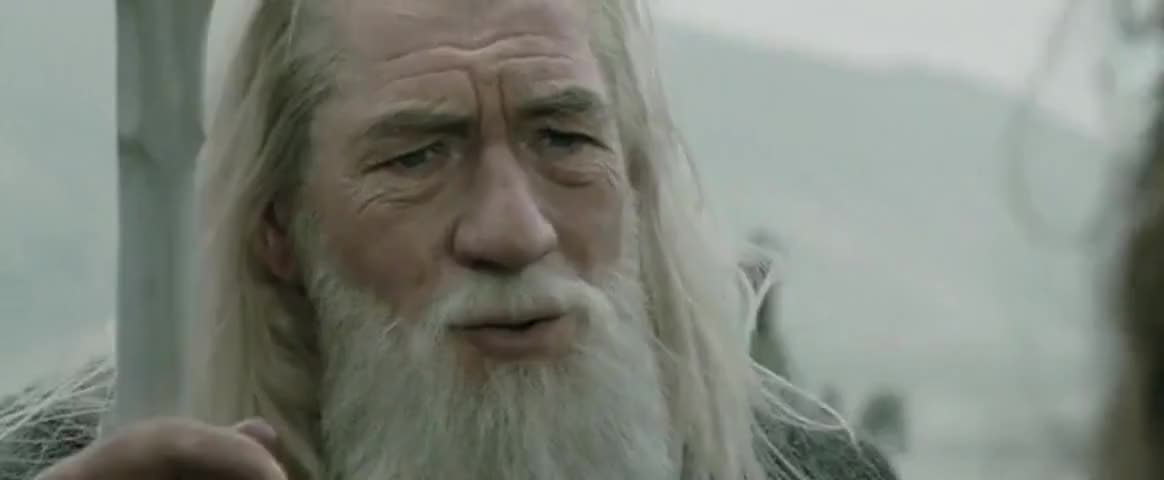 |
| But, of course, you wouldn't part an old man from his walking stick. Would you? |
Enough on restrictions. This train of thought led me to the provision of non-encumbering items for two situations. These are not characterful or plot-enhancing, as Manola's (excellent) lists for different classes. They offer a modicum of roleplaying potential, but hopefully allow for unexpected uses of a relatively niche item. Carrying more than one would be unusual, and perhaps even uncomfortable. None are intended to be class-limited.
Firstly, let us consider 'hurry up and wait'. How many occasions will there be when a party of adventurers must wait, despite being largely ready to move on? Everyone's in their armour, with full packs - so no-one is actively relaxing - but still, the cleric needs to finish his prayers, the ranger is covering their tracks, the scholar is translating something on the cave walls. Small, portable amusements and pleasures.
These are situated roughly as categories, rather than specifics. They all sit fairly closely in the pre-modern variety of settings that tend to characterise D&D (et al).
- Dice or knucklebones. Not too ornate; probably not loaded. Will the testing of probabilities confuse oracular predictions?
- Patience cards. Half the size of a regular pack, presumably less fancy, implies you know a few solo games.
- Prayer beads. Simple, easily pocketed. Can also be used to count steps.
- Counters (different designs on each side). Suitable for simple games like Noughts and Crosses or Nine Men's Morris.
- Blindfold. Privacy, easily obtained. A relatively fine piece of cloth.
- Compact musical instrument. A harmonica, a jaw harp, a tin whistle, a music box. Pocket-sized, not necessarily requiring any great talent, not a source of any real social cachet. If you play it and pass round the hat, you get coppers, not silver. Nothing loud enough to signal with, really.
- A lockpick. Only one, and hardly ideal for every lock, but concealable and useful.
- A length of wire. A snare? A garrotte? Wraps neatly round the wrist; may be inside a piece of clothing.
- Trade coin. The coin you never spend. A good weight of precious metal, valuable anywhere they like shiny things. It might even be a blank disc or gemstone.
- Marker stub. A small stick of material suitable for writing or marking most surfaces; chalk or wax pencil are possibilities.
- Treated handkerchief. Do not confuse with regular handkerchief. This piece of cloth has been treated so that you can breathe through it in foul air or poison gas. It can be moistened to create a seal of sorts over nose and mouth. It smells unpleasant.
- Pocket mirror. A little larger than one square inch. Useful for signals, peering round corners and minor grooming.
Friday, 3 September 2021
The Rest of All Possible Worlds: Palaces of Pavaisse
When people talk about Pavaisse, they aren't talking about Pavaisse. Even when Pavaissians talk about Pavaisse, they aren't talking about Pavaisse.
They aren't talking about the peaks and mines of Joachimsland, and narrow towns and tall houses of its people. Nor are they talking about the mountain-fenced plains of Arpadhia and the horses it rears for the Imperial cavalry. There are people that write about these places, but few people go to them.
They aren't talking about the long river valleys of Dordonneland, where the vines band the hillsides and the proud back-country folk gather in high-set villages. They aren't talking about Roqueport, the sole Pavaissian harbour for transoceanic ships. All sorts of strange ideas brew there. Not quite Pavaisse at all.
They aren't talking about Loughdainne, as old a city as any in Pavaisse. Profitably set at the junction of two rivers, it has long been a centre for commerce: it is the grand ornament of Celzia, and well knows it.
Perhaps they are talking of Ile-de-Szouche. But Ile-de-Szouche is so often a funnel for great gold-girdled Purlitz, capital of Pavaisse. What is in Purlitz? Law courts, Counting-houses, Hostelries, Markets, Drapers, Tailors, Cooks, Vintners, Booksellers, Parks, Riding-schools, Fencing-instructors, Colleges, Poets, Attempted Poets, Salons, Ballrooms, Courtyards, Palaces - in short, all those thing that a man of good taste could want, as well as a few things that probably fall outside the bounds of good taste as well.
One thing that is also generally in or about - or, possibly, above - Purlitz is the presence of the Emperor. Clovis X has been Emperor for most of his life, but did not always have an opportunity to demonstrate the fact. He succeeded his uncle, Boniface II at the age of three. Boniface II was a zealous devotee of the School of Malicarn; accordingly Grand Magister Remigian was named Chancellor and regent alongside Clovis's mother, Beatrice Von Dottore.
The Honoured Magister has conveyed his spirit to the hereafter, lifted up by the Words of Procophon; his influence over the young Clovis and his schemes in the name of Pavaisse have long ceased. The age of the Imperial Mother has brought with it quietude; she may enjoy her old age in the gardens of Ile-de-Szouche - and it looks like that's exactly what she will be doing.
Clovis X has entered his fourth decade. The Schoolmen of Malicarn no longer enter his privy circles, though they remain frequent at court. A thousand cares and amusements offer themselves to him - the reform of the currency, the disputes of courtiers, the malice of Dukes, the ceremonies that exhibit and enhance Imperial splendour, the balance of trade, proposals for foreign intrigues, designs for new uniforms, the armies of the Sublime Prince in the South and East, masques, dances, portraits, odes, plays in verse, romances, Romances, hunting, cards, dice, discoveries, tales and gifts from far-off lands - and the requests and concerns of all those who would share in these labours and pleasures.
With so much of the world spiralling into gold-girdled Purlitz, perhaps even here you will not find a certain idea that is Pavaisse.
***
 |
| There's probably a few of these in Purlitz. |
- Mask-maker /// Pasteboard, Brow pads, Glass discs, Two masks [Roll 1d6 - 1. Patrician 2. Matron 3. Wild beast 4. Malevolent ghost 5. Martial visor 6. Absolute blank], Perpetual knowing little smile (-1 to CHA unless wearing one of your own creations)
- Imperial Fusilier [Grand Magister's Retainer] /// Elegant sword, Colourful tabard: [Blue and gold with Imperial bees] [Red, silver and charcoal with Beatific flame], Wide-brimmed hat, Fusil (curiously underused), Foolish rivalry.
- Arpadhian Horseman /// Fur-trimmed Pelisse (protects against cold, elegant), Sabre, Sabretache, Ornate saddle, Horse (instructed in an obscure dialect).
- Chairman /// Pole with comfortable grips, Tough shoulder-straps, Overshoes (protects agianst street muck and other under-foot hazards), Ornate uniform with padded shoulders, Silent gnawing grudge against the man who gets to go in front.
- Artist's illuminator /// Folding screen, Book of carefully graded light spells, Translucent coloured panels, Pale sun-reflecting clothing (resists sun), Irregular tan.
- Man of letters /// Portfolio, Five different pamphlets*, Two books, One banned book in plain wrapper, Quire of paper, Quills, Bottle of Ink.
- Gambler /// Two packs of playing cards (unmarked), One pack of playing cards (marked), Three sets of dice, Baize cloth (green), Twelve gaming-tokens (mother-of-pearl), Wide flat reflective snuff-box, Large cuffs.
- Topiarist /// Stepladder, Pruning shears, Thorn-resistant jacket, 10' of Garden twine.
- Courtier /// Sinecure, Court Dress, Comfortable shoes (for long ceremonies), Wealth of delicately-expressed rumour, Vial of scent, Concealed pillbox with emergency purgatives and restoratives.
- Concierge /// Elegant but unobtrusive suit of clothes, Master key, Corkscrew, Four bottles wine, 1d8 Notes, Calling-cards and Billet-doux (one of them your own).
* (Roll 1d4 for tone; 1 - Comic, 2 - Poetic, 3 - Trenchant, 4 - Bawdy. You may decide on content or genre yourself - IE Bawdy Satire, Comic Romance, Poetic Editorial, Trenchant Travelogue, Bawdy Tragedy**, Trenchant Open Letter, Comic Verse, Trenchant Songs, &c)
** Titus Andronicus, I suppose. Or perhaps a bit like Thackeray's Luck of Barry Lyndon.
Saturday, 28 August 2021
Mariners of Malmery - and The Rest of All Possible Worlds
After vast Tsymric and bustling Datravia - we turn to Malmery.
This is the part of a setting I am now referring to as The Rest of All Possible Worlds, with the tag or strap White-Hot Sparks from the Crucible of the Enlightenment. The principle of interesting, varied equipment lists full of alternatives to leather remains a characteristic, but I intend the spirit of The Rest of All Possible Worlds to be about a continent (or continent-like culture grouping) on the verge of a magical Enlightenment - that is, an Enlightenment in the 18th century vein.
Speak then, of Malmery. Of wind-swept isles and rugged sea-rovers - of peaceable glades and quiet inlets. Of merchants who smile at pirates and pirates who smile at merchants. Of rich seams and swift waterways. Of choleric Earls and vigilant elders.
Malmery is the greatest of a string of islands in the western ocean fringes; there is nothing beyond them until you reach the Buccaneers' Archipelago or Bronzemount Free State in the west. Malmery gave its name to the island chain as a whole, not that some of those inside Malmery would be swift to recognise the fact.
Malmery itself is large enough to be divided into High and Low Malmery. The largest ports and widest fields are in Low Malmery, facing the mainland; the highest peaks and the old capital face the ocean. Trade is said to roll downhill.
Knit together by the traffic of sailors, the other parts of Malmery shuttle in and out of the orbit of the Crown and Capital on an almost seasonal basis. The Malmeric appellate courts close and open almost with the tides. The nearest Earldom may be granite-cliffed Nhalark, north-most trade hub. After that, the lush pastures and neat townships of Glengallow.
Further north than Nhalark would be the low island of Laldiel - which has a reputation as a mere floating moor, anchored by one brief belt of hills. Western-most we meet the limestone flats of rainswept Tyrconoway. Turning south, you will finally find the sunny, ore-rich Cerq and the long scattered curve of the Cerquae Isles.*
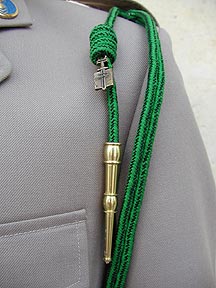
It is as true to say that every Malmeran is a sailor as it is to say that every Prizelander is a merchant. Which is to say, it is a lie, albeit a revealing one. Traditional Malmeric dress contributes to this - a Malmeran sailor would wear a length of rope on their person, even if they had plenty of other rope on their ship. In time it came about that a civilian mariner would wear a loop about the shoulder, from which a marlinspike could dangle; a fighting sailor would wear a longer, baldric like body-rope from which a sword or boarding axe could hang.
This became known as the 'cordon' to distinguish it from other ropes or lines. Eventually, the practice spread to those who were not sailors, often carrying a flat pouch (sometimes called a musette) or working knife - and it became smart to have a clean, neat rope for 'Sunday' best. A gentleman was assumed to be capable of bearing arms, and thus would wear the long rope even if they had never taken up a military career. Even wealthy modernisers and followers of foreign fashions will have a cordon somewhere.
 |
| Thanks, Wikimedia. |
Naturally, in scattered Malmery, there were local and familial variations. Rope or cord, which knots, the presence or absence of aglets, material of rope, colour of rope, which shoulder the rope hung on....you may be sure that in the present, a certain form of cordon has come into being with a full set of etiquettes attached to it. Dress beneath the cordon is not so standardised, but generally will have appropriate loops and pads to support and present the cordon.
 |
| There is a distinction between Aiguillettes, Forragère and Lanyards, but it is scarcely certain a Malmeran would recognise them. |
This process has been aided by a comparative lack of cattle and tanneries in Malmery - perhaps as a result of the terrain, perhaps as a result of plague. In addition to the cordon, therefore, a Malmeran will stereotypically have poor shoes: hardwearing hobnailed sandals or moccasin-like half-boots.
To continue on food-ways: fish, as you may expect is widely eaten in Malmeric cuisine. Cider is more readily available than wine, and to the traditionalist, is more prized. Oats and buckwheat grow more readily in Malmery than wheat. Beefeater, incidentally, is not a phrase that would convey a sense of bucolic plenty in Malmery - rather, it might convey silver-spoon privilege.
Malmery has lately endorsed theory and praxis of the Majestic Vision contrary to the continental schools. This, coupled with a few coinciding wars, has emphasised further the distance between Malmery and the mainland. Commerce raiding and prize-taking was preferred method of Malmeric campaigning, for no towns or forts could be reliably held on the mainland. Further internal disputes and civil wars have furnished a diaspora of Melmerans who supported the fallen Ascendancy serving as mercenaries, military advisors and privateers across the continent.
Thus, in the popular drama of overseas the Malmeran of low farce is a bearded ruffian in strange clothes, obsessed by shoes and knowing little of food beyond the dish of herring fried in oatmeal. The Malmeran of comedy is a good-hearted swaggering bluff rustic (often the friend or servant of the male lead); the Malmeran of romance is a wild, dashing sea-captain willing to seize what he sets his heart upon; the Malmeran of tragedy is a stern, masterful man, courageous and abstemious though reckless and unsocial.
***
- Sailmaker /// Thick needles, Reel of heavy waxed thread, Sailmaker's palm, Canvas Offcuts (one fitted to wear as a waterproof cloak).
- Returned Mercenary /// Fusil, Powder and Shot, Large well-made well-worn leather boots, Fascine knife, Commemorative medal depicting a recently-defeated Prince. Optional: [Hair cut and dressed in the Continental Style: +1 CHA in right conditions, lasts 1d3 months.]
- Tin Miner /// Pick, Auger, Stiff hat with candle-stubs, Thick-crusted pasty, Ease of movement in low-light conditions.
- Fishmonger /// Several filleting knives and sharpening stone, Robust apron, Heavily stained basket, Nosegay (protects against foul air, two uses).
- Privateer /// Basket-hilted cutlass, 1d3+1 flags, Letter of Marque (in robust pouch), Plundered commodity (spices, tea, tobacco, &c).
- Student Advocate /// Sober robes (second-hand), Bundle of legal briefs, Nightwatchman who owes you a favour, Tickets to an Oratorio, Ring that looks like a ruby.
- Mage Navigator /// Telescope, Enchanted automatic log-line (respools at will, counts with bell-chimes the number of knots), Book of tide-tables (incomplete), Sounding line.
- Thane /// Bottle buckwheat eau-de-vie, Outdated large-hilted sword, Brightly coloured bonnet with distinctive hackle, Elaborate clan-colours cordon.
- Island Shepherd /// Crook, Long axe-blade (attach to crook to make a lochaber), Warm woollen coat (works even when damp), Shears, Horn box of snuff.
- Wizarding Matross /// Witch-fire linstock, Sympathetic bearings in reinforced glass tube (can be used to subtly change motion of projectile), Set of ballistic tables, Windsock.
*Some sentimental cartographers take this to be in the shape of a wing.
Sunday, 7 March 2021
Tsoldiers of Tsymric
Returning to the project of a magic-Enlightenment setting, as started here, with reference to the Majestic Vision. The same emphasis is on interesting and characterful equipment lists, plentiful in their alternatives to Light Armour. So then, let us away to....
Tsymric: easterly Tsymric, vast Tsymric, wealthy Tsymric, cold Tsymric, Royal Tsymric, primitive Tsymric.
Of the Diverse Realms and Kingdoms subscribing to the Majestic Vision, this is the most distant. They have little knowledge of classical Latonic, and even their alphabet makes use of several obsolete letters. But still Tsymric is counted fortunate among the nations, new in its wealth and strength. In the last century under King Filip IV, the principalities of the east were knit together under one ruler - by his personal union, by sacred pacts, by force of arms - that all Tsymric might prosper and rejoice.
But how many in this wide arc of lands consider themselves truly Tsymrikane? Perhaps Tompordy, under Filip IV to see the city of Tompord rise to preeminence as capital. Perhaps the old heartland of Hentzay and its acres of rich farmland. Certainly the western shores of Mszhinksy where westward-gazing Caspianstadt rises from the delta.
This could not be said of those who dwell in the lakes and pine forests of northerly Suecomark. Neither does Choroff, clasped by the warm shadow of the southern mountains. Still less so the dense forests and chilly, fragrant, ankle-lacerating garrigue plains of Myrchonog, whose people speak a dialect obscure even by Tsymrikane standards.
Still, the several courts and assemblies of these lands are combined in the King's Joint Chancellery. So known is the Joint Chancellery that it is increasingly referred to in everyday speech as the Jointe. Tsymrikane political slang refers to both supporters and officials of the Chancellery as Jointers or Joiners. (A specialist woodworker can, of course, become a Joiner joiner). But the old Grandees and Dukes look poorly on the ebbing of their power, even as the Academicians of the Royal Schools begin to pen treatises on the benefits of autocracy.
And beyond Myrchonog? The mountains there were once the wall of the east. Utterly impassable - at least for men in any number. But then magesight and blasting powder carved a road through the rock, sending explorers and soldiers through, to subjugate the Terrace-Cities of the native Qacenoit and to send mine-shafts deep into the mountains. Gold and silver goes back to Tompord via the swift rivers of Myrchonog; newly minted Governors return, hungry for advancement and reward.
Transmontane Tsymric has seen the toppling of the temples of the Crag-God and Chamois-God and great wealth for some in Tsymric, being the envy of those who hear of it. But those who speak so know little of the challenges of governance faced in this new land or the shame and struggles of those who live there.
Among other things, however, Tobacco has come over the mountains, and is being grown in Choroff plantations.
***
How does the below intersect with a similar set of equipment lists from Datravia? Well, both Tsymric and the Prizelands have their ports. Even if some of the below are set up as having some characteristics as being particularly relevant to their homeland, a wide mix of the below is hopefully possible in Datresse or Caspianstadt.
***
 |
| Thank you, Wikipedia. |
- Royal Dimarchi /// Musket, Bardiche, Military Greatcoat (with cartridge-pouches), Optional: [Long beard, Willingness to interfere in dynastic struggles],
- Overseer of the Faithful /// Wide-brimmed hat, travelling vestments, Pectoral icon, Brace pistols and four blessed silver bullets, Extensive remit.
- Tobacconist /// Selection of clay pipes, Delicate scales, Thin knives, Caddy (many compartments), Lightly enchanted fire-striker.
- Alpine Expeditionary /// Close-fitting thick, warm clothing (as Leather), Iron-shod alpenstock (can double as gun-rest), 50' rope, Iron spikes, Carbine, Falchion.
- River boatman /// Canvas jack (resists water), 50' rope, Hauling harness, Block and tackle, Jackknife, Fisherman's priest, Resigned expression.
- Transmontane Native Scout /// Spear, Bolas, Quilted Armour (Warm and breathable), Bone crampons, Medicinal herbs, Concealed idol.
- Hidalgo /// Small-sword, Badge of obscure knightly order, Bottle of fortified wine, Gilt breastplate and bracers, Chose one: [Trimmed beard, Razor and Shaving basin] [Small mirror and Brief mantilla]
- Myrchonog Plainsman /// Tough, knee-length boots, Billhook, Sled, Windbreak, Bundle of fragrant plants.
- Engineering Student /// Sturdy apron, Hammer, Yardstick, Plumb-line, Spirit level, Dividers, Callipers, Book of tables, Pocket watch.
- Mage Prospector /// Thaumic touchstone (can Detect Magic, can't detect Curses/Types of Magic), Dowsing wand, Mapping gear, Stout boots, Auger.
Tsymric is something like a blend of 16th Century Spain and 17th century Russia.
I dimly recall one of the Young Kingdoms in Moorcock's Elric books being named Tsymric. That's not an inspiration.
Monday, 8 February 2021
Motorcycle Leathers of the United Provinces
Some recent reading included Mythago Wood (mentioned on here before). One detail caught my eye: Harry Keaton, on entering Ryhope Wood brings with him motorcycle leathers - noted to be quite resilient to the cold, and generally tough. Better, certainly, than a cloak. I wouldn't like to say if this meant that 1940s motorcycle gear was of a similar resilience to leather armour, but it certainly set my mind in a certain direction.
Of equal use to the adventurer as armour are clothes that protect against the weather. Indeed, the notion of travelling in full armour at all times is a fairly dismal one. It works in the confines of the dungeon (a limited space, designed to be traversed), but perhaps not in the wilderness. It is familiar to sacrifice freedom of movement for protection: it should be no less strange to willingly encumber yourself with bulky clothes or a tent. Indeed, a modern-day six-person canvas tent with poles and pegs weighs 33 kilograms - and it does not pack down very compactly.
Hence, I should like to put together equipment lists that include gear meant to keep out the cold, or the damp, or heat. Some of Joseph Manola's class equipment lists for Against the Wicked City do this very well. My recent trip to the Scum Quarter has helped inspire this; my references there to Electric Bastionland and Gus L's Fallen Empire are once again relevant.
Another point before I start; I have come to the decision that equipment lists do not list everything. This is perhaps no surprise to you - equipment lists have rarely explicitly listed clothing - and never in such detail as to include everything. I take it that an adventurer has a full set of largely intact clothing, or a pocket knife to cut their meat, or a comb about them. 5E sidesteps this by providing a ready-packed Explorer's Kit on the items list with mess kit and tinderbox and the like - I would rather leave such a step up to the GM. Rules of thumb are useful here: we imagine that the player can readily carry a pocketknife and cut their meat or sharpen a pen, but they can't butcher a hog without having a cleaver. It might be that the player can trim or tie back their hair and brush most of the mud from the hem of their cloak - but washing the cloak and getting a haircut requires a laundry and a barber.
There must be limits to this; needle and thread, yes, but not enough to make a tapestry. Enough vessels to cook a simple meal for the party, but no more. Anyway, that's probably enough of this for the time being. Time to put some of the ideas above into practice.
***
 |
| The Leo Hollandicus of Claes Janszoon Visscher |
The Thrice-Blessed, Benevolent and Victorious Republic of Datravia, known formerly and vulgarly as the Prizelands is a place of known, since the War of Liberation approximately a century and a half ago, for enviable modesty on the part of its inhabitants. Other than in some few particulars, their nature is peaceable, if not passive – if it is correct to draw that distinction. However, such matters as touch on their privileges, on the privileges of their Parliamentary Representatives and on the ancient laws of the Isle and City of Datresse, they are as humourless, passionate and inconsolable as any slighted courtier of the Imperial Household in gold-girdled Purlitz who has discovered a speck of dust on his pelisse.
The place is Datravia, vulgarly known as the Prizelands. The time is the time of my mooted Early Modern setting, clumsily referred to as White-Hot Sparks from the Crucible of the Enlightenment. The faith and cultural iconography refer to the Majestic Vision. The Temple and Church generator could fit here; the list of Religious Processions probably not.
The obvious inspiration is Golden Age of the Netherlands, though a significant other influence would be pre-Modern European city-state republics. There's probably a bit of A Tale of Two Cities and The Age of Innocence in here as well.
- Coach Guard /// Heavy lined greatcoat (as leather, resistant to cold and rain), Blunderbuss, Dark lantern, Flask of genever.
- Parliamentary Lictor /// Green sash with ivy motif, Concealing robes, Ceremonial sickle-staff, Unceremonious pistol, Archaic privileges.
- Dockyards Pugilist /// Hand wraps, hand wraps with concealed weights, Smelling salts, Jar of soothing unguent, Miraculously unbroken nose (+1 to CHA until you take a blow to the face).
- Coffee vendor /// Portable brazier (can be carried on back, requires high-energy fuel), Heatproof jacket (as leather, resists flame), Coffee grinder & sufficient beans for two pots, Stale pastries, Wealth of gossip (start with 1d6 rumours).
- Burgher of the Isle /// Wide-brimmed hat and lacy cuffs, Pocket watch, Box of calling cards, Officer's Gorget of a Shooter's Guild, Carbine of same (never fired outside the range).

The Shooting Company of Frans Banning Cocq and Willem van Ruytenburch
being the most famous of shooter's guilds. - Pamphleteer /// Bundle pamphlets (Roll 1d4; 1 - Comic, 2 - Poetic, 3 - Trenchant, 4 - Bawdy), Waistcoat with large flat hidden pocket, Bottle ink, Throat lozenges, Demagogue's Licence (Recently expired).
- Lensgrinder /// One finished lens, Two glass blanks, Lapping powder, Caddy half full of restorative tea, Absence of fingerprints.
- Supercargo /// Oilskin wrap (resists rain, seawater), Ledger in waterproof carrying case, Brace of pistols with exotic engravings, Tin of foreign sweetmeats.
- Hot-house botanist /// Secateurs, Wide-brimmed hat and long loose coat (resists sun), Selection of Interesting Plant Cuttings*, Out-of-season bouquet.
- Ley-line surveyor /// Witchsight theodolite, Tripod-staff, Rune-engraved measuring chain, Paper, Charcoal, Pen and Ink.


*Said cuttings may purely be of academic interest, or ornamental value - but if you wish them to have a more interesting purpose, Appendices A-C of Yoon-Suin will be of use. (The plants won't necessarily be Tea or Opium, but they could have similar effects to those detailed.).
I was largely thinking of the Wicked City rules for firearms - though I have an appreciation for the awkward Lamentations of the Flame Princess matchlocks.
Some of the above was composed with the aid of this website, largely focused on Delft. I'm not sure that it is utterly sound on every point, but it is very good at showing its sources.
Subscribe to:
Posts (Atom)