Showing posts with label Television. Show all posts

Friday, 3 March 2023

Diplomacy, Protagonists, Macbeth, Tully and Caithness

A recent post at Monsters and Manuals set my mind going. I don't watch a great deal of television and would likely endorse the moral of the story that no-one reaches up from their deathbed to say 'I wish I'd watched more TV'. But more to the point: I grew up with - possibly even to a greater degree than television - games (and books more than either, but this was a jumping-off point). The early 2000s had their share of real-time strategy games, but I suspect that Age of Empires (and sequels/derivatives) loomed highest in my mind. There's two things that these do or did to my developing preferences and understanding of (faintly realist) fiction (in a variety of media). The notion of multiple players who may succeed and the process of organisation and resource management. 

Firstly, there is the notion that anyone can win. However advantageous it may be to start as the Julii in Rome: Total War the notion of an entirely Carthaginian Balkans or a Seleucid Iberia is not implausible. I've not played the Paradox grand strategy games (Europa Universalis, Victoria, Hearts of Iron) but they at least allow this to an even greater degree. There is not always a protagonist, no-one chosen for victory. The mind goes to the board game Diplomacy, with its particularly obvious balance of forces: every player starts with three armies or fleets - except Russia, whose size is as much hindrance as help. 

Hence, I suppose, the light scorn I thrust in the direction of the Song of Ice and Fire Tabletop Miniatures Game here (the paragraph beginning 'Even if...'). Eight nominal or near equals on Westeros: the notion that Tully interests are permanently shackled to Stark is irritating. You have to cultivate and maintain allies - you don't just plug their troops into your command structure and keep fighting. Am I really so incensed that I can't bring about GLORIOUS TULLY HEGEMONY? 

I take it this has activated some neurones.
(Found here, the best and clearest Westeros Diplomacy map I found online.)


Which brings one back round to television: I watched Game of Thrones for long enough to A) be aware of its flaws and B) Give up on it. Fun while at Uni and able to chat it over with housemates, but not worth revisiting. The finale has been dissected at length in a variety of forms, but a recurring theme is that it got to attached to big showy character moments, and neglected the underlying logic and social structures of its setting (EG, people writing here, here and here). Teleporting armies, curiously obedient subordinates, religion with no grip on the hearts of the faithful. 

Time is limited in an episode of television. Special effects are limited. Books have the room to put this stuff in; games demand it, as the price of moving an army north is part of the challenge. The cost of logistics, even if only sketched in, can be displayed. There are cheap jokes about all the walking in The Lord of the Rings, but footslogging is a reality of campaigning! 

More to the point, the treatment of non-protagonists. You're either the commander, the champion, or nobody. A butt of jokes, a burden. Costuming reinforces this: I accept that the Freys have an unenviable family resemblance, that their patriarch is a disagreeable fellow, that the rest of the nobility don't much care for them. But they are wealthy and use their leverage to the best of their ability: they should be near as armoured and colourful as any lord rather than dressing in leather the colour of mud and wearing unflattering coifs. They're nouveau riche, not swamp-dwellers - and 'Betrayed by Unappealing but Vital Ally' is more interesting than 'Stabbed in the back by a bunch of Obviously Shifty Bastards'.

Specifics aside, if you've opened a broadsheet's Arts and Culture section in the last decade, you've probably read something about the importance of who we make protagonists, or representation, or similar questions. It's the sort of idea discussed here by Palmer and Walton, who extend it to the question of protagonists and chart the decline of Tapestry books (do read that link!). It's something I've speculated on before, and Noisms moots in the post that started this all off 'it is almost as though [Television] were designed to destroy our capacity to develop a fully-fledged theory of mind.' Terrifying if true. 

Well, that's all wonderful. But do I want a literal 'World without Extras' in my fiction? I approvingly cited Diplomacy above, but only the great powers get a say there (and depending on how many can make it for a game, we might kick Italy out of that club. Guess the Risorgimento went down in flames!). I still have to acknowledge that there are limits to the size of a novel or the processing power of software. 

My mind goes to Macbeth. I have no particular objections to Macbeth and, frankly, it would mean very little indeed if I did. Macbeth starts the play as Thane of Glamis, he becomes Thane of Cawdor also. Macduff is Thane of Fife. Banquo is clearly a peer of Macbeth: I don't believe he is referred to as Thane in the text of the play, but both Holinshed's Chronicles (Volume 2 of the 1577 Edition) and Hector Boece's earlier History of Scotland (Book Twelve) a source for Holinshed, refer to him as Thane of Lochaber. The Thanes of Angus, Ross, Caithness, Mentieth and Lennox appear, with or without lines. 

Do I really suppose that Macduff would as willingly usurp Duncan I as Macbeth? Well, that's a question for the philosophers and theologians. Who, other than Orson Welles, knows what evil lurks in the hearts of men? Do I want a play which plausibly might end with GLORIOUS CAITHNESS HEGEMONY?
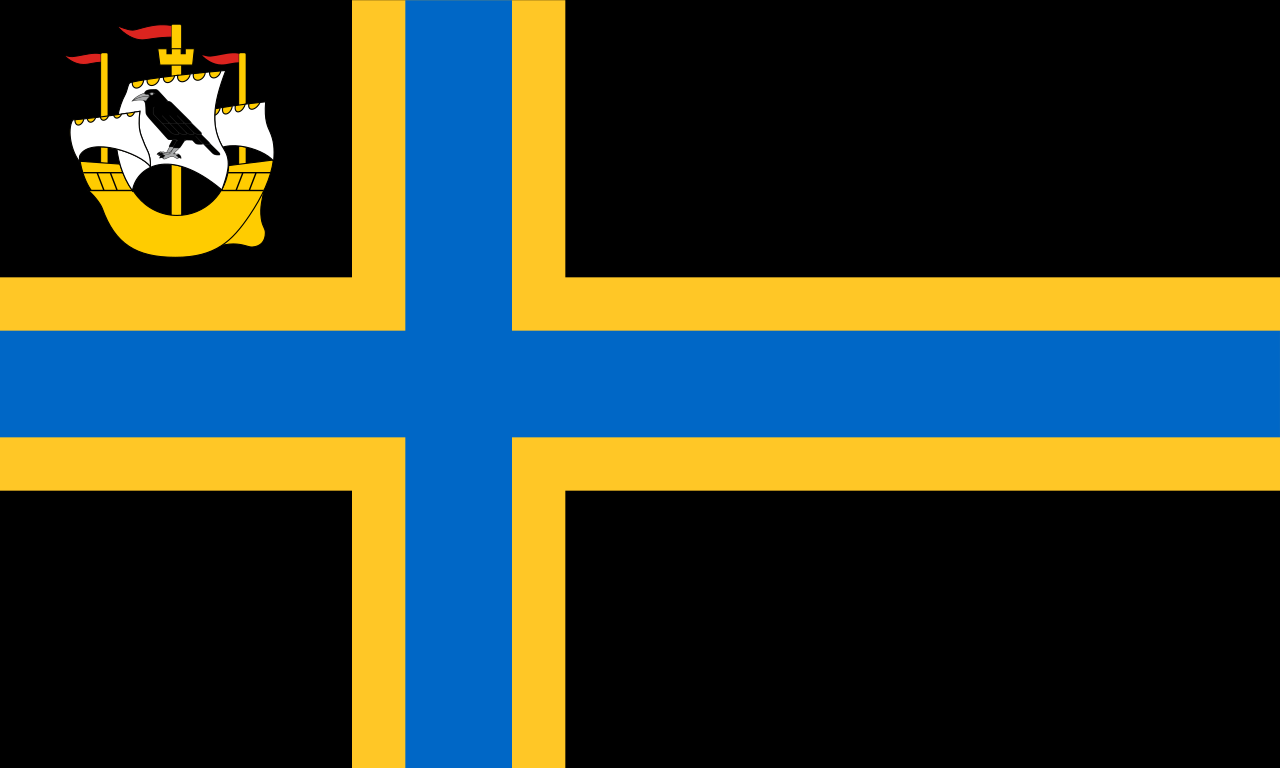
Flag of Caithness.svg
They do have a pretty cool flag these days.

I know full well that that wouldn't be Macbeth. But I would hope that the Thane of Glamis is dressed and staged in a comparable fashion to his peers. The rest of Scotland's nobility are not yet cowed by him*, driven into embarrassing spectacles - and useful or useless, you can't ignore Drunken Incompetent Regional Magnates. I'm leaving out much here - the world view of Shakespeare's England, to say the least. 

So, Macbeth may not be something that needs the above 'Diplomacy-perspective.' But there's room in my library for Portraits and Tapestries alike. The possibility that society will only start making (or praising, or honouring, or writing about, or otherwise considering to the exclusion of others) is a little unnerving. Compare this extended basketball analogy.

Perhaps we need some sort of Rawlsian Original Position. You might end up as any of these characters, so you should write something that at least considers any of these characters. Of course, the veil of ignorance doesn't always work quite as intended


*You thought that The Death of Stalin invented tense dinners of horseplay with moustachioed Dictators?


2026: A new copy was required....

Sunday, 21 April 2019

Entertaining a Notion: The Lannisters are Spaniards

Websites and the mouths of colleagues are abuzz with the latest and last series of HBOs adaption of A Song of Ice and Fire, Game of Thrones. Whilst I am familiar with the series, my interest waned sometime ago; this is a pungent and apt criticism. Besides, I do not watch much in the way of television these days.

Anyway, I might as well share this with you as a pet theory. It is of little significance really, but may provoke thought.

It is commonly known that A Song of Ice and Fire draws upon Medieval European history for much of its inspiration: the Wars of the Roses are frequently mentioned. This has spawned various articles, images, &c mapping on bit of Westeros or another to Europe - or vice versa.

Some of these have more worth than others, but I like to see folk thinking about history and how it can be applied to a certain kind of narrative. However, I'd tend to quibble with at least one of their interpretations. Dorne certainly may be thought of as Spanish: we even have authorial fiat on this. However, I should say that it rather represents a Moorish Spain - with a different faith, different mores and somewhat distinct physical features.

If we can map most of Westeros to Western Europe, what of the rest of the Iberian Peninsula? Some can be put in the Dornish Marches. But I'd like to make a case that The Westerlands, home of House Lannister can be thought of as having similarities with Northern Spain.

The mountainous terrain is perhaps one example of this - though that alone is scarcely enough. The long, ocean-facing coast line compares well to the Atlantic, with a sort of Bay of Biscay to the south. Its inhabitants are closer to the capital and court of Westeros than other regions (Dorne, the North and the Iron Islands are somewhat peripheral). The most famous castle of the region is Casterly Rock - which is almost a phonetic reading of Castille. The Lannisters have as their arms the lion: not unique to Spain, but pointing nicely to the Kingdom of Leon. The insistence on wealth and gold maps nicely onto an Early Modern Spain, reaping the rewards of Europe's discovery of the Americas.

[The notion that A Song of Ice and Fire speaks as often to the Early Modern as to the Medieval is not new; however, given Martin was willing to put a Late Medieval Venice equivalent and Pseudo-Babylon on the same continent (and stick down the Colossus of Rhodes at the entrance of the lagoon), linking it all to one time period is a fools errand.]

Said trade might also correspond nicely to the Kingdom of Aragon. We have at least one Westerlands name straight out of Spain: Jaime. Wikipedia suggests that this is simply in the style of distorted real world names, as 'Eddard' for Edward; perhaps, but I mention it anyway. House Westerling, a Westerlands house of narrative relevance bears several sea-shells on its coat of arms - which feels rather like a reference to Santiago de Compostela with its Pilgrim trail and sea-shell badge.

Is all this proof? Barely. But we construct parts of our images of fictional worlds from real places. Here is a little material to perhaps make those images richer.

Tuesday, 11 July 2017

What do you wear: a case study

My recent posts have all been of a piece, but I didn't have anything in mind regarding clothing until something crossed my mind. Therefore, I shall be talking about Star Trek.

I came late to Star Trek, and therefore have never quite taken on-board all of the show-specific tropes it invokes. The nature of the original show colours everything else; the odd mix of relatively hard science fiction and woosh-bang-kapow pulp space opera never quite sat right: why have a vessel that is simultaneously a main battleship, floating embassy and exploratory mission - with a large number of civilians into the bargain?  It would almost be like getting Flash Gordon to explore the cylinder from Rendezvous with Rama. Well, it does hark back to Captain Cook and other naval explorers that had to operate without close instruction. But don't tell me Captain James T. Kirk would be out of his element on Barsoom.

Part of my object, I suppose, was the uniforms; tunics or jumpsuits. I rarely recall seeing space suits festoon with oxygen cylinders or body armour for bouts of combat - "Of course this bicoloured jumpsuit is suitable apparel for a commando raid onto a giant spaceship full of deadly cyborgs." (Perhaps body armour is useless against future weaponry  - but the steel helmet of the Second World War was equally useless against a direct hit; it still had a purpose).

But the all these objections aside, there is one thing this does well. It emphasizes the nature of life in the semi-utopia that is the Federation. To whit, the jumpsuits of The Next Generation  lack pockets: clearly not a society that needs pocket handkerchiefs or small change. This is presumably because it has done away with the common cold and money (I'm not sure which of these is more astounding!).

There's an implication in all this: you do not need to carry anything for yourself, except your communications link with a central authority and whatever that authority thinks you will need to carry in this particular scenario. This is undoubtedly in part because Star Trek is about a (semi-) military organisation - or at least one with a hierarchy. It's perhaps another mark of utopianism that Starfleet personnel don't seem to carry sidearms unless they really have to.

The whole post-scarcity thing is centered around replicators - that seem to be the property or responsibility of communities as a whole, rather than individuals. If we conjure up an image of a libertarian United Federation of Planets...

[A notion that is open to ridicule and parody, but is worthy of taking seriously in this moment. Even if one can imagine something in the vein of 'Ayn Rand's Star Trek' being a throw-away gag in an alternate history novel. If necessary, replace the term libertarian with minarchist or individualistic or whatever seems best to you.]

.....with similar levels of technology, if different ways of applying them and at least some measure of Star Trek's virtue and goodwill. Let us say that everyone gets an education, of sorts (little state interference, not a lack of state support); most importantly -for our purposes - in the use of a replicator; to whit, the tool that can make bread out of stones. So every citizen has one of these - sold at very reasonable rates? - and can therefore make themselves food and shelter, possibly even more in the way of life support (synthesize your own penicillin!).

If there is a market, then, it is for ideas and new information and artwork and recipes. One imagines citizens wondering about in clothes with pockets or webbing full of replicator parts or modular add-ons, as well as the obligatory communicator. Because the nature of this society is what it is, you carry a replicator - in order to merely survive, or in order to exhibit your products or art or similar to society. As in Star Trek proper, the impulse to explore and discover would be strong, as means of gaining wealth and status - creating a degree of frontier culture (a lot easier to replicate into existence your dream home on virgin soil).

I've no idea how sound a civilization this is, or how true it is to Star Trek canon. But it feels a little like a combination of Iain M. Banks's Culture series and Joss Whedon's Firefly. Besides, the notion of wealth being determined by new information, ideas or art seems eminently gameable.