Thursday, 2 April 2026

The Terpsichorean Sodality welcome the Grand Commodore

 The latest post over at Grand Commodore has a great number of Animal Men listed. I read it over, appreciating the Osprey Man and the Musk Ox man, among others.

Then it occurred to me that there was some overlap between the various Avian Animal Men and the Aviscaputs listed in The Terpsichorean Sodality of the Bird People, my entry for the False Machine Dungeon Poem challenge back in February 2021. These were less animalistic - and definitely more English - than HCK's Animal Men (as I even observed at the time!) But there's enough of the bird species used in TSotBP* that overlap with this new post that I feel I'd quite like to fill in the gaps.

Anyway, referring to the list of Sodality Members.

  1. Hoopoe Tietjens.  [Hoopoe]
  2. Picador Vansittart. [Magpie]
  3. Raptora Uexkull.  [Kestrel]
  4. Iolanthe Wrenfield. [Wren]
  5. Lanner Coningsby. [Lanner falcon]
  6. Urgulanilla Guillemot. [Guillemot]
  7. St. John Goldfinch. [Goldfinch]
  8. Clemency Yaffle. [Green woodpecker]
  9. Gymkhana Dabchick. [Dabchick]
  10. Monedulus Alleline. [Jackdaw]
  11. Egret Dalziel. [Great white egret]
  12. Hilarion Ptarmigan. [Ptarmigan]

Magpie Men already exist, as do Wren Men and Kestrel Men. For completeness, here are their entries.

Kestrel man

The animal man attack helicopters; hover and dive
A lot of people like their coats
Discourse tends to be sort of ratchet

Flying (don't need traverse to remain airborne), +d6 Damage when diving at least 15’

***

Magpie man

It’s not that you have to be a thief, it’s that skill and interest have a compelling channelizing effect
You are profoundly intelligent, however intelligence is orthogonal to impulse. Impulse may win out against reason. Desire often wins out against reason
You can sing beautifully; that’s one way to gain coins (them being shiny is less important than reputed)
Or you can do what people will expect you to do
Pica pica
Their mate-attraction is done a little bit more suavemente than most bird men

-1 Str, +3 Int, -3 Wis, +3 Cha, +3 to Bardic performance, Advantage to Pickpocket, Advantage to Lockpicking, Professional Skill: Numismatist (Int)

 ***

Wren man

Songs appeal to dilettantes
Attracted to the caves of the Bat Men and the Cave Swallow men; often serve them as heralds, troubadours, and auxiliaries. Despite enjoying insect man flesh, wren men often serve with antman armies, as well
Small-bird Napolewren complex**

-1 Str, +2 Cha, +2 to Bardic performance
 ***

And on the remainder from TSotBP.


Hoopoe man
Massive crrrrresssssst
Long elegant beak, which seems like it would be a bad idea to be on the wrong end of
Occasionally claims to be the king of the birds; this is amusing to eagles, offensive to swans and an affectation to most others
Probably never going to invent a religion, but pretty good at keeping one going (occasionally, one will turn out to be a particularly magnetic cult leader)

Flying, Animosity: Swan men, Advantage to Intimidate

 ***

Lanner falcon man
Fly best in straight lines, and take a lot of airborne prey - if kestrels are attack helicopters, they are interceptors
Like the savannah, great on a safari
Cooperative hunters, no glory boys here (by Raptors standards)

+2 Str, Flying, Copes well with the heat


***
Guillemot man
Cliff dwellers, highly fertile
Can attack water-dwellers in one-minute dives to surprising depths and swim 30' underwater
Mostly spend their time fishing and ignoring you
Some are black and white, some brown and white. The abstract curves of their patterns have led guillemots to develop a form of folk-art rather like dazzle camouflage 
 
Flying, Diving, -1 Cha  
*** 

Goldfinch man
Small, with red, white and black faces like exaggerated theatrical masks
Excellent singers and quick learners, frequently find a place as an artiste of some kind (sparrows are far more down-to-earth and easier to get on with backstage)
They know how popular they are, and how much the powerful like to keep them around - they are almost always adopting a social persona of some kind  

-1 Str, +2 Cha, +2 Int, +3 to Bardic Performance 

 ***

Green woodpecker man***
Sleek, red-headed. 
Thick beak, thick skull.
Better joiners than lumberjacks; they pair up with Beaver men to corner the woodworking industry. Vertical integration: tree-roots and tree-trunks!
Sounds like they're laughing at you, probably aren't
 
+1 Con, Flying, Affinity: Beaver Men, Can make a d4 attack that ignores light armour or breaks a wooden shield

*** 

Dabchick man
Small, dumpy
Like to live by lakes and other smaller bodies of water
Better in the water than on land, if not quite to penguin levels 
Beautiful chestnut throat and cheeks 
Have a reputation in some circles as being really good harbourmasters and lockkeepers. Have a reputation in other circles as being good smugglers.

-1 Str,  Flying, Advantage to stealth in water


*** 
Jackdaw man
Look faintly clerical and shabby, decent mimic, excellent for spy work in cosmopolitan settings
Social, but not always very talkative
Smaller than Crow men and Raven men, and less of a target for Swan men
A jackdaw man is reputed to have invented the first joke

+1 Cha, Flying, Choose 1 additional language, Suffers no disadvantages in ruins and tunnels

*** 

Great white egret man
Long tall white streak with thin legs and manic eyes. 
Will squint at you like a librarian then puncture you full of holes with a spear-sharp beak
Politely baffled by people who fish for a hobby. Utterly antisocial white fishing
Good with a harpoon, thinks tridents and eelspears are for losers

Flying, d8 beak attack with the reach of a polearm, Animosity: Frog men

*** 

Ptarmigan man
Undergo a personality shift with their winter plumage - from dowdy summer shyness to glacial winter hauteur
Not a frequent flier.
They taste delicious, and they know it.
Not afraid of thunderstorms

+2 Cha in Winter, -2 Cha in Summer 

*** 

I regret not making Urgulanilla Guillemot a Gannet.

I suspect that the Great white egret man would serve as a heron man also.


* Pronounced 'Tsot-Bop', if you must...
** Alas, a missed opportunity to discuss London architecture.
***I'd forgotten that these turned up in the Three Mile Tree.

Tuesday, 31 March 2026

The Cape of Four Pleasances: Nereid Bell Edition

I decided to finally get on and pull The Cape of Four Pleasances into a PDF. You can find it on Itch.io, for free. There's some extra content compared with the original blog post; the only things I've cut are the introductory blog text referring to The Rest of All Possible Worlds and the pictures from Darkest Dungeon illustrating the crossbow/firearms connection.

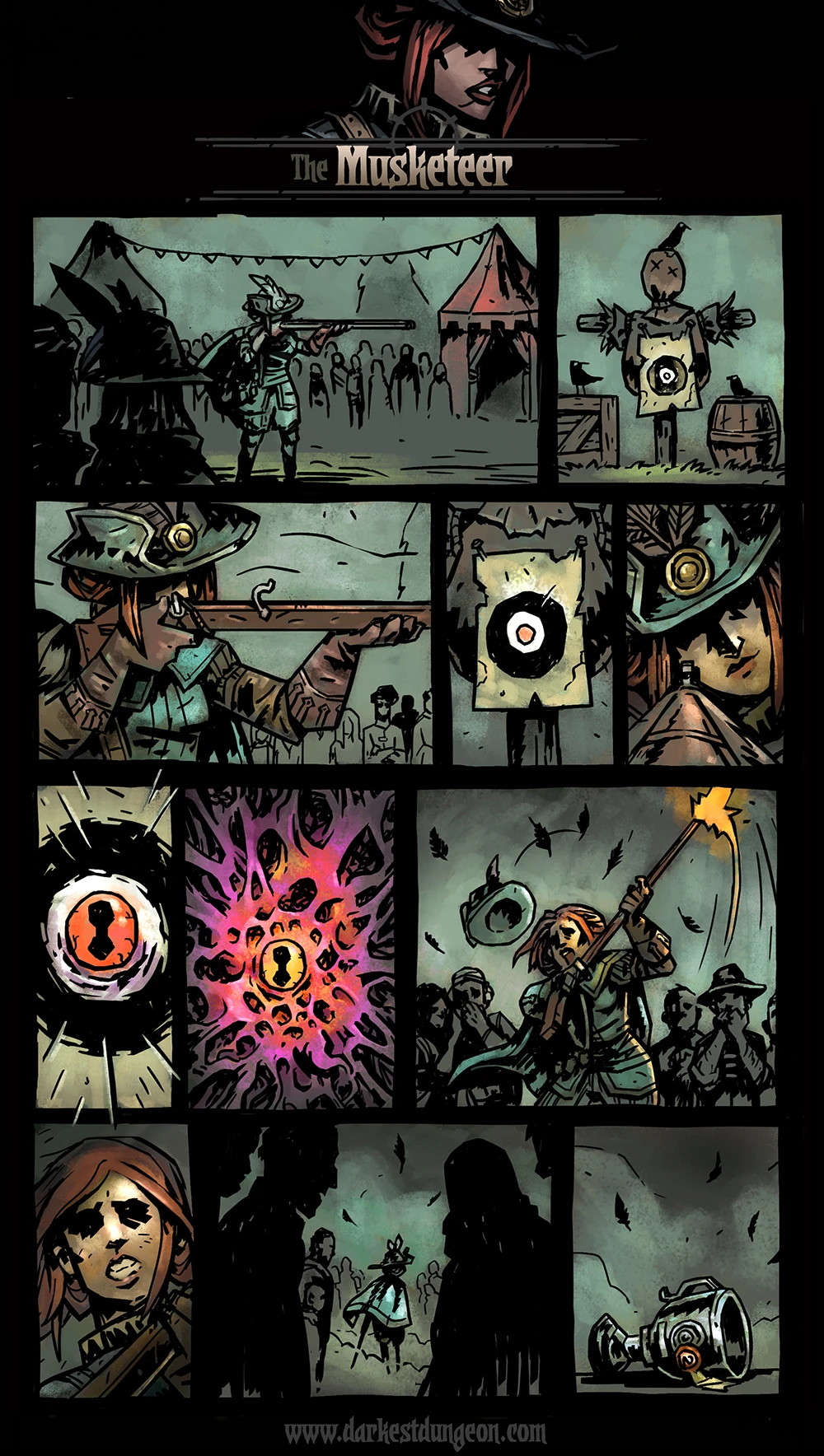
Buy Darkest Dungeon®: The Musketeer - Xbox Store Checker
Musketeer and Arbalestof Darkest Dungeon.
Arbalest - Darkest Dungeon Guide - IGN
Admittedly, they have a somewhat different characterisation.

That aside, all other introductory material is in the PDF - and I may direct you to it here.

Monday, 16 March 2026

Solomon and Saturn: Saxon Sages

I recently discovered the Old English dialogue of Solomon and Saturn. This is, of course, highly relevant to my interests

There are several of these dialogues, either in poetry or prose. They appear back to back in the same manuscript and are largely thought to have been written at the end of the first millennium. Saturn is here a Prince of the Chaldeans, though not without some measure of knowledge. Solomon is still Solomon, but without some of the more oriental aspects with which he is sometimes presented (see Kipling, for instance, aside from the whole business of summoning demons). 

Saturn calls on Solomon, setting him a series of questions, sometimes with a reward. He either trying to get details of the power of the Lord's Prayer, or quizzing him about the state of the life of man, the nature of creation and God's will. In the former he is sceptical and offers a sounding-board for Solomon's long discussions of the power of prayer. In the latter, he becomes a testing, probing presence; not diabolic, but clearing pushing at a few boundaries. 

Here's an example of the text:

SALOMON cwæð:

Þæt gepalmtwigude  Pater Noster
heofnas ontyneð,  halie geblissað,
Metod gemiltsað,  morðor gefilleð
adwæsceð deoflesfyr,  Dryhtnes onæleð.

Solomon said: The palm-twigged Paternoster opens heaven, blesses the holy, makes the Lord mild, fells murder, extinguishes the devil's ire, kindles the Lord's.

The Lord's Prayer is not only potent, but highly decorated: 'Golden is the word of God, studded with gems, it hath silver leaves...'. The letters of it are themselves given magical and specific associations.

prologa prima  ðam is . ᛈ . P. nama;
hafað guðmæcga  gierde lange,
gyldene gade,  ond a ðone gr[im] man feond
swiðmod sweopað;  ond him on swaðe fylgeð
. ᚪ . A . ofermægene  ond hine eac ofslihð.
. ᛏ . T . hine teswað  ond hine on ða tungan sticað,
wræsteð him ðæt woddor  ond him ða wongan brieceð.

prologa  prima,  which  is
named . ᛈ . P.: the warrior has a long staff, with
a golden goad, and brave he ever swipes at the
grim fiend; and in the track . ᚪ . A . pursues him
with mighty power and also strikes him. . ᛏ . T.
injures him and stabs him in the tongue, twists
his throat, and shatters his jaws.

The prose dialogue features a battle where between the devil and the Paternoster where they take on various forms:

Solomon said: The devil first will be in youthfulness, in the likeness of a child, then the Pater Noster will be in the likeness of the Holy Spirit. In the third instance the devil will be in the likeness of a dragon; in the fourth instance the Pater Noster will be in the likeness of an arrow, which is called brahhia dei. In the fifth instance the devil will be in the likeness of darkness; in the sixth instance the Pater Noster will be in light’s likeness. In the seventh instance the devil then will be in the likeness of a wild animal; in the eighth instance the Pater Noster will be in the likeness of a whale that is called Leuiathan.

Saturn even desires to know of the Features of the Paternoster.

Saturnus quoth. But what kind of head hath the Pater Noster?
Salomon quoth. The Pater Noster hath a golden head and silver hair; an although all the waters of the earth should be mingled with a the waters of heaven into one channel, and it should begin to rain them together upon the earth and all its creatures, yet might it stand dry under a single lock of the Pater Noster's hair; and his eyes are twelve thousand times brighter than all the earth, though it be overspread with the brightest lily-blossoms, and the leaf of every blossom should have twelve suns, and every blossom twelve moons, and every individual moon should be twelve thousand times brighter than it was ere Abel's murder.

'The world was young, the mountains green, no stain yet on the moon was seen'?

And in the Pater Noster’s right hand is the likeness of a golden sword, unlike all other weapons; its gleam is clearer and brighter than all the constellations of the heavens, than there are ornaments and fairness of gold and silver in all the earth: and the right edge of the lordly weapon, is milder and more moderate than all the sweetness or the perfumes of the earth; and the left edge of the same weapon, is fiercer and sharper than all [middle-earth], though between its four pinnacles it should be driven full of wild-beasts, and every individual beast should have twelve horns, and every horn twelve tines of iron, and every tine twelve points and every point should be twelve thousand times sharper than an arrow which has been tempered by a hundred and twenty hardeners. 

The assorted hyperbole and vast numbers and shifts of perspective are somewhat psychedelic, even faintly Hindu in a certain light.

Solomon was more famous; however, Saturn, the  bold  strategist, had the keys of certain books in which learning was locked. He wandered through all the lands: the land of India, the East Cossias, the kingdom of the Persians, Palestine, the city of Nineveh, and the North Parthians, the treasure halls of the Medes, the land of Marculf, the kingdom of Saul – where it lies south by Gilboa and north by Gadara – the halls of the Philistines, the fortress of the Cretans, the forest of the Egyptians, the waters of the Midians, the cliffs of Horeb, the kingdom of the Chaldeans, the skills of the Greeks, the race of the Arabians, the learning of Libya, the land of Syria, Bithynia, Bashan, Pamphylia, the border of Porus, Macedonia, Mesopotamia, Cappadocia, Christ’s homeland – Jericho, Galilee, Jerusalem.

Saturn is well-travelled, well-read - but not quite supernatural. He might be associated with gloom and be a fairly melancholy type and ask questions about old age, but isn't the god of old age.

Saturnus cwæð:
Nieht bið wedera ðiestrost,  ned bið wyrda heardost,
sorg bið swarost byrðen,  slæp bið deaðe gelicost.

SALOMON cwæð:
Lytle hwile  leaf beoð grene;
ðonne hie eft fealewiað,  feallað on eorðan,
ond forweorniað,  weorðað to duste.
Swa ðonne gefeallað  ða ðe fyrena ær
lange læstað,  lifiaðhim in mane,
hydað heahgestreon,  healdað georne
on fæstenne  feondum to willan,

Saturn said: Night is the darkest weather, need the hardest of fates, sorrow the most oppressive burden, sleep is most like death.

Solomon said: Leaves are green for a short while, then later they fade, fall on the earth and decay, turn to dust. Just so, then, fall those who earlier persist for a long time in their sins – they live in crime, they hide great treasures, they hold them eagerly in strongholds, to the delight  of  the enemies....

I've been dancing between two translations here, accessible by an academic library: that of Dr Daniel Anlezark and that of John Kemble. You can find the latter here and a third partial for comparison here.

It's not a unique piece of work: one sage setting riddles for another is a familiar enough pattern for Norse legend. But the introduction of Saturn and Solomon as protagonists is noteworthy, though not unique. There's a few interpretations I've come across since encountering this on the shelves a few days ago; that this is a form of catechesis is one. 

But I've not tapped the limits of what's in this poem - for instance, the vast bird, feared by the Philistines (and by Saturn) and called by them Vasa Mortis, due to appear at Doomsday. Anlezark says in his commentary 'the Vasa Mortis passage ranks as one of the most obscure in Old English'. Anyway, there's a greater variety here (if perhaps less focused) than in the tale of St Erkenwald. For your consideration?

Tuesday, 10 March 2026

Frenchmen and Fairies in Space

There are the books I planned to read and the books I didn't plan to read. I didn't quite plan to read the books by, for and about Frenchmen in space.

***

Cyrano de Bergerac (1619-1655) L'Autre monde ou les états et empires de la Lune (1657), trans. Thomas St Serf (1624-c. 1669) as Selēnarhia, or, The government of the world in the moon a comical history (1659)

Bertrand de Fontenelle (1657-1757), Entretiens sur la pluralité des mondes (1686), trans. Aphra Behn (1640-1689) as A Discovery of New Worlds (1688)

Voltaire (1694-1778), Micromegas (1752), trans. Douglas Parmee, 2014.

Well, maybe that's not quite true. I had half an eye open for Micromegas, having seen it referenced in Terra Ignota. Further, Marat of Red Berries for the Red Planet had referenced 'Conversations on the Plurality of Worlds' in my TRoAPW Appendix N post. I didn't make the connection on first seeing my second-hand Hesperus Press copy, but soon did. 

Some notes on translators:

Aphra Behn was a remarkable author in her own right. I've read a number of her plays and novels. Many deal with affairs of the heart (I won't list her with Rochester as a libertine, though she's undeniably a coquette), and a number are set in the Catholic parts of the Low Countries - where she was a spy for Charles II. Her work Oroonoko: or, the Royal Slave (1688) has stayed in print these many years, and provokes much interest as a narrative of an African slave's early life and rebellion in Dutch Suriname. Accomplished as she was, Virginia Woolf's praise for her catapults her onto Feminist reading lists (though I note that in her translator's note, she takes a moment to complain about the foolishness of the Marquise); her Toryism is not necessarily stressed.

Thomas St Serf is far less well-known, but in digging up dates for this I found him to be the son of a Scottish Bishop (their surname is rendered as Sydserff, Sincerth, Sydceff and more, confusing the issue). In addition to his translation, he was also the producer of a short-lived Scottish newsletter, the Mercurius Caledonius - which has all been transcribed online.

Both are appropriate sources for TRoAPW - though Behn has perhaps the wider application. The Mercurius Caledonius would make a great deal of sense for characterising Malmery.
I note that other translations are available on Project Gutenberg.


Statue of Aphra Behn, outside the Beaney Library in Canterbury.
Again, unlike Rochester, I can't tell you which Warhammer Army she collected.
         

Let's look at some summaries. In Selēnarhia Bergerac's narrator projects himself to the Moon (following a crash in Canada - New France) using vials of dew. When he arrives at the Moon, he is taken as an animal, and presented to the queen as her beast. He is slowly drawn into lunar society - where meals are taken entirely as scents, poetry is used as money, the language is music (with proper names all rendered in musical notation) and other wonders abound. There are long disputations on natural philosophy (and whether the Moon is a Moon). 

Among other things, the men of the Moon enjoy audio books.

At the opening of the Box, I found in one of them ſomething of Metal, almoſt like our Watches, full of little ſprings, and almoſt imperceptible Machines : tis true, it is a Book, but a Miraculous one, which hath neither leaves nor letters. In fine,it is a Book, wherein to learn any thing, the eyes are altogether unneceſſary, and the ears are only to be uſed. When any one then hath a mind to read in it, he winds up with a great many little Springs this Machine, then he turns the needle upon on the Chapter he intends to peruſes and ſtraight, as from the mouth of a man, or ſome Muſical inſtrument, there iſſueth forth diſtinct and different ſounds, which the men of quality make uſe of in the Moon for the expreſſion of their thoughts.

 They also make use of mobile towns:

 Amongſt our Towns, dear Stranger, there be Motional and Fundamental; the Motional ones of that we are now in, are made as I ſhall  now tell you: the Architecture as you ſee of each Palace upholds it upon light wood; we make it upon four wheels: in the thickneſs of one of the walls, he puts ten great pair of bellows, whoſe ſnowts paſs by an Horizontal line thorow the laſt ſtory from one pinacle to the other; ſo that when they would remove the Town to another place (for they change the Air each ſeaſon)each one unfolds on one fide of his houſe large ſayls, juſt before the pipes of the bellows; then having bent a ſpring to make them play, their houſes, in leſs then eight dayes, by the continual guſts which thoſe windy Monſters vomit, are driven a hundred leagues: as for thoſe we call ſtable, they are almoſt like your Towers, except that they are of wood, and that they are pierced in the Centre, by a great and ſtrong Vice, which goes from the top to the bottom, to mount or diſmount them at pleaſure. 

The whole thing resembles more than a little Gulliver's Travels, though is (on the whole) less bitter and misanthropic. A sequel takes place in the Sun. 

A Discovery of New Worlds, by contrast, is an account of stargazing, in which a young astronomer instructs a young Marquise in the wonders of the cosmos. Accordingly, a lot of it is to do with orbital dynamics and Copernicus vs Ptolemy, but there are occasions for discussions of who dwells on the Moon and other worlds, and what sort of men they are. Do they fear eclipses, as men do on earth? Comparisons are drawn with the inhabitants of the New World prior to the arrival of Columbus; and, accordingly, the possibility of frequent travel between the Moon and Earth in time to come. There is also an extended passage discussing Ariosto - teachers now and then refer to cultural touchstones.

Then we have Micromegas. In which an inhabitant of the planet Sirius, the titular Micromegas has to leave the Sirian court after having written a heretical book - he was taught by that planet's Jesuits. They get everywhere! In journeying through the cosmos, he eventually lights on our solar system, and pays a visit to Earth in the company of a Saturnian. A problem presents itself: the Sirian is 24,000 feet tall and the Saturnian 6,800 feet tall. They eventually make microscopes to observe life on Earth, and begin conversations with a boatful of philosophers. Micromegas approves of Locke, but laughs mightily at the suggestions of a theologian from the Sorbonne quoting Thomas Aquinas, and promptly quits the scene.

What are we to make of all these? Well, one could see it as an evolution of astronomy: first the moon as fairyland, then the systematic examination of the solar system, then the vast beings and vaster distances of the galaxy. This is a narrow slice of Early Modern tales of star-faring, of course, so that's a little too glib. Indeed, the ideas don't only evolve: the use of microscopes and vast differences in scale in Micromegas are matched by discussion of a louse on a human body in Selēnarhia. There is the use of alien beings: Fontenelle's sober-ish speculation against Voltaire's whimsical culture-war puppets.

In any case, the attitudes and discussions are just those one might expect of TRoAPW. The curiosity for other worlds, the self-confidence, the whim and threat of lunar monarchs or star-archons - all might find a home in Calliste!

***

I did plan to read about Fairies in Space. Which is to say that I backed the Kickstarter for Queen Mab's Palace. It arrived a few weeks ago, and I have been slowly working my way through it.  

How to describe it? Well, we may turn to the author's own words:

This book is a Science-Fantasy Adventure story which follows the  a medieval scribe in his quest to to save six children, stolen from his village by Fairies and taken to Queen Mab's Palace.

The reader will quickly realise what the protagonist does not; this is no 'magic palace', but a gigantic, dying space ship, taken over by insane transhuman radicals and populated by mutants and loons. 

The author being, of course, Patrick Stuart. Queen Mab's Palace was illustrated by August Lake Cartland.

There's a few things to say about the conception of QMP. Much of it is detailed here, but I would note two things. First, that QMP was for a time meant to be read two ways: as a science fiction piece, and as a fantasy adventure - as in, one could flip the book around and read it right to left for a different experience. Second, that it was (like Stuart's other work) initially a game book: the structure of events, in which a quest has multiple destinations and interconnected possibilities presumably owes much to this, though this doesn't feel like an artefact of earlier versions (for reasons to be discussed below). The Appendices do, but this is a touch more charming and is integrated (or not-quite-integrated) into the story in a fitting fashion. The acquisition of a weapon, a map and a lamp in a bustling and mysterious market is a section that strikes one as very RPG; the division of weapons into man-killer, crowd-killer and Lady-killer is both a good moment to describe the world and enjoy the literary use of lists, and quite close to scrolling through the available weapons at an armourer in an RPG (the characterful purposes of such a categorisation are not lost on me).

A moment on art. The cover manages to be A) evocative, B) accurate but not slavish and C) good-looking. This is a hard set of qualities to fit together.

The interior illustrations tread a line between fantasy and science fiction, as they should, and largely do it well. Too far towards fantasy, and you get Arthur Rackham or Aubrey Beardsley. Too far towards science fiction and you get Chris Foss (whose mix of colour and detail and vastness would work quite well in places!) or H.R. Giger. Illustrations have to show some of the mechanical and high-science detail, along with the 'crunchy' chainmail and bracers and belts fantasy, and escaping into the impressionistic would be cheating. And it does this without summoning up comparison with John Blanche - who is good, but probably not good for fairies. Some elements dial up the whimsy too far, but an assertion of the artist's personal touch on the work is oft-times welcome, even where it doesn't quite align with text or tone (I've seen this said of Josh Kirby's illustrations for the Discworld, for instance, as contrasted with Paul Kidby). Bravo Cartland.

QMP's cover, shorn of the title. Found here

Having raised John Blanche, there is one way I think I would characterise QMP. The feudalistic or some-how devolved society in a generation ship is a well-established trope or feature of speculative fiction. Consider Heinlein's Orphans of the Sky, or Aldiss's Non-Stop, or Wolfe's Book of the Long Sun. Likewise, consider the mingling of the feudal and futuristic in Dune or A Canticle for Leibowitz. QMP does something not immediately so different to all of these, but differs in two ways. First, in that the voice is somehow more medieval: as if the whole of QMP could be a string of allegorical scenes - or, rather, as if it is something strange and bewildering that is being communicated by one whose nearest reference point is colourful, complex allegory (almost as if the author is very familiar with Edmund Spenser). This isn't perhaps constant, but is frequent enough to matter. (I'd comment on Shelley's poem Queen Mab here if I had anything more than a superficial acquaintance with it).

Second, in that it lingers in the Blanche-esque. That needs explaining: John Blanche's illustrations for Warhammer 40,000 are well known (or, at least, presumably well-known if you've found your way here!) but aren't always 'in focus'. That is to say, they are set next to army lists and functional prose and stat-blocks, which pull one away from the madness and ruin of Blanche. What is more, it does this without becoming Ian Watson - or a toy commercial (see here and here; contrast discussions here). The new reader shouldn't expect too much in the way of Warhammer, but I think that this is a way to express an element of what's going on in QMP.

I take it that the Frenchmen and Fairies reading this will consider this a recommendation. Goodness knows what the Star-Archons make of it.

Monday, 2 March 2026

The Falcons that Eat Dreams

 ...I dared not speak of the beak of the King's falcon, but well I knew
how it flew through my sleep as now; a slither of wings beats on my face and
brings a hot iron to my heart....

Thomas Cranmer of Canterbury, Charles Williams


The king is troubled by bad dreams and a unquiet spirit. The usual solution has failed, due to the lack of a nearby shepherd boy with anything like the degree of necessary musical talent. But an alternative has emerged from an unseen quarter.

The falcons of the Argelephantine Mountains are said to be swiftest of fowls. A dream moves as quick as thought; a dream need follow no road or path or any track along the ground; a dream is an elusive thing, fading at the break of day. Therefore that which must pursue them must be keen-eyed, swift and possessed of the power of flight. So the king's falconer reasoned.

He set to training his birds, hitting a number of snags along the way.  Inducing them to pursue dreams was a troublesome process. One attempt, involving quantities of opium smoke, may have made the falcons of the Royal Mews see dreams, but did not do so in such a way as spurred their raptor's instincts. 

An alternative was found; the falconer found a broken-hearted young page-boy - whose dreams are transparently obvious, near to the surface of the mind and (if transient) quite potent in their composition. He was induced by alternate beatings and bribes to recount his dreams over several dead rabbits, which were used in lures to train the falcons in the pursuit and taste of dreams. 

The process needed to be repeated several times; fortunately, the court is a place where many dreams can be found, and the falconer is a strangely charismatic and masterful man who was able to suborn more than a few servants and courtiers for his purposes. In time, the falcons took to the air and began to feed on dreams themselves, removing the need for rabbits. They have developed since a certain, disturbing fixed gaze (even by the standards of raptors) and faintly purple eyes; the falconer has taken to making them new hoods, with a layer of silver leaf. They turn on a gyre woven of maidens' hair. Rune-graven bells ring at their talons.

But the falcons did exactly what they were meant to: plunging and seizing the fell dreams out of the sky at twilight. The king sleeps soundly. The falconer basks in acclaim and royal gifts. The page-boys are both beaten and bribed less. 

Of course, the applications for this kind of oneiro-accipitrarian technique have not gone unnoticed. What else is a spell, that sits in and over the mind of a wizard, but a kind of dream? Could not the falcons have some wider use?

Saturday, 10 January 2026

Faufreluches: The Salvation of Nereus

You are a man out of time. You are yesterday's hero, and tomorrow's. 

You are of the Palace. You are a Paladin.

This is a treatment of Investigating Censor for this blog's Faufreluches setting. Consulting both before proceeding is recommended!

+++

The Scene

The Nereus system lays spinwards of Mencharo, on the verges of Regency territory. It sits in an odd plane of Curtmantle space, making it slow to access but necessary to pass through. Thirty-four planets, planetoids, and moons orbit a blue-ish but hospitable sun. 

These include...

  • Limnoreia, airless seat of a Mews waystation
  • Amphinome, where abundant pastures have been seeded under Stadtholder supervision
  • Maira, glistening with deadly volcanic activity
  • Kymothoe, a planet of vast oceans and swift winds
  • Galateia, blanketed in impenetrable cloud
  • Amatheia, a moon of grit deserts and grey chasms
  • Oreithyia, high-peaked planetoid with an erratic orbit
  • Speio, of the fertile caverns
Two Janissariat groups have set claims to these worlds. They are the Díarmuidapur Kin-Brigades and the Neo-Bactrian Peregrines.

The Díarmuidapur Kin-Brigades

The Díarmuidapuri are known as some of the foremost shock infantry in the Regency. Their main advantage is not merely the charge - though this is undeniably ferocious - but that they make their assaults through and in mortar fire from their support column. This is enabled by the short-burst energy-based 'shield umbrellas' that allow for carefully timed near-invulnerability from above. Trust between 'Pipes' and 'Drums' is essential, given the nature of their signature tactic - and they are reshaped by the structures of this Janissariat band to have bonds equal or surpassing the family bond. The desire for mortar-hefting Pipes to become broad-backed Drums covered by the taut cylindrical skein of the shield umbrella also leads to competition, reinforcing that bond in odd ways as Pipes try to both goad on and preserve Drums.

Recruitment 

The Díarmuidapur Kin-Brigades take only volunteers - but do spend their time boasting widely of their deeds and encouraging artwork in their honour. Their reputation is significant in their sector of the galaxy, and it is well-populated enough to provide an ample supply of young hotheads, would-be heroes and thick bastards. It helps that the Kin-Brigades look and act a lot more human that many Janissariat Bands. 

There are a scattering of Díarmuidapuri families, but never quite enough to repopulate their numbers. Former Drums (and invalid Pipes) will drift into assorted administrative roles.

Resources

The Kin-Brigades' characteristic shield units are now difficult to fabricate: force-flow circuit miniaturists are few and circuit miniaturists with access to precision-work machinists and ample resources are even scarcer. So shield umbrellas are passed on from a former Drum (who are never defeated, because when even when broken, they can't be beaten) to a battle-proven Pipe. Shield units are plugged between the shoulder blades of a Drum via spinal nerve-ports, to enable their flexible, nigh-instinctive use. 

Díarmuidapuri mortars are not altogether dissimilar from those used across the Regency by household armies and local defence forces. They are easier to carry and reposition, but the real advantage of a Pipe over any other bombardier is their single-minded practice and training. Kin-Brigades are also more willing to obtain exotic munitions. Pipes will carry compact solid-shot carbines and short, handy combat blades.

Drums are glad in robust armour (largely unpowered - the shield-umbrella requires a bulky power pack already), proof against most small arms fire. A tall helm is common. They typically carry a long two-handed sword, edged with molecule-baffling quasi-sharp Tonsori anomaly shards. Compact 'Saltshaker' hand cannons offer the possibility for harassing fire, clearing rooms and intimidation. 

The Kin-Brigades make use of a variety of muscle enhancements, dietary supplements and synth-sinews, and have a number of trailing surgical clans dedicated to supplying these. They also have access to an impressive array of construction tools and materials

Customs

The Díarmuidapuri encourage plenty to be said about them, and will offer patronage widely. But they have a few specific customs of their own. Firstly, there are lineages of Pipe and Drum that reproduce sensibilities, techniques and personal superstitions from master to apprentice. The term 'Kin-Brigade' often makes outsiders think of these as essentially father and son relationships - but the Díarmuidapuri are sufficiently egalitarian that it is better thought of as elder and younger brother (other than those Pipe and Drum combinations that have a father and son in them...).

Secondly, a Kin-Brigade raises up a feasting house in every even semi-successful campaign. These are towering affairs bearing a variety of stylised geometric forms - lines, diamonds, squares, carefully regular semi-circles. Glazed terracotta is often used, as are neolithiform blocks, along with chrome. Sometimes the local marmoreal will be used for floors or details. Several empty floors and vaults support an upper section that is a banqueting hall with the attitude of a penthouse. When the Kin-Brigade moves on to a new world, the feasting house is left. The vast buildings frequently become storehouses or government departments.

Campaigning

Kin-Brigades generally aim to bring their opponents into a fixed battle. Settlement of the dispute will happen one way or the other and the Kin-Brigade can move on. In the event that they cannot bring an opponent onto the field, they will sweep a region in a series of raids looking to flush their foe into the open. 

The Díarmuidapuri largely aim to enlarge their network of protectorates and obligated nobles and will move quite readily between systems to allow this. They take very little territory but a great deal of supplies and arms.


The Neo-Bactrian Peregrines

The Neo-Bactrians will go about anywhere a human being will go. They will go there carrying more, seeing more and coming back with more. They are also far more likely to survive. Peregrines are nomadic cybernetic warriors bound into mechanical walkers; typically Neo-Bactrian walkers have four legs (with a variety of foot and hoof options), a back bowser for fuel, a central pod for the pilot and an extended forward weapon and sensor mount. 

A world is given into their care for survey work: settlers will serve their needs for a generation - then the Peregrines will move on. If not gathered into a great expedition, Peregrines spend their time moving between settlements on Neo-Bactrian worlds, usually alone. 

Recruitment

The Neo-Bactrians are open to talent, but maintain their numbers largely through a slow but persistent breeding programme. Genetic material can be exchanged, surveyed and assessed at the meeting or two Peregrines. Offspring are deposited with the mobile creche-barracks run by a Secretariat-registered nursery guild. 

Resources

Neo-Bactrians walkers stand higher than the average Regency four-person automobile, but are generally narrower. A variety of hooves allow them to master different terrain. The flexible weapon and sensor mount can be raised and lowered to precise and surprising angles. Walkers are known to be armed with flame projectors, grenade launchers, flechette autorifles and microwave burst guns. 

Neo-Bactrian worlds will have settlements known as Oases (which are probably near a body of water, if not a literal oasis). A peregrine will call at these once a month or so: the helots in this village will provide the Three Types of Fuel, the Six Types of Filter, the Four Types of Projectile and an number of items from the Catalogue of Spare Parts. 

Customs

At an oasis, a Peregrine emerges from their walker. They report on the many miles they have travelled and the various sights around them in careful, objective tones. Peregrines cover their intrusive and extensive cybernetics when out of a walker in cloaks, veils and tight cloth bandages. 

Peregrines are essentially solitary, but will attend occasional moots for decision making and exchanges of goods and information. 

Neo-Bactrians are buried in upright pillar-sarcophagi made from the pods of their walkers. These are topped by an ornate capita carved by a Peregrine in their own lifetime. The wide plains of Neo-Bactrian worlds will often have an isolated and dramatic avenue or geometric web of these sarcophagi. 

Campaigning

Peregrines are gathered for propositions or expeditions by the hereditary functionaries of the Peregrine Delegation. They fight as mobile hordes, striking at will then withdrawing - often at startling speed over all manner of terrain. In the event that they encounter a fixed position, they will besiege it quite patiently.

+++

The Overture

Ramantai of the Díarmuidapuri has stolen a march on the Neo-Bactrians. Almost literally. Yelain de Lakedt is the Margravial Commissioner over the Star of Nereus, charged with the slow knitting of this border region into the fabric of the Regency and its transformation into a strongpoint against the machine-mind legions and the Empire of P'o L'u.

The Neo-Bactrian Peregrines were called on to survey the numerous planets; this was to give way in time to wider settlement under de Lakedt's oversight and the establishment of the Díarmuidapuri. But the Díarmuidapuri have arrived early. 

Ramantai's Kin-Brigade seized land in lieu of prompt payment from Polyclète, Baron Matamore the on the world of Toranius, which was an as-yet undeveloped holding of the Schematicians. The Baron objected, the Schematicians objected, the Secretariat produced a number of convincing document and the Glossatrices smoothed everything over. The Díarmuidapuri took an immediate payment in supplies and assorted Mint certificates and moved on - but felt they had given way all too easily to the high-handed Matamore. The Baron would admit that he finds the assorted representatives of the Pillars far easier to deal with than Janissariat half-humans. 

This solution was about agreeable to basically everyone on Toranius and nearly tolerable to the Díarmuidapuri. They went to Nereus - and promptly decided that they would not move again. In any event, the Mews carrier flotilla that might have been able to move them was called away by direct order of the Siegneuria, to aid in the excavation of a Stellar Regulatory complex under the eyes of the Pastorate. 

Upon reaching Nereus, the problem of supporting two Janissariat groups quickly became apparent. Hearing rumours that the Díarmuidapuri would be moved on again, Draupadraig, nephew of Ramantai seized Yelain de Lakedt in a desperate raid. It has been put about that she went willingly - and de Lakedt is willing to say as much, not only due to being in Díarmuidapuri hands, but also due to details Draupadraig uncovered of her sale and receipt of prohibited machine-mind designs and formulae. 

The Neo-Bactrians have not taken this lying down, and there have been siezures of Díarmuidapuri assets. Raid and counter-raid have lead to deaths, and more will no doubt follow. An entire star system could be lost from this folly.

+++

The Cast

But what do you know of this? You only woke up a week ago.

You are a man out of time. You are yesterday's hero, and tomorrow's. You are one of the first psychics. You are a fore-runner of humanity's destiny. You are the bearer of a grave responsibility. You are a great man, and sometimes a good one. You are of the Palace. You are a Paladin.
You have been preserved in the temporal suspension vaults in the Palace of the Massif for the best part of three thousand years, where your mind echoed with the whispers of the Regent and the background murmurs of the College of Martyrs.  

Why did you wake up now? The Regent won't emerge for another three years. He didn't tell you why last time, and he probably won't next time. You've gone along with this for three thousand years, for your own reasons. Another month or so won't hurt.
Everyone knows what a Paladin is. No-one recognises you, so far.
The Martyrs thought you should go to Nereus. They gave you a thick stack of briefings to read en route.

 What were you best known as, Paladin?

  1. A Warrior.
  2. A Commander.
  3. A Ballistician.
  4. An Artificer.
  5. A Counsellor.
  6. A Logistician.
  7. An Analyst.
  8. A Diplomat.
  9. An Orator.
  10. A Spy.
  11. A Poet.
  12. A Survivor.
What characteristic weapon or item do you possess?
  1. An antique automatic pistol.
  2. A thurible with thought-quickening incense.
  3. An advanced mechanical calculator.
  4. A spyglass with psychic filament lenses, allowing you to pick out targets with ease.
  5. A vademecum of selected law and precedent written in a personal private shorthand by you in ages past. 
  6. A hovering rostrum (incorporating dramatic lighting, speaker system, &c) of archaic design, beautifully preserved.
  7. A gauntlet incorporating numerous high-precision highly adjustable tools.
  8. A banner with the strange device. The strange device is a miniaturised shield projector.
  9. A cartographic drone, customised to your own particular needs and sculpted with your own personal heraldry (or by your own personal whim).
  10. A suit of armour hardened against every risk of the long-ago war agains the Machine-Minds.
  11. A concealable long-range communicator, silenced pistol and survival knife. Tales of your espionage exploits are so well-documented that it is assumed that anyone who has these is you, no matter how improbable that would be. (They are still a pretty good pistol, communicator and knife.)
  12. A fold-out box of psychic sand, which shifts according to your whim (while in the box, which can be extended to a metre square).

(The Palace will of course furnish you with numerous other weapons and supplies.)

The Martyrs and the Maiors of the Palace have provided a number of possible assistants for you.

  1. A Siegneuria-trained herald, very good at proving that you are who you say you are.
  2. A Mint transit conductor, who can find a way to pay for almost anything.
  3. A Pastor of the Beacon and Banner Circle, carefully recording everything you do (like it or not)- and with some excellent stories about what you have done.
  4. A winning, elegantly dressed Glossatrix. As willing to use existing culture for your benefit as to use you to engineer the culture of the future.
  5. The younger son of a Magnate household, with an eye on personal fame to set him above and beyond family repute. He is, alas, unwilling to make use of his family's resources. 
  6. A taciturn, near-mute Pyrokine.
  7. A Stadtholder Circuitrider: Has gun, will travel. Ability to do things which aren't involved with being a ranger or a marksman is mixed. Probably knows a lot about land use.
  8. A Secretariat Full Spectrum Archivist. Can create, utilise, disentangle or disrupt any record-keeping system in Regency space. Has lots of badges that say as much.
  9. A Mews Astrothete. Good not just at navigating the stars, but telling people why they have to be navigated in a certain way. A rare diplomat among those of the Mews.
  10. A Maioral Pharmacist. Makes just about any drug or medicine you could care to name. Due to the bodily effects of suspension, they work for you and only you: you are the Pharmacist's life's work. Arguably knows your body better than anyone else.
  11. A Janissariat Varangist: a hulking bodyguard who is professionally and deliberately foreign. Absolutely incorruptible, really quite lethal, frequently indecipherable. 
  12. A Frontiersman. Not remarkably good at anything, but the only person the Palace could find who actually knows the Nereus system personally. The story of why they ended up on Terra is a long and potentially quite thorny story.
  13. An Armourer of an unnamed house, who spent fifty years equipping a Magnate's forces to fight a particularly intransigent Janissariat band, only to see the whole thing diplomatically resolved. They are outwardly philosophical about this. 
  14. A Mobile Seneschal, perfect for organising quarters, victuals and supplies for an itinerant court - even your bijoux household.
  15. One of your descendants. The family line developed quite an interest in you over the centuries. No psychic powers, alas, but really well equipped to deal with what happened the last time you came out of the vaults.
  16. A Cryptologist, for the making and breaking of codes and ciphers.
  17. A Pastorate officer of the College of Martyrs. Perhaps the only person in the galaxy qualified to be your confidante.
  18. An Informer. Really good at blending in where you stand out. Won't tell you where they acquired their skills.
  19. A Researcher on the space-faring powers beyond the Regency. Slightly too keen on the Machine-Minds.
  20. A Mencherene Defence Force veteran. Knows the fraying social order of the frontier a little too well. Might even know something about the Empire of P'o L'u.
Two or three of these will go in your train to Nereus - where other allies - common or uncommon, virtuous or corrupt, loyal or disloyal - await you. 

+++
The Places

The inhabited worlds of Nereus fall into three main categories.
  • Unaffiliated - where the local Centre of Gravity (or, indeed, centres) may be a regional hetman, a Schematician First-Level Director, a wealthy businessman, an officer of the Margravial Commission, a charismatic Pastor or many other things. An unaffiliated world can still have a Díarmuidapuri or Neo-Bactrian presence. 
  • Janissariat-run - firmly controlled either by the Díarmuidapur Kin-Brigades and the Neo-Bactrian Peregrines. The Centre of Gravity will definitely be Janissariat. A Key Personality may be a figure like the Unaffiliated Centres of Gravity mentioned above, but the majority of Key Personalities will be Janissariat.
  • Contested - in which case, there are two Janissariat Centres of Gravity in direct conflict, be it open battle or Cold War.
Travel between the world of Nereus is frequent but irregular. There are a variety of craft in a variety of hands that cross between the assorted planets, planetoids, and moons. Getting passage isn't so very hard, given a Paladin's resources and clout - but getting a interplanetary craft of your own will be difficult, and pressing one into your service will not make the owner and/or pilot agreeable.
   Either way, it should take no more than twenty-four hours to find off-world travel as a Paladin.

Travel out-system is only by the permission of the Mews, who exact a fee. While the Mews will have representatives and cotnacts across the System, their centre is the airless moon Limnoreia, where the star-dromonds can rest. The nearest Regency system is Mencharo.

The seat of Yelain de Lakedt was in the high-walled city of Podarsopolis. She is still occasionally seen there, maintaining the vestiges of her legitimacy - but always with a robust Díarmuidapuri escort, and either Ramantai or Draupadraig with her. 
Ramantai and Draupadraig move between Kin-Bridgade holdings frequently: the former to keep the different Díarmuidapuri groups pointed in the same direction, and the latter to keep de Lakedt in his hands (and out of simple boredom).
Meanwhile, Podarsopolis stagnates as the Margravial Commission flounders in the absence of its leader. Plans are deferred, decisions delayed - and funds saved. Any plan to bring peace to Nereus will have to at some point involve de Lakedt, Ramantai and Draupadraig - and, most likely Podarsopolis.

The location of the Peregrine Delegation is as shifting as the Peregine's themselves.

+++
Other notes:
  • This is the long-hinted at Champion Narrative for Faufreluches. As a reminder 'Vorontsov at Bay' was roughly what a Retainer Narrative would be, and 'The Audubonian Breached' is the Scum narrative. 
  • Aside from the other inspirations of Faufreluches, part of idea behind this post was 'Jedi Knight parachuted into the Trojan War'. Make of that what you will.
  • Obviously, a little more fine-tuning would be needed to bring this to the level of Investigating Censor.