Showing posts with label Something actually useful for a Change. Show all posts

Tuesday, 31 March 2026

The Cape of Four Pleasances: Nereid Bell Edition

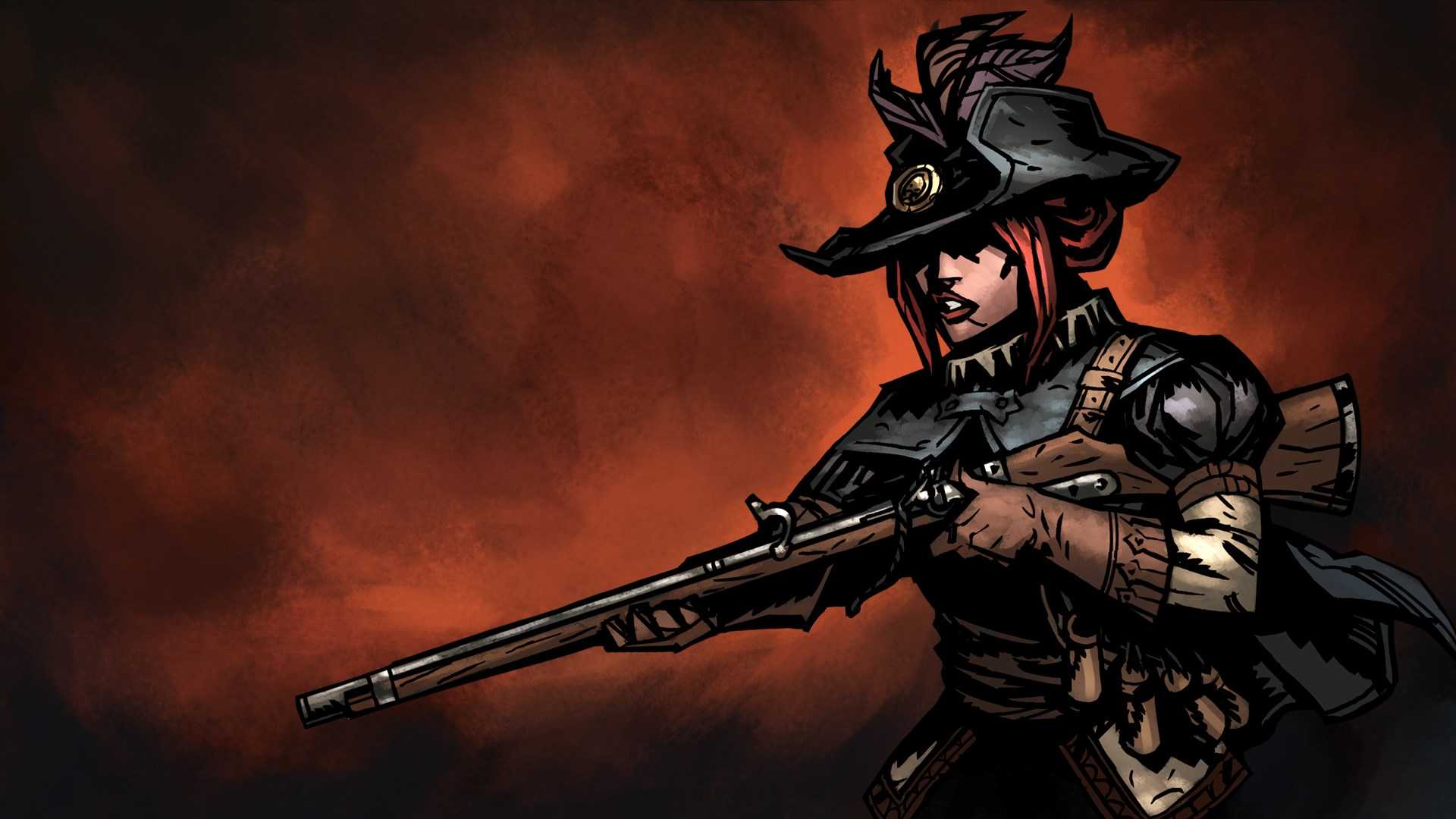
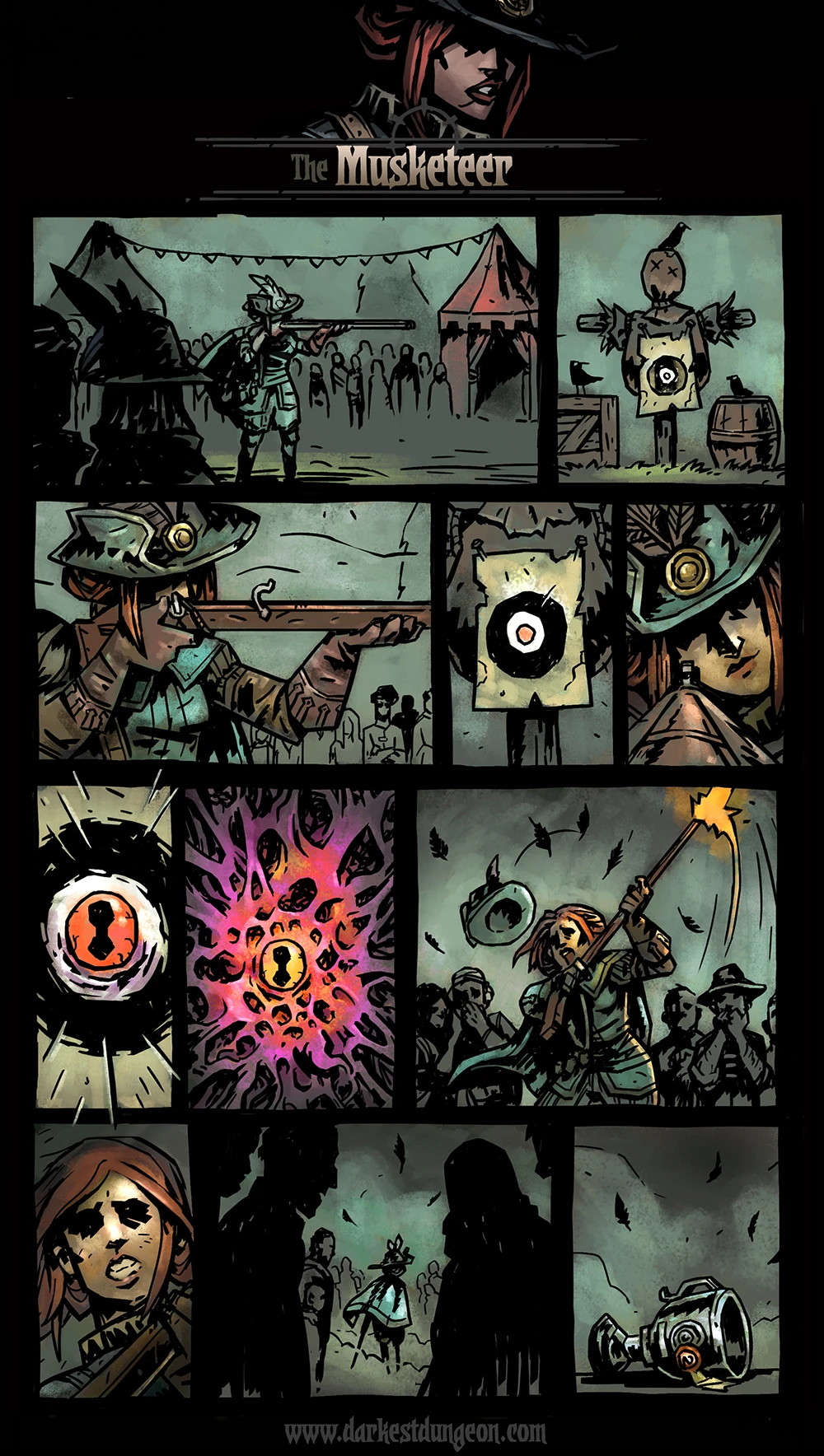
I decided to finally get on and pull The Cape of Four Pleasances into a PDF. You can find it on Itch.io, for free. There's some extra content compared with the original blog post; the only things I've cut are the introductory blog text referring to The Rest of All Possible Worlds and the pictures from Darkest Dungeon illustrating the crossbow/firearms connection.

Buy Darkest Dungeon®: The Musketeer - Xbox Store Checker
Musketeer and Arbalestof Darkest Dungeon.
Arbalest - Darkest Dungeon Guide - IGN
Admittedly, they have a somewhat different characterisation.

That aside, all other introductory material is in the PDF - and I may direct you to it here.

Saturday, 10 January 2026

Faufreluches: The Salvation of Nereus

You are a man out of time. You are yesterday's hero, and tomorrow's. 

You are of the Palace. You are a Paladin.

This is a treatment of Investigating Censor for this blog's Faufreluches setting. Consulting both before proceeding is recommended!

+++

The Scene

The Nereus system lays spinwards of Mencharo, on the verges of Regency territory. It sits in an odd plane of Curtmantle space, making it slow to access but necessary to pass through. Thirty-four planets, planetoids, and moons orbit a blue-ish but hospitable sun. 

These include...

  • Limnoreia, airless seat of a Mews waystation
  • Amphinome, where abundant pastures have been seeded under Stadtholder supervision
  • Maira, glistening with deadly volcanic activity
  • Kymothoe, a planet of vast oceans and swift winds
  • Galateia, blanketed in impenetrable cloud
  • Amatheia, a moon of grit deserts and grey chasms
  • Oreithyia, high-peaked planetoid with an erratic orbit
  • Speio, of the fertile caverns
Two Janissariat groups have set claims to these worlds. They are the Díarmuidapur Kin-Brigades and the Neo-Bactrian Peregrines.

The Díarmuidapur Kin-Brigades

The Díarmuidapuri are known as some of the foremost shock infantry in the Regency. Their main advantage is not merely the charge - though this is undeniably ferocious - but that they make their assaults through and in mortar fire from their support column. This is enabled by the short-burst energy-based 'shield umbrellas' that allow for carefully timed near-invulnerability from above. Trust between 'Pipes' and 'Drums' is essential, given the nature of their signature tactic - and they are reshaped by the structures of this Janissariat band to have bonds equal or surpassing the family bond. The desire for mortar-hefting Pipes to become broad-backed Drums covered by the taut cylindrical skein of the shield umbrella also leads to competition, reinforcing that bond in odd ways as Pipes try to both goad on and preserve Drums.

Recruitment 

The Díarmuidapur Kin-Brigades take only volunteers - but do spend their time boasting widely of their deeds and encouraging artwork in their honour. Their reputation is significant in their sector of the galaxy, and it is well-populated enough to provide an ample supply of young hotheads, would-be heroes and thick bastards. It helps that the Kin-Brigades look and act a lot more human that many Janissariat Bands. 

There are a scattering of Díarmuidapuri families, but never quite enough to repopulate their numbers. Former Drums (and invalid Pipes) will drift into assorted administrative roles.

Resources

The Kin-Brigades' characteristic shield units are now difficult to fabricate: force-flow circuit miniaturists are few and circuit miniaturists with access to precision-work machinists and ample resources are even scarcer. So shield umbrellas are passed on from a former Drum (who are never defeated, because when even when broken, they can't be beaten) to a battle-proven Pipe. Shield units are plugged between the shoulder blades of a Drum via spinal nerve-ports, to enable their flexible, nigh-instinctive use. 

Díarmuidapuri mortars are not altogether dissimilar from those used across the Regency by household armies and local defence forces. They are easier to carry and reposition, but the real advantage of a Pipe over any other bombardier is their single-minded practice and training. Kin-Brigades are also more willing to obtain exotic munitions. Pipes will carry compact solid-shot carbines and short, handy combat blades.

Drums are glad in robust armour (largely unpowered - the shield-umbrella requires a bulky power pack already), proof against most small arms fire. A tall helm is common. They typically carry a long two-handed sword, edged with molecule-baffling quasi-sharp Tonsori anomaly shards. Compact 'Saltshaker' hand cannons offer the possibility for harassing fire, clearing rooms and intimidation. 

The Kin-Brigades make use of a variety of muscle enhancements, dietary supplements and synth-sinews, and have a number of trailing surgical clans dedicated to supplying these. They also have access to an impressive array of construction tools and materials

Customs

The Díarmuidapuri encourage plenty to be said about them, and will offer patronage widely. But they have a few specific customs of their own. Firstly, there are lineages of Pipe and Drum that reproduce sensibilities, techniques and personal superstitions from master to apprentice. The term 'Kin-Brigade' often makes outsiders think of these as essentially father and son relationships - but the Díarmuidapuri are sufficiently egalitarian that it is better thought of as elder and younger brother (other than those Pipe and Drum combinations that have a father and son in them...).

Secondly, a Kin-Brigade raises up a feasting house in every even semi-successful campaign. These are towering affairs bearing a variety of stylised geometric forms - lines, diamonds, squares, carefully regular semi-circles. Glazed terracotta is often used, as are neolithiform blocks, along with chrome. Sometimes the local marmoreal will be used for floors or details. Several empty floors and vaults support an upper section that is a banqueting hall with the attitude of a penthouse. When the Kin-Brigade moves on to a new world, the feasting house is left. The vast buildings frequently become storehouses or government departments.

Campaigning

Kin-Brigades generally aim to bring their opponents into a fixed battle. Settlement of the dispute will happen one way or the other and the Kin-Brigade can move on. In the event that they cannot bring an opponent onto the field, they will sweep a region in a series of raids looking to flush their foe into the open. 

The Díarmuidapuri largely aim to enlarge their network of protectorates and obligated nobles and will move quite readily between systems to allow this. They take very little territory but a great deal of supplies and arms.


The Neo-Bactrian Peregrines

The Neo-Bactrians will go about anywhere a human being will go. They will go there carrying more, seeing more and coming back with more. They are also far more likely to survive. Peregrines are nomadic cybernetic warriors bound into mechanical walkers; typically Neo-Bactrian walkers have four legs (with a variety of foot and hoof options), a back bowser for fuel, a central pod for the pilot and an extended forward weapon and sensor mount. 

A world is given into their care for survey work: settlers will serve their needs for a generation - then the Peregrines will move on. If not gathered into a great expedition, Peregrines spend their time moving between settlements on Neo-Bactrian worlds, usually alone. 

Recruitment

The Neo-Bactrians are open to talent, but maintain their numbers largely through a slow but persistent breeding programme. Genetic material can be exchanged, surveyed and assessed at the meeting or two Peregrines. Offspring are deposited with the mobile creche-barracks run by a Secretariat-registered nursery guild. 

Resources

Neo-Bactrians walkers stand higher than the average Regency four-person automobile, but are generally narrower. A variety of hooves allow them to master different terrain. The flexible weapon and sensor mount can be raised and lowered to precise and surprising angles. Walkers are known to be armed with flame projectors, grenade launchers, flechette autorifles and microwave burst guns. 

Neo-Bactrian worlds will have settlements known as Oases (which are probably near a body of water, if not a literal oasis). A peregrine will call at these once a month or so: the helots in this village will provide the Three Types of Fuel, the Six Types of Filter, the Four Types of Projectile and an number of items from the Catalogue of Spare Parts. 

Customs

At an oasis, a Peregrine emerges from their walker. They report on the many miles they have travelled and the various sights around them in careful, objective tones. Peregrines cover their intrusive and extensive cybernetics when out of a walker in cloaks, veils and tight cloth bandages. 

Peregrines are essentially solitary, but will attend occasional moots for decision making and exchanges of goods and information. 

Neo-Bactrians are buried in upright pillar-sarcophagi made from the pods of their walkers. These are topped by an ornate capita carved by a Peregrine in their own lifetime. The wide plains of Neo-Bactrian worlds will often have an isolated and dramatic avenue or geometric web of these sarcophagi. 

Campaigning

Peregrines are gathered for propositions or expeditions by the hereditary functionaries of the Peregrine Delegation. They fight as mobile hordes, striking at will then withdrawing - often at startling speed over all manner of terrain. In the event that they encounter a fixed position, they will besiege it quite patiently.

+++

The Overture

Ramantai of the Díarmuidapuri has stolen a march on the Neo-Bactrians. Almost literally. Yelain de Lakedt is the Margravial Commissioner over the Star of Nereus, charged with the slow knitting of this border region into the fabric of the Regency and its transformation into a strongpoint against the machine-mind legions and the Empire of P'o L'u.

The Neo-Bactrian Peregrines were called on to survey the numerous planets; this was to give way in time to wider settlement under de Lakedt's oversight and the establishment of the Díarmuidapuri. But the Díarmuidapuri have arrived early. 

Ramantai's Kin-Brigade seized land in lieu of prompt payment from Polyclète, Baron Matamore the on the world of Toranius, which was an as-yet undeveloped holding of the Schematicians. The Baron objected, the Schematicians objected, the Secretariat produced a number of convincing document and the Glossatrices smoothed everything over. The Díarmuidapuri took an immediate payment in supplies and assorted Mint certificates and moved on - but felt they had given way all too easily to the high-handed Matamore. The Baron would admit that he finds the assorted representatives of the Pillars far easier to deal with than Janissariat half-humans. 

This solution was about agreeable to basically everyone on Toranius and nearly tolerable to the Díarmuidapuri. They went to Nereus - and promptly decided that they would not move again. In any event, the Mews carrier flotilla that might have been able to move them was called away by direct order of the Siegneuria, to aid in the excavation of a Stellar Regulatory complex under the eyes of the Pastorate. 

Upon reaching Nereus, the problem of supporting two Janissariat groups quickly became apparent. Hearing rumours that the Díarmuidapuri would be moved on again, Draupadraig, nephew of Ramantai seized Yelain de Lakedt in a desperate raid. It has been put about that she went willingly - and de Lakedt is willing to say as much, not only due to being in Díarmuidapuri hands, but also due to details Draupadraig uncovered of her sale and receipt of prohibited machine-mind designs and formulae. 

The Neo-Bactrians have not taken this lying down, and there have been siezures of Díarmuidapuri assets. Raid and counter-raid have lead to deaths, and more will no doubt follow. An entire star system could be lost from this folly.

+++

The Cast

But what do you know of this? You only woke up a week ago.

You are a man out of time. You are yesterday's hero, and tomorrow's. You are one of the first psychics. You are a fore-runner of humanity's destiny. You are the bearer of a grave responsibility. You are a great man, and sometimes a good one. You are of the Palace. You are a Paladin.
You have been preserved in the temporal suspension vaults in the Palace of the Massif for the best part of three thousand years, where your mind echoed with the whispers of the Regent and the background murmurs of the College of Martyrs.  

Why did you wake up now? The Regent won't emerge for another three years. He didn't tell you why last time, and he probably won't next time. You've gone along with this for three thousand years, for your own reasons. Another month or so won't hurt.
Everyone knows what a Paladin is. No-one recognises you, so far.
The Martyrs thought you should go to Nereus. They gave you a thick stack of briefings to read en route.

 What were you best known as, Paladin?

  1. A Warrior.
  2. A Commander.
  3. A Ballistician.
  4. An Artificer.
  5. A Counsellor.
  6. A Logistician.
  7. An Analyst.
  8. A Diplomat.
  9. An Orator.
  10. A Spy.
  11. A Poet.
  12. A Survivor.
What characteristic weapon or item do you possess?
  1. An antique automatic pistol.
  2. A thurible with thought-quickening incense.
  3. An advanced mechanical calculator.
  4. A spyglass with psychic filament lenses, allowing you to pick out targets with ease.
  5. A vademecum of selected law and precedent written in a personal private shorthand by you in ages past. 
  6. A hovering rostrum (incorporating dramatic lighting, speaker system, &c) of archaic design, beautifully preserved.
  7. A gauntlet incorporating numerous high-precision highly adjustable tools.
  8. A banner with the strange device. The strange device is a miniaturised shield projector.
  9. A cartographic drone, customised to your own particular needs and sculpted with your own personal heraldry (or by your own personal whim).
  10. A suit of armour hardened against every risk of the long-ago war agains the Machine-Minds.
  11. A concealable long-range communicator, silenced pistol and survival knife. Tales of your espionage exploits are so well-documented that it is assumed that anyone who has these is you, no matter how improbable that would be. (They are still a pretty good pistol, communicator and knife.)
  12. A fold-out box of psychic sand, which shifts according to your whim (while in the box, which can be extended to a metre square).

(The Palace will of course furnish you with numerous other weapons and supplies.)

The Martyrs and the Maiors of the Palace have provided a number of possible assistants for you.

  1. A Siegneuria-trained herald, very good at proving that you are who you say you are.
  2. A Mint transit conductor, who can find a way to pay for almost anything.
  3. A Pastor of the Beacon and Banner Circle, carefully recording everything you do (like it or not)- and with some excellent stories about what you have done.
  4. A winning, elegantly dressed Glossatrix. As willing to use existing culture for your benefit as to use you to engineer the culture of the future.
  5. The younger son of a Magnate household, with an eye on personal fame to set him above and beyond family repute. He is, alas, unwilling to make use of his family's resources. 
  6. A taciturn, near-mute Pyrokine.
  7. A Stadtholder Circuitrider: Has gun, will travel. Ability to do things which aren't involved with being a ranger or a marksman is mixed. Probably knows a lot about land use.
  8. A Secretariat Full Spectrum Archivist. Can create, utilise, disentangle or disrupt any record-keeping system in Regency space. Has lots of badges that say as much.
  9. A Mews Astrothete. Good not just at navigating the stars, but telling people why they have to be navigated in a certain way. A rare diplomat among those of the Mews.
  10. A Maioral Pharmacist. Makes just about any drug or medicine you could care to name. Due to the bodily effects of suspension, they work for you and only you: you are the Pharmacist's life's work. Arguably knows your body better than anyone else.
  11. A Janissariat Varangist: a hulking bodyguard who is professionally and deliberately foreign. Absolutely incorruptible, really quite lethal, frequently indecipherable. 
  12. A Frontiersman. Not remarkably good at anything, but the only person the Palace could find who actually knows the Nereus system personally. The story of why they ended up on Terra is a long and potentially quite thorny story.
  13. An Armourer of an unnamed house, who spent fifty years equipping a Magnate's forces to fight a particularly intransigent Janissariat band, only to see the whole thing diplomatically resolved. They are outwardly philosophical about this. 
  14. A Mobile Seneschal, perfect for organising quarters, victuals and supplies for an itinerant court - even your bijoux household.
  15. One of your descendants. The family line developed quite an interest in you over the centuries. No psychic powers, alas, but really well equipped to deal with what happened the last time you came out of the vaults.
  16. A Cryptologist, for the making and breaking of codes and ciphers.
  17. A Pastorate officer of the College of Martyrs. Perhaps the only person in the galaxy qualified to be your confidante.
  18. An Informer. Really good at blending in where you stand out. Won't tell you where they acquired their skills.
  19. A Researcher on the space-faring powers beyond the Regency. Slightly too keen on the Machine-Minds.
  20. A Mencherene Defence Force veteran. Knows the fraying social order of the frontier a little too well. Might even know something about the Empire of P'o L'u.
Two or three of these will go in your train to Nereus - where other allies - common or uncommon, virtuous or corrupt, loyal or disloyal - await you. 

+++
The Places

The inhabited worlds of Nereus fall into three main categories.
  • Unaffiliated - where the local Centre of Gravity (or, indeed, centres) may be a regional hetman, a Schematician First-Level Director, a wealthy businessman, an officer of the Margravial Commission, a charismatic Pastor or many other things. An unaffiliated world can still have a Díarmuidapuri or Neo-Bactrian presence. 
  • Janissariat-run - firmly controlled either by the Díarmuidapur Kin-Brigades and the Neo-Bactrian Peregrines. The Centre of Gravity will definitely be Janissariat. A Key Personality may be a figure like the Unaffiliated Centres of Gravity mentioned above, but the majority of Key Personalities will be Janissariat.
  • Contested - in which case, there are two Janissariat Centres of Gravity in direct conflict, be it open battle or Cold War.
Travel between the world of Nereus is frequent but irregular. There are a variety of craft in a variety of hands that cross between the assorted planets, planetoids, and moons. Getting passage isn't so very hard, given a Paladin's resources and clout - but getting a interplanetary craft of your own will be difficult, and pressing one into your service will not make the owner and/or pilot agreeable.
   Either way, it should take no more than twenty-four hours to find off-world travel as a Paladin.

Travel out-system is only by the permission of the Mews, who exact a fee. While the Mews will have representatives and cotnacts across the System, their centre is the airless moon Limnoreia, where the star-dromonds can rest. The nearest Regency system is Mencharo.

The seat of Yelain de Lakedt was in the high-walled city of Podarsopolis. She is still occasionally seen there, maintaining the vestiges of her legitimacy - but always with a robust Díarmuidapuri escort, and either Ramantai or Draupadraig with her. 
Ramantai and Draupadraig move between Kin-Bridgade holdings frequently: the former to keep the different Díarmuidapuri groups pointed in the same direction, and the latter to keep de Lakedt in his hands (and out of simple boredom).
Meanwhile, Podarsopolis stagnates as the Margravial Commission flounders in the absence of its leader. Plans are deferred, decisions delayed - and funds saved. Any plan to bring peace to Nereus will have to at some point involve de Lakedt, Ramantai and Draupadraig - and, most likely Podarsopolis.

The location of the Peregrine Delegation is as shifting as the Peregine's themselves.

+++
Other notes:
  • This is the long-hinted at Champion Narrative for Faufreluches. As a reminder 'Vorontsov at Bay' was roughly what a Retainer Narrative would be, and 'The Audubonian Breached' is the Scum narrative. 
  • Aside from the other inspirations of Faufreluches, part of idea behind this post was 'Jedi Knight parachuted into the Trojan War'. Make of that what you will.
  • Obviously, a little more fine-tuning would be needed to bring this to the level of Investigating Censor.

Tuesday, 23 December 2025

On the Shield of Achilles

You touched the metal disc on the wall, vast and engraved with scenes you couldn't quite make out. There was a flash: the sun, moon and stars wheeled around you, and you saw one or two constellations you think you could name. Then a voice said With it or on it, return to the waves. 

You found yourself in a new and strange place, inhabited by a people speaking an unknown tongue (so unknown, that translation spells fail). Their eyes gleam like mercury. So does their blood. Clearly, you wish to escape this. Perhaps with something in your pocket for your pains....

Roll 1d10 for where you start, re-rolling 10s, then roll 1d6+3 for the number of scenes you must move through.

Transition between areas is a jumble of low, sunken sandy lanes, winding hillside paths and forests. 

  1. A city at night: torches gleam as crowds gather for a prominent wedding. The young dance and the old look on.
    Observing at them solemn feasts, the brides from forth their bow’rs
    With torches usher’d through the streets, a world of paramours
    Excited by them; youths and maids in lovely circles danc’d,
    To whom the merry pipe and harp their spritely sounds advanc’d...

  2. The gathering of a law-court in a city forum. A murder case is being tried, and masses of onlookers and supporters have gathered before the seated judges and bailiffs, with a bounty for correct judgement.
    The heralds made the people peace. The seniors then did bear
    The voiceful heralds’ sceptres, sat within a sacred sphere,
    On polish’d stones, and gave by turns their sentence. In the court
    Two talents’ gold were cast, for him that judg’d in justest sort.
  3. Outside a besieged city, a conference is being held between the various factions of the beseigers. Some wish to sack the city entirely, the others are willing to let it be in return for a goodly share of its wealth.
    Two armies glittering in arms, of one confed’racy,
    Besieg’d it; and a parlè had with those within the town.
    Two ways they stood resolv’d; to see the city overthrown,
    Or that the citizens should heap in two parts all their wealth,
    And give them half.

  4. The besieged city has sent out a picked band, under the head of two gold-skinned siblings to ambush the armies described in 3. They have chosen a careful spot where they will go to water their cattle. Interlopers will be dealt with promptly and desperately. Those supernaturally gifted will see spirits of slaughter and panic and clash gather in ghostly, ghastly anticipation.
    When those in siege before the town so strange an uproar heard,
    Behind, amongst their flocks and herds (being then in council set)
    They then start up, took horse, and soon their subtle enemy met,
    Fought with them on the river’s shore, where both gave mutual blows
    With well-pil’d darts. Amongst them all perverse Contention rose....

  5. A peaceful scene, where ploughmen are at work - and sustained in their work by ample wine. Careful examination will reveal that the plough uncovers a wonder: gold with the hue of fresh-turned turf. Highly valuable to a collector of curiosities....
    The soil turn’d up behind the plough, all black like earth arose,
    Though forg’d of nothing else but gold, and lay in show as light
    As if it had been plough’d indeed, miraculous to sight.
  6. You enter a harvest scene, where a local prince oversees the gathering of wheat. His huscarls prepare an ox for roasting as the harvesters gather in the sheaves.
    His harvest-bailiffs underneath an oak a feast prepar’d
    And having kill’d a mighty ox, stood there to see him shar’d
    Which women for their harvest folks (then come to sup) had dress’d,
    And many white wheat-cakes bestow’d, to make it up a feast
    .
  7. Glittering in the sun is a great jewellers folly: a vineyard, of a kind. Gold vines hang on silver poles in a tin-fenced yard with a moat of glittering blue enamel. Humanoid constructs guard the vineyard against any intruder; their control unit is sculpted in the shape of a boy with a lyre.
    A silver rail ran all along, and round about it flow’d
    An azure moat, and to this guard, a quickset was bestow’d
    Of tin, one only path to all, by which the pressmen came
    In time of vintage...
  8. Bovine automata of tin and gold are being escorted by men and dogs through the meadows. Great lions, envious of the gold hides of the oxen prowl after them, hoping to tear one to bits. (If it comes to it, the mastiffs are ineffectual against the lions).
    ...with high rais’d heads, forg’d all
    Of gold and tin, for colour mix’d, and bellowing from their stall
    Rush’d to their pastures at a flood, that echo’d all their throats,
    Exceeding swift, and full of reeds; and all in yellow coats....
  9. In a village strug around with sheep pastures, a party is in progress. Armed muscular youths in silver belts dance in a ring with maidens in floral crowns. Two acrobats do something spectacular at the centre of the circle.
    Fresh garlands too, the virgins’ temples crown’d;
    The youths gilt swords wore at their thighs, with silver bawdrics bound.
    Sometimes all wound close in a ring, to which as fast they spun
    As any wheel a turner makes, being tried how it will run,
    While he is set; and out again, as full of speed they wound,
    Not one left fast, or breaking hands. A multitude stood round...
  10. A circling, endless sea. Not a cloud or a bird in the sky. Following the line of the beach along only leads to more sea-shore.
    All this he circled in the shield, with pouring round about,
    In all his rage, the Ocean, that it might never out.

    Escape is achieved by hurling a shield into the sea (your own, or one obtained from any of the locales above). This produces a cloud of steam; when it settles, there is the mouth of a cave in the sea. When you walk into it, all lights are extinguished and darkvision blurs. When you are far enough in that you can no longer see the entrance, there is the sound of a single great hammer-blow and you return to your starting location with the disc on the wall - which may now be touched without fear of dimensional travel. 
***

  • As the title suggests, the inspiration is the Eighteenth Book of The Iliad. Somewhat spur-of-the-moment, and written with reference to the translations of Chapman (see above) and Caroline Alexander. 
  • The various scenes suggest a tight selection of social and combat challenges to my mind, though it might be possible to simply sneak through the entire thing. Not quite the action of an Achilles, but perhaps Odysseus would approve.
  • It's tempting to place the joined 3. & 4. as the last scene before the sea, but I leave that decision in your hands!
  • Presumably, if you dig deep enough in any of the above scenes, everything is made of metal. 

Friday, 12 December 2025

Punth: Ka-Punth Generator

Yoon-Suin inspired a certain amount of Punth: A Primer, notably some of the 'deliberate mystery' regarding the Qryth and their nature and motivations. Following my work reviewing the second edition of Yoon-Suin, it occurred to me that I hadn't applied used the structure of tables in the same way. Punth itself would make for a poor subject for something like the Starting Polity tables for the Hundred Kingdoms: the central regularising element of the Codes rather get in the way. But the fringe tribes of the Ka-Punth might benefit from this. 

Leadership Style

  1. Paranoid - the leaders of the tribe are constantly on the look-out for foes within and without, as well as more insidious dangers.
  2. Acquisitive - the leaders of the tribe seek more: more territory, more resources, more weapons.
  3. Vain - the leaders seek acclaim and flattery.
  4. Quietist - the leadership are keenly aware of their relative smallness and seek not to disturb their neighbours.
  5. Fanatic - be it grudge, whim, passion, mission or djinn's command, the tribe's leadership have a cause in mind and dedicate themselves wholly to it.
  6. Opportunist - the tribe's leadership look to enrich themselves at any opportunity, no matter how slight. 
  7. Scholarly - the tribe's leadership seek knowledge: of the Fallen Tower, of the Qryth, of the howling powers of the desert. 
  8. Indecisive - these leaders are given to putting off decisions and consulting as many relevant parties as possible.
  9. Bloody-handed - the leadership maintain power inside (and project power outside) with spectacular examples of cruelty.
  10. Unifier - the leadership seek to pool resources among the Ka-Punth.
  11. Scrupulous - the leadership are painstaking about details and proprieties.
  12. Client Kings - the leadership owe their rule or prosperity to a foreign power, and will act to benefit that power.

Manner of Rule

  1. Shamanic College: An Oligarchy tempered by Fits and Visions - and always open to Talent.
  2. Warlord and Comitatus: A Charismatic Warrior and their closest comrades, with succession determined by by impromptu democracy, ritual duals and heavy drinking (or a combination of the above.)
  3. Mage-Blooded Lineage: The djinn speak clearest to a particular family line, for reasons of their own. The result is hereditary monarchy, of a kind - with competition for right-hand man status.
  4. Kritarchy: Rule by makers of law, precedent and tradition and interpreters of law, precedent and tradition. No-one wants to do something unprecedented around a djinn, or for a djinn to do something unprecedented.
  5. Merchant Prince: The tribe is led by a master trader and negotiator who maintains their prosperity in the shifting state of the Punth borderlands. Until they don't.
  6. Priest and King: spiritual leadership and temporal power are given to two rulers, who each exercise full authority in their own sphere. The conditions for succession are particular to that sphere.
  7. Clan Council: the tribe regularly gathers into a Ka-Punth althing to decide on policy, distribute prizes and determine responsibility.  
  8. Daimonocracy: a djinn governs the tribe directly, somehow. 

Relation to Djinn

  1. No djinn are in this tribe's orbit.
  2. Spirits drift in and out of the tribe's awareness.
  3. One particular djinn has made this tribe their own.
  4. The tribe maintains careful ties to a number of shades and spirits.
  5. Several djinn take a special interest in the tribe.
  6. The tribe is fully attached to the djinn as a body.

Characteristic Customs

  1. This tribe wear ornate woven sashes to identify themselves.
  2. This tribe are 'born in the saddle' and form strong bonds with their mounts.
  3. This tribe has an excellent knowledge of Punthite Codes, frequently used for parody.
  4. This tribe are known as leaping, twisting, remarkable dancers.
  5. This tribe practices ritual scarification; whether or not the scars are displayed depends on the reason and placement of the scar.
  6. This tribe are known to use bizarre, difficult to master weapons.
  7. This tribe has a vivid and fascinating epic poem detailing an episode in their history committed to memory by some of their members (and often quoted by the rest).
  8. Many members of this tribe have a photographic memory.
  9. This tribe regards a certain animal as not just symbolic, but positively sacred. If domesticated, they will adorn them and their cages; if wild, they will leave offerings by their lairs.
  10. This tribe is either: a. Highly matriarchal, b. Highly patriarchal, c. alternate between a. and b. with the generations or d. Suspiciously egalitarian. 
  11. Members of this tribe endure physical hardship and other such trials with great forbearance. 
  12. This tribe is widely regarded as cursed.
  13. This tribe go veiled at all times, as far as anyone on the outside can tell.
  14. This tribe are very keen on falconry. This has very little use in war, but everyone thinks it's pretty cool.
  15. This tribe regards raiding as not just a pleasant occupation to be practiced when opportunity presents, but as a way of life.
  16. This tribe are staunch Chauvinists.
  17. Perhaps as a result of living so near to the followers of the Codes, this tribe are terrifyingly literal.
  18. This tribe are known to be forthright and dramatic, and are given to monologuing.
  19. This tribe really want to hear about your god or gods and add them to their pantheon.
  20. Members of this tribe are known as being insatiably curious.

Size

  1. A Company.
  2. A Regiment.
  3. A Brigade.
  4. A Division.

Relationship with the nearest power

(The nearest powers being: Punth, The Nirvanite Empire, the River Kingdoms of the South, the Eight Vales of Marikylo to the east, the Hydraulic Dwarves of the Dividing Mountains and - occasionally - the League of Civic Etiquette from across the sea).


  1. The tribe fear and avoid the nearest power.
  2. The tribe frequently raid the nearest power.
  3. The tribe have been implacable foes of the nearest power for untold generations.
  4. The tribe benefit from an unspoken understanding with the nearest power that preserves their lands as a buffer.
  5. The tribe are maintain active and profitable relations with the nearest power.
  6. The tribe are in a formal alliance with the nearest power.
  7. The tribe are being employed as proxies by the nearest power for their own ends.
  8. The tribe are being employed as proxies by the nearest power and actively wish to cease this arrangement.
  9. The tribe are very eager to gain the protection and resources of the nearest power.
  10. The tribe are attempting to draw the nearest power into conflict with their enemies, to maintain their own independence.

Assets

  1. A series of concealed cisterns and watering-places.
  2. A small stable of successfully tamed and broken Qryth beasts.
  3. A number of interpreters who have a well-developed understanding of the speech and script of pre-Qryth Punth.
  4. Control of a shady canyon that serves as a meeting-place and trade hub for Ka-Punth tribes.
  5. More gold (or other portable wealth) than the tribe knows what to do with, and far more than anyone suspects.
  6. A hidden, wondrously fertile valley.
  7. Control of an entrance to ruins of the fallen tower.
  8. Possession of an ancient Qryth device.
  9. A major pilgrimage site (be it for another tribe, many other tribes or a regional power) lies in this tribe's territory.
  10. A sect of talented healers and hedge-wizards bolster the tribes capabilities.
  11. A group of some of the swiftest and most secret couriers in all Punth.
  12. A surprisingly large and extensive library; the tribe's leadership probably know far more about the outside world than they are letting on.

Problems

  1. There is broad, popular discontent among the many of the tribe.
  2. There is discontent and conspiracy among the tribe's elite.
  3. There is strong evidence of a witch among the tribe, cursing them and employing sorcery for their own selfish ends!
  4. Disease ravages the tribe (if there are talented healers in the assets above, it's an especially potent plague).
  5. Famine or drought ravage the tribe (again, if there is a wondrously fertile valley in the assets above, it is a very bad famine indeed!).
  6. A deep-seated feud within the tribe has bubbled into new and fervid life.
  7. Infiltration by a regional power or simply another tribe threatens one of the tribe's assets - or the tribe itself.
  8. On account of war or depression or disaster, trade through this tribe's territory has slowed.
  9. A key resource - arms, mounts, coin, salt, ritual cauldrons - is in dangerously short supply. 
  10. There is a power vacuum at the head of this tribe, no obvious successor has yet stood up to direct it and no-one wants to take major decisions until they do.
***
Notes
  • Some prompts for this also come from the Khanates and March of Empire tables for The Wicked City.
  • As before, Punth has a lot of Near Eastern or Middle Eastern elements that can be whittled down by those using the Primer. This extends to the Ka-Punth. If you want to move away from the obvious Bedouin or Tuareg influences (or, indeed, Fremen - that is, Dagestani...), by all means do. Perhaps Bornu cavalry are an option. Or the Comanche. 

Tuesday, 31 December 2024

Returning to the Veins of the Earth

Patrick Stuart of the False Machine has announced a remastering of Veins of the Earth. I imagine most readers already know what this is; for those who don't - well, it's a vision of the 'Underdark' of D&D fame as examined and remodelled through the lenses of A) Real world caving expeditions, B) Geological time and C) Nightmares, possibly relating to the above.

If you haven't read it, then I can recommend it. If you want someone else, then here's the Questing Beast review

Anyway, I've been rereading it over the last week and a half, with an eye towards the remaster - and here are some thoughts.

The Pariahs of the Earth: It's almost impossible to imagine any worthwhile changes to this bestiary. The nature of the various monsters, the art, the assorted off-putting or unsettling or downright mystifying descriptions rather makes Veins. Are they difficult to use versus a pack of level one Goblins? Of course, but one rather has to push the boundaries a little if a work is to stand out at all. (To say nothing of the all-important conceptual density.) Cluttering this up with a low-level goblin / rat / other substitute to carve your way through would be a mistake.

Some of the entries have Treasure or Trophy paragraphs (as, say, the Scissor Fish or Fossil Vampire) - I would like to see these appear for every entry. Not that every entry needs them, but it would be a way to say 'These are here, look out for them'. To point to something of mine for a moment - the Gifts and Trophies entries for Humanity's Elementals is a model I like.

I would also like to know how some of these beasts climb and navigate. Sometimes that's in the text, sometimes it can be clearly derived from descriptions (the salamander-men have two legs and two arms and will climb more like human beings that snakes).

Cultures in the Veins: Likewise, it is very difficult indeed to imagine changing these. Things like the Dvargir are so very emblematic of Veins that changing them would be a mistake. (The dErO are charming, as always.) The Gnonmen don't quite strike the same note, but we have had a hint at a potential remodelling in the form of the RayMen, whose J.B.S Haldane-influenced society strikes the right note of alienness demanded by the Veins.

What would be useful is a separate table appended to these entries of other items from that cultural - EG, the Dvargir Carbide Lamp. The index goes a certain way to do this, but could be broken down more - X, X items, X locations and so forth. If adding or shoring up these entries, some other general purpose details might be good (that the Dvargir capital is City 1A is good, and interesting to learn through a treasure table - but what is the general pattern of Dvargir settlements?). I admit, that too many details of some entries may be less of a boon than hoped for.

Likewise, I suppose - how does Culture XYZ use the light and the darkness?

Generating the Veins: The bit that strangles me a little here is the Large Scale Maps. The overall principle makes sense once explained, but I would be interested in an extra part in the worked example in the Appendices. One more page, explaining 'This is how I decided that this section here is an Eight Mile Waterfall' (or a series of cascades, or...). As with the rest of Veins, no-one has to act make the same decisions, but knowing how someone else has made those decisions is useful. (I may have to do a worked example here!)

Some other, less general points:

  • The Gegenschein - how many moths are going to appear in your work, Patrick? (The trilobites are different, I know that.)
  • In Appendix III there's talk of a settlement generator in the sequel. I know that this isn't quite a sequel, but some settlement or trading post details would be good. What food and lumes are traded? What games and forms of entertainment are shared in the Veins? What card game would a dErO, an Ælf-Adal and a Substratal all enjoy playing?
  • Are the Zombie Coral building anything?
  • When the current font is in bold, some of the detail of serifs is lost and takes a moment to identify - see especially As and Ms. 

***

I'm not certain that I'm necessarily the best person to answer the question of what to do with Veins - I've not tried to run it, and I've had it in my headspace for too long. But I am interested in seeing what comes of it, and look forward to seeing it remastered.

Wednesday, 24 July 2024

The Rest of All Possible Worlds: Pocket Items

There are all sorts of interesting devices these days. Bigger and better telescopes, dense almanacs, precisely fitted sextants. And since then there has been a market for portable versions of these. 

Bluntly, these are toys for rich men.  Few need a sextant at any moment, let alone a smaller, fiddlier, uncomfortable, easily broken version. But one or two people have found these very useful indeed - and not just as portable trade pieces.

Here's a few - others may exist.

  1. Within a stubby silver cylinder ticks A Perpetual Calendar. Turn shells of year and system on the outside to the indicted marks. Good for all Calliste, valiant attempts to indicate assorted high days and holidays of the Alamgir Empire and the Bronzemount Free State.
  2. The slim brass case of a Tally-Box. This can add, subtract and convert the Pavaisse Mark, the Pavaisse Trade-Weight and the Malmeric Gold Piece.
  3. Extending from a smooth horn box is a Microscope. The base of the box turns into a mount for whatever minuscule thing you wish to examine.  
  4. A carved wooden case reveals a series of ivory Rabdological Rods.
  5. A brass-half moon unfolds into a small Astrolabe.
  6. Set in velvet, a fine golden set of Scales and a set of tiny weights.
  7. A Mage's Chronometer. Perfectly mundane in construction, but allows the user to set a series of markers for when they can re-apply themselves to a spell.
  8. Folding wood and gilt Sundial (sun not included).
  9. Set in a rotating gimbal in a little pale box is a Mundane Lodestone. This points to the least magical place in a Ninety-Nine Mile radius of the user and is often used by insufferable wags at parties. 
  10. Some men hold the world in their hands; you hold it in your pocket. Or at any rate, an ornate and definitely accurate Globe.

As for some actual rules:

The value of any of these in working order is meaningful - at least a month's wages, say. It may be difficult to find someone who will buy it, however. 

None of the above meaningfully contribute to encumbrance. 

This is not an age of mass production. At most, there are a dozen items of this kind coming from the same artificer's studio. Finding an exact replacement outside the maker's home city and years after it was made will be difficult.

Spare parts are non-existent. You will need to find someone who can work from scratch.

It may be that whoever made the device in the first place lacked certain details - the knowledge of annual holidays in Transmontane Tsymric may be patchy in High Malmery.

There may be lands where all of the above is untrue! 


If you are ever in Cambridge, consider visiting the Whipple Museum.

Monday, 3 June 2024

Seek not to know for whom the Moon Gackles

GACKLING MOON - the latest publication from Patrick Stuart. Except not purely the work of the False Machine, this time. As Kickstarter backers were warned:

This will be quite different to any standard False Machine book. Gackling Moon is a production of 'Formling' Press, run by Emile Frankel.

But it has roots in two sets of posts over on False Machine: here is the rising of the Gackling Moon - and here the mists part and reveal the Wodlands. Well, the Wodlands are now the Moonlands and everything has been set together in a hardback - which I have a few thoughts on.

Firstly, presentation is very different - beyond the obvious. Gone is the initial Wodlands illustration and the colours associated with it. The Gackling Moon hardback is white, with black and white interior illustrations. The book is counterintuitively white: summoning up images of our own Luna, rather than shattered, faintly goblinoid Gackling Moon. It also constantly taunts you with the prospect of spilling red wine or coffee on it.

Illustrations are provided by Tom K. Kemp (no relation?), working in a mix of charcoal and other analogue media enhanced with digital techniques. They are intended to act something like photographic plates in a museum catalogue (or similar). Sometimes this works quite well, as hazy images of a distant land or sketches by an archaeologist. Sometimes it looks unfitting - as if this expensive museum catalogue can't afford a decent photographer.

Text is in single columns of seriffed characters. The Printer's Imp has been left unchecked, which is vaguely fitting for Gackling Moon if loosely vexing to stodgy boring types like myself. Though there's something I dislike about the way the text curls around the page numbers.

Speak to us of the Moonlands.

Imagine a carefully imagined alien landscape, with numerous details about those who live there and how they survive. Improbably weather patterns and beasts, wily folk adopting uniquely geared folkways to match their land. Something like Villenueve's Dune and his sparse, echoing Arrakis or stark Geidi Prime - or the vision of the Southern Reach in Alex Garland's Annihilation.*
    And then someone comes and fires the Terry Gilliam Ray at it, sending several brilliant shafts of Terry Gilliam penetrating the scenic vista. Gilliam piercing everything. 

This sounds like a colourful exaggerated description to grab my audience; it is, in fact, basically true to the nature of the setting. Landscapes like the Plain of Anaesthetic Fire and the Asbestos Bedouin who dwell there interrupted by GOBLINS emerging in rickety steampunk submarines from the Vermillion Sea, quite possibly to the sound of Sousa marches played on ill-tuned and worse-conceived instruments. 

You may think this sounds a little tiresome, so described - and depending on your tolerance for Goblins - but it is neatly leavened by the sheer variety of Goblin, and the welcome appearance of the beautifully conceived Anti-Goblins. (I don't know where the name 'Esploradoj' came from, but it sounds just right.)

I'm also quite fond of the Manticore-hunting Nobles. The Incoherent Isles are beautifully drawn. 

And over it all, the changing face of the Gackling Moon casting baleful shadows across a tormented land - driving men into horrifying emotional extremes. 

Does it hang together? Does it have the certain spark?

Sometimes. Though I suspect that this is something to be mined for parts - little dimensional adjuncts and strange intrusions. (The Gackling Moon as Outside Context Problem?) The sort of thing that the Wilderness of Taroc and some of the rest of the material clustered under Translucent Polities gets at. One can imagine the Gackling Moon itself becoming a Gackling Comet, tearing across the realms of men causing terror and havoc in equal measure. Or one can imagine the phases of the Gackling Moon as quasi-divine Star Archons, coming in and out of alignment with the world below. 

However, certain elements of the presentation aren't pulling their weight. The Museum Catalogue elements could be leant into rather more heavily. If The Sabbat World Crusade is a benchmark, you need multiple sources of art. It worked in Fire on the Velvet Horizon because that was a region that felt the size of or as populous as (say) Northumbria: the Moonlands feel...the size of the Iberian peninsula maybe? The final essay by Frankel is rarely use and even rarer ornament: if you want to think about the image of the Heavens and what a Moon might mean, you are far better reading Chapter Five of The Discarded Image and meditating on 'dull sublunary lovers'.

Sooo...?

Read some of the blog posts and decide for yourself whether you think it would be useful to have them enhanced, expanded and bundled together somewhere. 


*I have read Frank Herbert; should I read Vandermeer? Answers on a postcard, to the usual place.

Thursday, 25 April 2024

Faufreluches: The Audubonian Breached

As suggested last time, a sketch for a 'scum narrative' in the Faufreluches setting. 

A presumed playable structure might be a point-crawl four deep and three wide, with increasing risk the longer one stays in a region. Additions could be made to the cast list, but a dozen will serve to give an impression. 

+++

The Scene

Brachemond is a prosperous world, both from years of cultivation and from its useful position in the topography of Curtmantle space. It is the home of House Ximenzborg, who permit a variety of enclaves in the proud city of Elsinjoz. 

One such enclave is that of Tortuga-Clyne; one of the more wilfully mysterious of the great Magnate Houses. Orbiting the cold world of Audubon-5 is their home: The Moon; Algranesh - from which they dispatch wonders. Best-known of these are their remarkable timepieces: bioclocks or hyperclocks of remarkable reliability even across the gulfs of the galactic void and the dislocation of Curtmantle space. Second are the thousand strange alloys of The Moon; Algranesh, shaped into a thousand ornaments and tools all catalogued and marketed by Tortuga-Clyne. 

As notorious as their products are their prices: a ritual for any sufficiently high status exchange is that they are never paid in mere specie or anything standard or common, but only in goods, services or rights as specific and obscure as the thing or service they provide. The Mint regards them as something between a challenge, a calculated insult and a curiosity - and it is a rite of passage to sit through a high-end Tortuga-Clyne exchange. 

So an enclave was a necessity for them. Thus, the Audubonian Exchange: a net of secure warehouses, private landing grounds and assessor complexes surrounding the great cube of the Praetorium. It is an affectation of Tortuga-Clyne that they are a 'House without Servants', that their needs are adequately filled by a group of antique 'analogue robots'. That this flirts with the Regency's prohibition on machine-minds has not stopped the members of the family from bringing them up. 

Even if no servant will ever set foot in the Praetorium, that does not mean there is no need for labour in the Exchange. Supplies go into the Praetorium, rubbish comes out. Guests are escorted, directed and pampered. Diplomatic signals are collected, goods packaged, customs officials accommodated, boundaries are patrolled, motorcarriages refuelled and spies identified. 

Throughout it all, the handful of Tortuga-Clyne residents are watching from the dusty halls of the Praetroium. Stooping eccentrics and hypochondriacs, frequently veiled, they are the talk of any visitor to the Audubonian.

 +++

The Overture

But now they are the talk of all Brachemond. Last night, following a conference in the Praetorium, Ximenzborg forces moved rapidly to seize the Audubonian. No whiff of hostility had been detected before this - not so much as one look askance in the Seigneuria. Something has changed very, very quickly. Ximenzborg has acted with absolute certainty: witnesses report not just household armigers but also the Fortunate Companions - the honour guard of Dagmar Ximenzborg, conspicuous in honey-coloured battle-plate and war garlands about their brows. The lantern-jawed face of Dagmar Ximenzborg herself has been seen leading the assault on the Praetorium. 

Come the dawn Secretariat minutemen are picking through the Audubonian, cataloguing everything. There are rumours of Pastorate ministers in the red coifs of witchfinders entering the cracked cube of the Praetorium. The House of Ximenzborg is certain, so certain as to be incautious, bringing the attention of these notoriously neutral organisations to the attention of a Magnates' feud. Certain, that is, or scared. The citizenry of Elsinjoz take their cue from their masters, and make a nervous breakfast. 

But what do you know of this? Last night you had a job, perhaps even a good one. Today you don't. Today, you are tainted by association. Your quarters are on the edge of the Audubonian Exchange. It is time to leave.
  Transport out of Elsinjoz has crawled to a halt, as a cordon tightens its hold. The dress, skills and mannerisms of those even remotely associated with Tortuga-Clyne will give you away. There is one place you might make for. About a hundred and fifty miles outside of Elsinjoz is a district given over to the Stadtholders - a permanent reserve. Ximenzborg reach into this backwater will be slow and tangled in a legal quagmire. Maybe you can go to ground there. 

But the reserve is a long way off, and you have only what is about your person.... 

 +++

The Cast

Of Tortuga-Clyne

You were a....

Cellarer: take a corkscrew, jigger, apron and a decanter of spirits (technically worth quite a lot, were it not for the gilt Tortuga-Clyne symbol on it).

Chambermaid: take a trolley of assorted linens, an iron and a demijohn of caustic cleaning chemicals.

Moneychanger: you have managed to carry with you small sums in six different currencies, only two of which are approved by the Mint and only three of which anyone's ever heard of. 

Shipping Clerk: take an exquisitely minimalist tea service, an off-world carved boxwood ornament, two cans of paraffin, four preserved freshwater fish and a pocket perpetual almanac. Your warehouse had some interesting things in it.

Gardener: take a pair of comfortable kneepads, a trowel, a pruning knife and a handful of exotic blooms.

Bouncer: take a shock-glove. Get close enough and you can render unconscious anyone not wearing powered battleplate. However, you were selected for your brawn and imposing presence. 

Server: take a tray of assorted, rather soiled nibbles, a palette knife, a ThermoPad ("Keeps your Soup Simmering on the Sideboard!") and several old guest lists. 

Perimeter Guard: take a wide-band secure communicator. You'll be able to listen into Domestic Service Corps chatter, at least for a bit. Also take a sidearm and one clip of ammunition, as well as a very smart uniform with lots of well-placed badges.

Schematician Process Avatar: you know exactly how to produce high-quality canvas according to a variety of timetables with almost any workforce and the right motivation. You also have a clipboard.

Glossatrix Aide: your senior was supposed to her have finger to the pulse. You just arrived from off-world. You have a beautiful outfit, a winning smile and a stack of fancy magazines geared to a variety of Brachemondian tastes. 

Secretariat Cypher-clerk: you have trained very carefully to memorise absolute gibberish, so that someone may quote the correct keyphrase to you in order to decode it. You will remember nothing afterwards. (Also, your shorthand is amazing). Take a smart blue tabard and a string of mnemonic beads. 

Praetorium Staffer: take a dusty robe, a Tortuga-Clyne bio-abacus and a mask. You will not remove the mask.

Of Ximenzborg

The Domestic Service Corps of Ximenzborg's armed forces is divided into two commonly encountered groups. 

The Intramurales are local enforcers, usually older troopers rotated out of frontline service. They patrol their own districts, largely focusing on minor issues of civic order. They have the reputation as fiery Chauvinists in the name of Ximenzborg, happy to raise fist or club in defence of their liege-lords - and in protection of their own little sphere of influence. 
    Their matt cream box-backed motorwagons have won them the curious nickname of 'Dairymen'. It is a long-standing joke that the family, spouse, favoured paramour or crony of an Intramurale will run a liquor shop, gaming parlour or other licensed enterprise. 

The Extramurales go where required within a given region, or indeed beyond. They are dedicated long-service professionals, focused on different roles and coming in several different service branches.
    Extramurale Investigators appear doing standard information-gathering and detective work, lightly armed and clad in the distinctive blue-black service tunic with chest ornaments of rose-pink and dove-grey braid.
    Extramurale assault teams are not seen until they want to be. They are heavily armed and practiced in swift, powerful operations against their targets, distinctive in the irregular gaze-warping cross-hatching of their ash-grey body armour.
    Extramurale Informants are not seen. But they're definitely there.

The Fortunate Companions don't care about you. Really, they don't. They're busy going through purity exercises with the Pastorate or on honour guard duties. But if they happen to be nearby when you manage to make your presence known, their wargear lets them break through a house wall, leap over road vehicles and perform improbable judo throws with a charging aurochs.

Also: divers families of yeomen, burghers, freeholders, villeins, metics, guard dogs and mendicants.

 +++

The Places

Nearmost the Audubonian Exchange

Procyon Terrace

A street or so of large, well-built buildings, given over the years to the offices of the Pastorate - administrative offices, the Metropolite's Residence, a Seminary, a carefully inconspicuous barracks for Wardens. 
   Witchfinders walk openly in the dull dawn light; clerks and Ministers emerging from the offices have clearly slept little. No Intramurales can be seen, and it would be odd indeed for them to show their faces here. 

Fabian's Conduit

Even if the Audubonian had it's own generator, most enclaves in Elsinjoz do not. The Conduit is the great sunken channel for power cabling, the provision of water, the removal of waste. It reaches directly out of the quarter to splice into the main arteries of the city. A row of narrow, elegant trees sits over it and ornamented pillars have subtly placed entrances down into it. 
    The Conduit channels are unattended most of the night. Maintenance engineers are only now arriving. In places, the desperate or the tormented make temporary shelter.

The Diplomatic Penumbra

About the Audubonian and the other cluster of embassies and consulates are a series of little specialist shops, set in winding crescents of terraced houses.  Uniform tailors, pastry cooks, discreet little banking houses, high-end vintners, places where you can hire footmen for a banquet or dancers for a party. 
   You know people here. Everyone knows what happened. No-one will help you. None of them are badly off, but most would like a little more and all would suffer from the attention of the Extramurales.

***

Firmly within Elsinjoz

The Campanologist's Tomb

A housing district for the loyal middle-rank, dotted with small shops. Many of the streets have little piles of Tortuga-Clyne goods, carefully smashed and discarded. Young men, possibly cadets in an Ximenzborg military academy lounge in the courtyards.
    A minor house named Laagercruz owns many of the vendors here; their current paterfamilias is a younger man who is flirting with defiance of Ximenzborg. 

Muinadona Fields

Dense housing in a grid of overcast alleys, defined at one end by the low bulk of the Pastorate Hall of St Yoshifusa [EDIT: This should now be 'Celb. Yoshifusa'] and at the other by the broad field with the two opposing stages for the scrum-based ball game 'Hounds and Mastiffs'.
    The Intramurales attend here in large patrols, to prevent the possibilities of outflanking in tight alleyways. No-one here really knows or cares about goings-on uptown.

Esquiline Park

Recreation grounds, flower-beds, promenades, tea-houses and vendors of sweet-meats. A gap between wards, tended into green splendour. Statues of Ximenzborg dignitaries, Brachemond grandees and abstract personalities of the Regency's virtues dot the pathway. 
    The barracks for the Ximenzborg Foot-and-Motor Guards are nearby, and it is their custom to spend free-time in the Esquiline, generally clad in their distinctive walking-out dress. The number of them that are armed, alert and active will vary from time to time. 

***

Just beyond Elsinjoz

SW167 Livestock Processing

Where pigs, or things that might as well be called pigs, are sent. An area of vehicle parks, feed ramps and stockyards gives way to slaughterhouses, boiling vats and curing halls. 
    The best-known product of Elsinjoz are the 'void-cured' sausages. Specialised containers are packed with sausages and the assorted flavourings and preservatives and slowly mature to completion in the course of interstellar travel. 
    Occasionally, stowaways try to hide in the void-curing containers. They are generally found having choked to death in a cloud of pulverised herbs and spices. 

The Cinnabar Brakes

A long belt of dense red cane snakes round the North and East of the city, cultivated as a deliberate environmental and defensive measure. Immaculate gullies of jade-sheened concrete water it, where rangers in slow flat punts slowly patrol.
    The brakes are far too dense to move through swiftly, but discourage pursuit very effectively. You would not be the first to note this, and miserable red shacks may be found in various states of repair. The residents will have fled at your presence. 

Tollyard 5

Like a concrete tag hanging from the knot of a major junction. Vehicles are checked, permits are issued, drivers fed, maps checked, bladders emptied. 
    A small Intramurale station may be found here. Screens in the main concourse display pictures from the sacked Audubonian, and speculation about what was happening there is splenetic and rife.

***

Nigh on the Reserve

Glazed gullies

A series of shallow valleys in the landscape. Ximenzborg have found that quickest way to make use of these was to roof them over and turn them into vast greenhouses. The fresh fruit and vegetables from these find their way to maintain the working population of Elsinjoz in relative health.
    Shabby camps for the labour parties exist outside, where the inhabitants shiver when they leave the heat of the gullies. Concealment in the gullies would be difficult, and deeply uncomfortable for those unused to the conditions within.

Danstal Lodge

The Brachemond Mint has a back-country centre here, used (variously) as a retreat, a discreet locale for sensitive exchanges and an examination centre for promising candidates. The grounds are largely kept wild, with only a few trails through the mix of wood and heath being maintained. 
    Danstal Lodge is at present empty, barring a maintenance and security team. The Mint being who they are, the lodge grounds are under intense surveillance with reliable data feeds to Elsinjoz.

Iagkyrkan

A settlement connected to the main rail artery. It largely serves to act as a depot for outlying farms and freeholdings. One fabricator station, one wholesale store, one retail store, one dairy, one hostelry, one gaming parlour, one projectionist's hall, one Pastorate Hall the size of a racquet court, one admin hub and four barbers. 
    Rural Intramurales have far more leeway than their urban counterparts. The Station Chief in Iagkyrkan is intelligent, proactive and bored. 

The Reserve

Shelter? Perhaps. The Reserve is bounded by a trail of sensors, intended to track animal movements - and trespassers. The Stadtholders will be on the alert, but the reserve is a big place. A discreet life might be possible. And there are ways through and out of this province. 
    Of course, life here for any length of time will need tools of some kind; likewise some raw materials. You know where to find those, don't you?

 +++

Other Notes

  • Tortuga-Clyne is the the work of Patrick Stuart, of False Machine. Among other things. He may make the briefing document on them available in time.... [EDIT: He did!]
  • House Tortuga-Clyne's symbol is a tortoise carrying the sun on its back.
  • House Ximenzborg's symbol is a black tower on white surrounded by drops of green-gold chrism. This is all shown within a quatrefoil frame of carmine. (Variations exists, generally replacing the tower with another object or symbol). 
  • The 'scum narrative' layout comes from the sources mentioned in previous posts, though the 'Fall of the Embassy' theme comes from a few sources. The atmosphere of Ice Cold in Alex, an early chapter of Use of Weapons. And, once again, the mix of urban and rural evasion in Rogue Male.
  • Though, of course, given the various parties who might club together to get out of Elsinjoz, Stagecoach might be an interesting comparison.

Friday, 26 January 2024

The Cape of Four Pleasances

As suggested last time, here's some material put together for Investigating Censor. I have tied this to some of my own Rest of All Possible Worlds - I quite liked the idea of newcomers to the region, and this was a way to do it. A deliberate sort-of expansion pack. The two aren't supposed to be drawn too tightly together, so I haven't been too specific about (say) a newcomer being from this bit of Malmery or that bit of Tsymric. Anyway, off to.....

***

The Cape of Four Pleasances is quite a way from High Dreaming Citadel, on the South-Westerly tip of the coastline. Largely flat, but still full of plant life, it hooks round to provide ample shelter for ships from the winds. It was once home to four villa complexes, the sea-side getaways of landowning families from the farming valleys deeper inland; a place to send invalids or troublesome younger sons - or to escape plague. Stables, bathhouses and colonnades welcomed guests; gardens, pavilions and gaming terraces entertained them; wall-hangings, scented breezes and palisades surrounded them. 

Those families have now all been killed, or exiled, or subdued. The Cape of Four Pleasances should be the haunt of pirates, turning well-appointed chambers into sprawling plunder-pits or airy courtyards into open-air debauches. But somehow, it isn't: the estates remain empty, slowly decaying in the absence of gardeners, scullions and builders. 

Any successful strike against the Cult of Protection should be welcome news to an Investigating Censor - or so one would imagine. Then, from traders and travellers comes report of newcomers: strangely dressed, heavily armed and highly inquisitive. They are the ones who have driven the pirates back, and created an orbit of relative peace.

The Hub        Port Houndsfair

Port Houndsfair was named for a regular gathering to sell hunting beasts to bored nobles. It nudged a fishing village into a full-blown port town, accommodating the Four Pleasances. There has been no-one to sell scent-hounds or other luxuries to for quite a while, and so Port Houndsfair was slowly decaying, and gradually earning that unfair nickname - 'Muttstown'. So it went, until a few years ago.

There are three principal areas one could divide Port Houndsfair into.

The Harbourside Narrows of the Old Town

Shacks and wharfs and slipways, and smokehouses, and nets in the sun - until you get close, and see the carefully varnished timbers of the buildings, the rows of pink and gilt tide-charms or pale wooden nereid bells hanging from the balconies, the fold-away street booths and the painted sunscreens of taut canvas. 

Most of the Port's well-off families are elsewhere, but there are a few reasons to keep them coming into town - including an increasingly perfunctory set of civic rituals and the annual regatta.

The South-East Processional

Warehouses face each other along a straight new road, with walled gardens and large houses behind them. The new trade has meant that traders of Houndsfair have re-established themselves, to accommodate new volumes of goods going out to Fort Baculum and to house their increasingly prosperous families and retinues. 

This is the place to find both a dozen cartloads of Musth and those dealers in it flaunting their new finery, and gossiping, and thinking of ways to embarrass one another at the next Cartel Assembly. Every two hundred yards of road was paid for by a different merchant, who attempt to outdo one another with elaborately carved man-high milestones, conspicuous scarlet roadside shines or numerous bright flags. 

There is no formal Centre of Gravity to the merchant class of Houndsfair: the Chair of Cartel Meetings is always a carefully chosen second-stringer. However, many individual merchants might show themselves as Key Personalities.

The armed portions of a Merchant's retinue typically carry Man-catchers, Whips, Throwing Clubs and Dirks. Several of them will carry Cur-pipes: lightly enchanted bone flutes that produce a wince-inducing shriek, designed to make crowds clear the road, slinking and cringing into alleys and gutters. 

At night, perhaps one in four will be given Tether Lamps. The retainer wears a large flat pectoral amulet, which attaches to him and sustains (through his heartbeat) a glowing paper lantern hovering several feet above. (It takes a small act of magical will, generally clutching the amulet in the right hand, to oblige the lantern to lower itself to go through an archway.)

The Blue Light District

Trade of a different kind. Small by the standards of the pirate coast, the Blue Light District is at present dominated by a band of cutthroats who call themselves - with desperate, leaden gaiety - the Elephants who Trample Care

Their boss is generally called Trunk, and is a Centre of Gravity in his own right. He owns a bludgeon made of ivory, terminating in a metal spike tip. This looks very impressive but he only recently acquired it and hasn't yet had to use it in anger.

Acuity: d10
Archery: d4
Fetches and Fetishes: d6
Gambling: d6
Poetry: d4
Prowess: d10

The Old Power        The Temple of Suspended Heads

Set down the cape, between the abandoned Pleasances (which it predates), there is a temple complex. This is dedicated to a figure called the Mother of Cormorants and a collection of sea-spirits called the Parliament of Tides. However, this is fairly far down the list of things people remember about the temple, for one very good reason.

From the broad eaves of the temples in the centre of the complex hang upside-down human heads. These are made of every material imaginable - stone, wood, wickerwork, metal, leather, ivory. These are decorated in as wide a set of styles with paint or chalk or gilding or carving, though the heads are all still recognisably human. These are suspended by a variety of chains, rope and cords.

The influence of the heads makes the Temple precincts within the ritual line of the ceremonial gate a sort of magical blind spot. Confused by the myriad symbols of dislocated and inverted sight, auguries fail, scrying produces an absolute blank and witchsight just gives wizards a headache. 

This has made the Temple very popular over the years with people wanting to escape magical detection - and likewise with those who want to conceal themselves from divine attention as well. 

(Which is to say, the Temple is a resting place between sins rather than a place wonderfully suited for one to commit them. The Three-Precinct Master and the temple brethren drive out the more obvious Blue Light types of vice and would be aghast at cold-blooded murder.
[Hot pursuit is bothersome and unpleasant, but only a minor problem.])

Consequently, The Temple of Suspended Heads wields a great deal of relatively subtle power on the Cape, as well as owning a broad estate in its own right. And it has wielded this a long time: twisting the arms of visiting nobles, sprinkling a dust of ritual propriety and moral rectitude over the grasping merchants and truculent fisherfolk of Houndsfair, and baffling Pirate Warlords into a rough semblance of good manners. 

Young Men from Port Houndsfair volunteer (by custom) as wardens at the Temple of Suspended Heads. They spend several non-consecutive seasons in this role, and are expected to live temperately in this time. They wear Lovat green tunics, brass lozenge-shaped ornaments and dull crimson head wraps; they are armed with long poles with a sharply curved blade on the end. From these they take their name - the Pruning-Hook Serjeants.

They are not usually called upon to do more than break up fights or chase off intruders, but will use deadly force in the event someone fails to back down. A Serjeant who decapitates someone in the course of his duties will dine out on the story for the rest of his life.

Centre of Gravity            The Three-Precinct Master

The Arch-Priest of the Temple of Suspended Heads. A deliberately inscrutable and taciturn man, who allows his subordinates to bear the brunt of daily administration and boring meetings. He concentrates on the cycle of Temple ritual, and on what he terms the 'higher mysteries'. Decades of sermons, spiritual tutelage and formal authority give him an aura of power enhanced by the tricolour chequerboard robes he wears.

He possesses the Twenty Cormorant Rosary, a string of jet beads that allow him to dive and glide like a seabird and breath underwater for a surprisingly long time. In the Master's Chambers he also possesses the sinuous enchanted glaive Immortal's Expectorate. This rests on the wall of his chamber and looks like an unused decorative piece - an impression prompted by several ornate nacre panels. In fact, the Three-Precinct Master practices with it daily. 

Acuity: d12
Fetches and Fetishes: d6
Poetry: d10
Prophecy: d12
Prowess: d10

Key Personality        The Vernal Provost

As the name suggests, the Vernal Provost is appointed every spring. No-one holds the position for consecutive years. He acts as the daily overseer of the business of the Temple, and is usually an elder of the brethren. The Provost exercises control over the central temple buildings, the lodging and feeding of the priests and acolytes and minor infractions between them. The Pruning-Hook Serjeants report to him.

The current Provost has been in the post four times previously, and is secretly rather exasperated by the need to put all his projects into the hands of another priest. He would happily prolong his term of office in the case of a 'state of emergency'. He would also happily become Three-Precinct Master, though is (at heart) aware that the position of Master would thrust him into the sort of context where his concerns as Provost would immediately dwindle or shift.

Key Personality        Head Usher

Overseer of the Visitors' Lodge in the Temple. Harried by his duties, he has slipped into a mental and social rut of repetitive cheerful cliche, which is dropped only and shockingly when he must upbraid an underling. A careful tender of power relations and niceties in the mixed surroundings of the lodge.


The Young Power    The Whetstone Pundit

Thirty years ago, a scholar from an obscure cadet branch of a wealthy family moved into one of the Pleasances. He began to teach, providing an elite education for those that could afford it along the coast. 

Twenty years ago, they began calling him the Whetstone Pundit - though whether this is in honour of his flat, stony features, his rasping voice or his ability to bring a degree of keenness to even the bluntest young minds is open to dispute. 

He has become prosperous beyond the prospects of his birth. He is in his 51st year, and could happily retire now and live on his accumulated wealth and the products of his estate. He will not do so, because he is also highly respected. The Cartel in Houndsfair frequently consult him on all matters not linked to personal profit. Indeed, on almost all matters not related to public religion or wholesale commerce, he has managed to enact his ideals for public policy across the Cape. Further, he has managed to do so while retaining the image of a scholar pottering within the bounds of his own (flourishing!) walled garden.

Naturally, he is not alone. The Whetstone Estate has perhaps a score of young students each with a body servant staying there, as well as a household staff and a village of workers. This was intended as a model of harmonious, mannerly rule, and is a charming blend of parkland and agriculture. However successful this presently is, the extent to which it is all a façade has varied from year to year. 

The Pundit also has a trained band of Guards, who have been trained as loyal, ferocious huscarls but largely find themselves acting as night-watchmen and lodgekeepers. They would need sometime to gear up into near-equals of anyone in Fort Baculum. 

Centre of Gravity           The Whetstone Pundit

Never strictly vigorous, the Pundit has remained active in his maturity - including some of the martial skills necessary for a noble. He does not openly embrace the minor magics of Fetishes and Fetches, but will make use of them.

His library would be immensely valuable to someone in Fort Baculum.

Acuity: d12
Alchemy: d6
Archery: d8
Fetches and Fetishes: d6
Flute: d12
Gambling: d4
Poetry: d12
Prowess: d4

Key Personality        Millrace

Millrace is the Pundit's Bailiff and has been busy with the practical application of his principles for decades. She is a squat, tireless woman in her middle years, typically clad in a set of blue-green robes. A common remark by the Pundit's servants is that she is the Iron Hand that allows him to wear Silk Gloves. She is also one of the main conduits of the Pundit's will to the outside world and really enjoys the occasional moments when she gets to browbeat someone far richer than herself.

Acuity: d12
Gambling: d10
Poetry: d4
Prowess: d6

Key Personality        Head Disciple

The Pundit's head scribe, secretary and sounding board. He actually regards him as wonderful, but distant from the practicalities of instructing aristocratic adolescents. This manifests as grousing, rather than resentment. Changing this way of life at his age would be a costly process, though it would not be so very hard to set up himself up as a tutor or similar riding on the Pundit's reputation.


The New Power    Fort Baculum

Strange visitors from another land live here. They arrived in the face of piratical opposition, but fought it off in spectacular fashion, at what they now call the Battle of Journey's End. Revealing themselves to be traders, they acquired land across from Port Houndsfair where they set up a fortified compound - a secure anchorage for themselves, stores for their goods and a battery to ward off pirate raids. Their new goods have enriched the merchants of Houndsfair, as has their willingness to fight in defence of the Cape. 

The residents of Fort Baculum are from Calliste. They represents an assortment of nations and peoples, gathered into a company of merchant venturers based in Datresse. They have an outlandish religion (or, depending on the individual, an outlandish irreligion) that makes them poor targets for the persuasive arts of an Investigating Censor. They have telescopes, coffee, tobacco and remarkable weapons, called fire-arms.

(Unless you'd rather they didn't, in which case they have highly advanced crossbows. There's precedent for that.)

Buy Darkest Dungeon®: The Musketeer - Xbox Store Checker
Musketeer and Arbalestof Darkest Dungeon.

Arbalest - Darkest Dungeon Guide - IGN

Several trade runs have now gone from Fort Baculum back to Datresse. It is showing a profit, and Fort Baculum is slowly gearing up for the long haul. 

The Fort itself is a square, boxy affair - with a small stream fifty yards off for water. It has a battery at the tip of the Cape, a hundred yards off as the crow flies, but far further to walk up the series of switchbacks and curves that allowed the Callistans to haul their cannon up to the top. Someone sufficiently active could scramble up quicker, but probably not in armour.

No-one at Fort Baculum can play the Flute, and their poetry is far too elaborate and fanciful.

The Sailors, Marines and Armed Labourers at the Fort carry Boarding Axes, Marlinspikes and Messers - as well as Muskets. Some officers carry long, slim swords - an oddity on the Cape. Their instinct, if attacked, is to stick to prepared defences - the ramparts, stashes of powder and shot, the ditches, the switchbacks up to the battery.  They can be remarkable effective in these prepared positions. If overwhelmed they go into No-quarter-asked-or-given mode, and become particularly paranoid and dangerous. 

Centre of Gravity    Warrant-Holder

Licensed to deal in strange foreign goods, and defend his ships while doing so. Merchant, mariner, fighter, amateur linguist - and here for the long haul. He has people he owes, as well as interested officials that call on him whenever he steps back into port. The only way to get out of this is to make his packet. Then he can settle down and reminisce about the taste of the local hooch and the bizarre shellfish-based cuisine and the erotic frescos. A stable and steady man - until it pays not to be.

Acuity: d12
Archery: d8
Poetry: d4
Prowess: d12

Key Personality    Wizarding Matross

You can either pay through the nose for Wizard College, or bugger off to the ends of the earth to dodge the debt collectors. Somehow, she did both. The Matross is a key component of the Fort Baculum battery, speeding cannonballs into pirate vessels with uncanny accuracy. The trouble is, there is only one Matross in Fort Baculum. She spends most of her freetime on a rough cot in a shack near by the guns. 

The Matross has no desire to visit the Blue Light District and cut loose, no time to engage with the local culture and no immediate prospect of going home. The Warrant-Holder still feels the Cape is not yet secure against pirate raids. 

Acuity: d12
Alchemy: d6
Archery: d20

Key Personality    Second-Son Scholar

One officer of the Fort nurses a set of ambitions - to apply his scraps of magical knowledge to this new world, starting importing to Calliste fetishes and fetches - or making them himself. This could make money. This could build prestige. This could make a name in the lecture halls and wunderkammern and salons of Calliste.

Except, of course, that for the Warrant-Holder, it is already huge. No need to push the envelope too far when we barely know the language and are making quite enough money already. The Warrant-Holder, naturally, has more shares apportioned to him of the Fort's trade. 

Still, the Second-Son is trying. He probably has less of natural gift for languages than the Warrant-Holder, but he's using his in so many more different new contexts - and gradually building a far better cultural understanding of the region. Apparently. 

Acuity: d10
Archery: d4
Fetches and Fetishes: d4
Poetry: d4
Prowess: d8

The Empty Pleasances

These are now haunts of wild beasts, desperate beggars and bandits. Anything valuable was sold or removed long ago. There is one notable exception, however.

A Pirate Intelligencer has arrived and is making slowly gathering news of the Cape and Fort Baculum. This is generally accomplished through prompt payments of large amounts of hard cash or interesting new drugs, and the Intelligencer needs somewhere to store these. The Intelligencer has chosen a Pleasance to do this*, for their remoteness and ill-repute. Any beasts or itinerants were driven out and the crumbling manse has been rigged with numerous traps. 

In theory, one of the Pleasances would be the first choice as an operating base for a Pirate assault on the Cape, but the Intelligencer has not got anywhere near making this a reality. 


*Possible Variant: Hide the Lady. The Intelligencer is in one of the old Pleasances, but has booby-trapped all three.....