Showing posts with label Resources. Show all posts

Tuesday, 31 March 2026

The Cape of Four Pleasances: Nereid Bell Edition

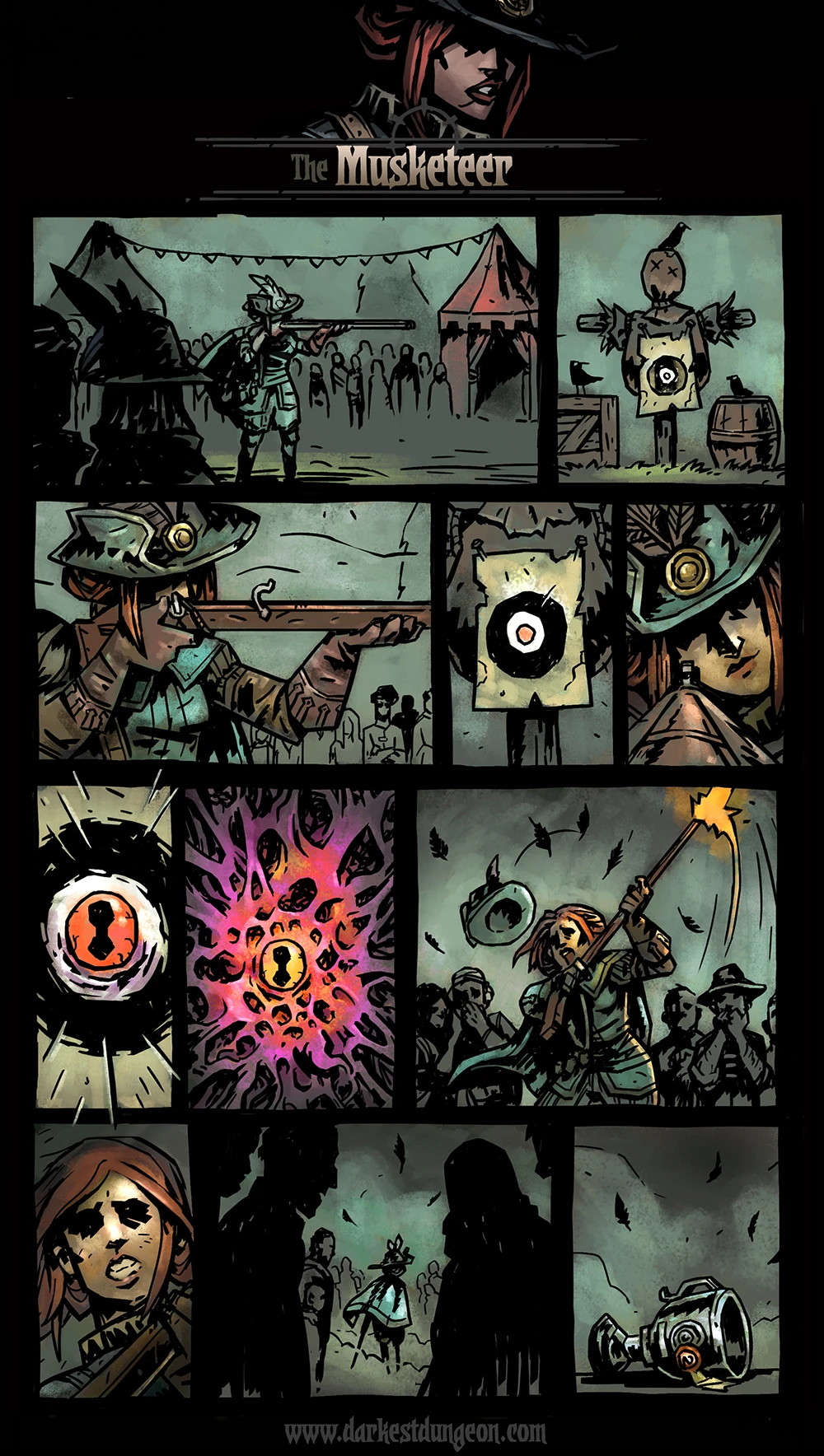
I decided to finally get on and pull The Cape of Four Pleasances into a PDF. You can find it on Itch.io, for free. There's some extra content compared with the original blog post; the only things I've cut are the introductory blog text referring to The Rest of All Possible Worlds and the pictures from Darkest Dungeon illustrating the crossbow/firearms connection.

Buy Darkest Dungeon®: The Musketeer - Xbox Store Checker
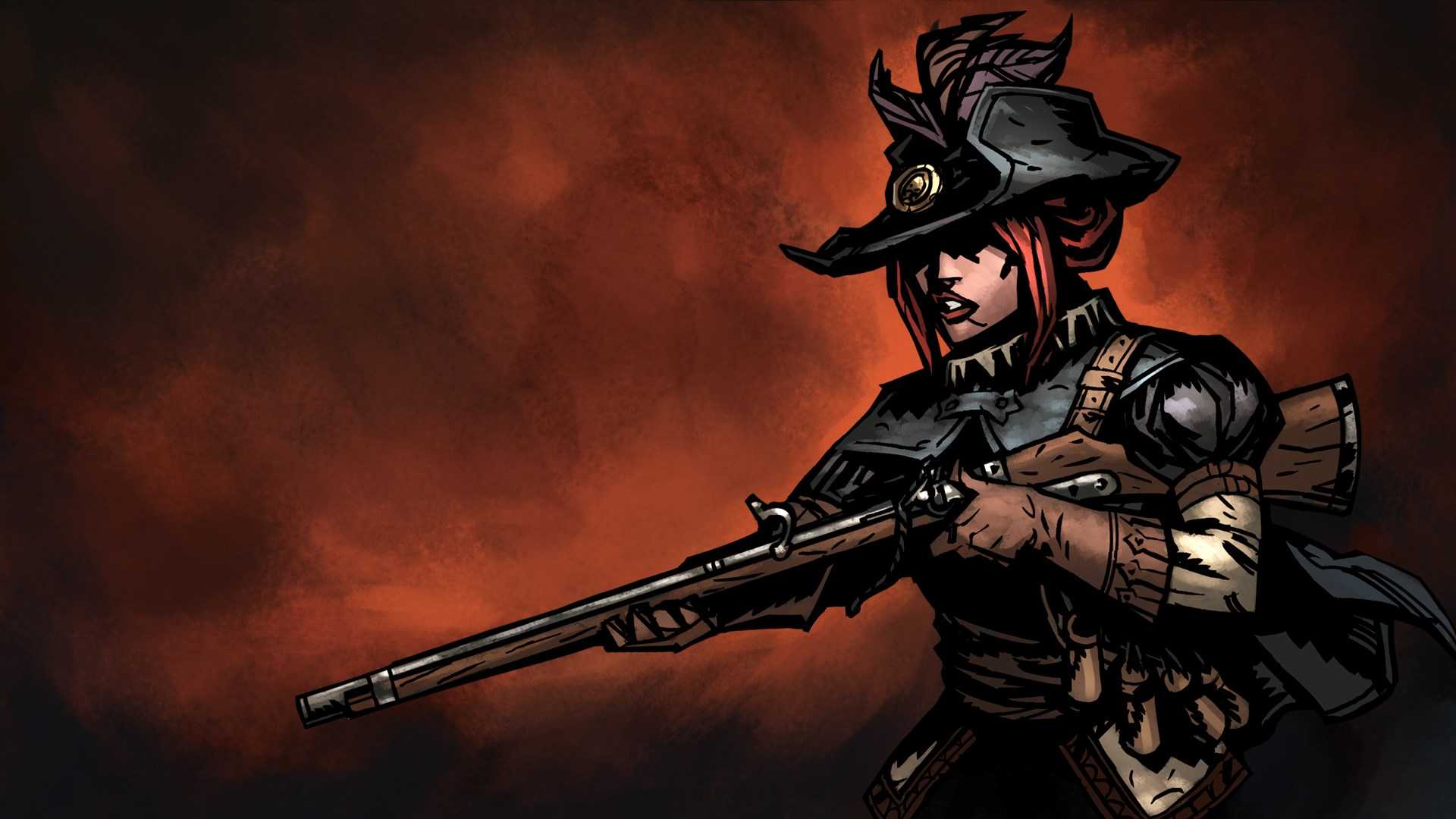
Musketeer and Arbalestof Darkest Dungeon.
Arbalest - Darkest Dungeon Guide - IGN
Admittedly, they have a somewhat different characterisation.

That aside, all other introductory material is in the PDF - and I may direct you to it here.

Friday, 12 December 2025

Punth: Ka-Punth Generator

Yoon-Suin inspired a certain amount of Punth: A Primer, notably some of the 'deliberate mystery' regarding the Qryth and their nature and motivations. Following my work reviewing the second edition of Yoon-Suin, it occurred to me that I hadn't applied used the structure of tables in the same way. Punth itself would make for a poor subject for something like the Starting Polity tables for the Hundred Kingdoms: the central regularising element of the Codes rather get in the way. But the fringe tribes of the Ka-Punth might benefit from this. 

Leadership Style

  1. Paranoid - the leaders of the tribe are constantly on the look-out for foes within and without, as well as more insidious dangers.
  2. Acquisitive - the leaders of the tribe seek more: more territory, more resources, more weapons.
  3. Vain - the leaders seek acclaim and flattery.
  4. Quietist - the leadership are keenly aware of their relative smallness and seek not to disturb their neighbours.
  5. Fanatic - be it grudge, whim, passion, mission or djinn's command, the tribe's leadership have a cause in mind and dedicate themselves wholly to it.
  6. Opportunist - the tribe's leadership look to enrich themselves at any opportunity, no matter how slight. 
  7. Scholarly - the tribe's leadership seek knowledge: of the Fallen Tower, of the Qryth, of the howling powers of the desert. 
  8. Indecisive - these leaders are given to putting off decisions and consulting as many relevant parties as possible.
  9. Bloody-handed - the leadership maintain power inside (and project power outside) with spectacular examples of cruelty.
  10. Unifier - the leadership seek to pool resources among the Ka-Punth.
  11. Scrupulous - the leadership are painstaking about details and proprieties.
  12. Client Kings - the leadership owe their rule or prosperity to a foreign power, and will act to benefit that power.

Manner of Rule

  1. Shamanic College: An Oligarchy tempered by Fits and Visions - and always open to Talent.
  2. Warlord and Comitatus: A Charismatic Warrior and their closest comrades, with succession determined by by impromptu democracy, ritual duals and heavy drinking (or a combination of the above.)
  3. Mage-Blooded Lineage: The djinn speak clearest to a particular family line, for reasons of their own. The result is hereditary monarchy, of a kind - with competition for right-hand man status.
  4. Kritarchy: Rule by makers of law, precedent and tradition and interpreters of law, precedent and tradition. No-one wants to do something unprecedented around a djinn, or for a djinn to do something unprecedented.
  5. Merchant Prince: The tribe is led by a master trader and negotiator who maintains their prosperity in the shifting state of the Punth borderlands. Until they don't.
  6. Priest and King: spiritual leadership and temporal power are given to two rulers, who each exercise full authority in their own sphere. The conditions for succession are particular to that sphere.
  7. Clan Council: the tribe regularly gathers into a Ka-Punth althing to decide on policy, distribute prizes and determine responsibility.  
  8. Daimonocracy: a djinn governs the tribe directly, somehow. 

Relation to Djinn

  1. No djinn are in this tribe's orbit.
  2. Spirits drift in and out of the tribe's awareness.
  3. One particular djinn has made this tribe their own.
  4. The tribe maintains careful ties to a number of shades and spirits.
  5. Several djinn take a special interest in the tribe.
  6. The tribe is fully attached to the djinn as a body.

Characteristic Customs

  1. This tribe wear ornate woven sashes to identify themselves.
  2. This tribe are 'born in the saddle' and form strong bonds with their mounts.
  3. This tribe has an excellent knowledge of Punthite Codes, frequently used for parody.
  4. This tribe are known as leaping, twisting, remarkable dancers.
  5. This tribe practices ritual scarification; whether or not the scars are displayed depends on the reason and placement of the scar.
  6. This tribe are known to use bizarre, difficult to master weapons.
  7. This tribe has a vivid and fascinating epic poem detailing an episode in their history committed to memory by some of their members (and often quoted by the rest).
  8. Many members of this tribe have a photographic memory.
  9. This tribe regards a certain animal as not just symbolic, but positively sacred. If domesticated, they will adorn them and their cages; if wild, they will leave offerings by their lairs.
  10. This tribe is either: a. Highly matriarchal, b. Highly patriarchal, c. alternate between a. and b. with the generations or d. Suspiciously egalitarian. 
  11. Members of this tribe endure physical hardship and other such trials with great forbearance. 
  12. This tribe is widely regarded as cursed.
  13. This tribe go veiled at all times, as far as anyone on the outside can tell.
  14. This tribe are very keen on falconry. This has very little use in war, but everyone thinks it's pretty cool.
  15. This tribe regards raiding as not just a pleasant occupation to be practiced when opportunity presents, but as a way of life.
  16. This tribe are staunch Chauvinists.
  17. Perhaps as a result of living so near to the followers of the Codes, this tribe are terrifyingly literal.
  18. This tribe are known to be forthright and dramatic, and are given to monologuing.
  19. This tribe really want to hear about your god or gods and add them to their pantheon.
  20. Members of this tribe are known as being insatiably curious.

Size

  1. A Company.
  2. A Regiment.
  3. A Brigade.
  4. A Division.

Relationship with the nearest power

(The nearest powers being: Punth, The Nirvanite Empire, the River Kingdoms of the South, the Eight Vales of Marikylo to the east, the Hydraulic Dwarves of the Dividing Mountains and - occasionally - the League of Civic Etiquette from across the sea).


  1. The tribe fear and avoid the nearest power.
  2. The tribe frequently raid the nearest power.
  3. The tribe have been implacable foes of the nearest power for untold generations.
  4. The tribe benefit from an unspoken understanding with the nearest power that preserves their lands as a buffer.
  5. The tribe are maintain active and profitable relations with the nearest power.
  6. The tribe are in a formal alliance with the nearest power.
  7. The tribe are being employed as proxies by the nearest power for their own ends.
  8. The tribe are being employed as proxies by the nearest power and actively wish to cease this arrangement.
  9. The tribe are very eager to gain the protection and resources of the nearest power.
  10. The tribe are attempting to draw the nearest power into conflict with their enemies, to maintain their own independence.

Assets

  1. A series of concealed cisterns and watering-places.
  2. A small stable of successfully tamed and broken Qryth beasts.
  3. A number of interpreters who have a well-developed understanding of the speech and script of pre-Qryth Punth.
  4. Control of a shady canyon that serves as a meeting-place and trade hub for Ka-Punth tribes.
  5. More gold (or other portable wealth) than the tribe knows what to do with, and far more than anyone suspects.
  6. A hidden, wondrously fertile valley.
  7. Control of an entrance to ruins of the fallen tower.
  8. Possession of an ancient Qryth device.
  9. A major pilgrimage site (be it for another tribe, many other tribes or a regional power) lies in this tribe's territory.
  10. A sect of talented healers and hedge-wizards bolster the tribes capabilities.
  11. A group of some of the swiftest and most secret couriers in all Punth.
  12. A surprisingly large and extensive library; the tribe's leadership probably know far more about the outside world than they are letting on.

Problems

  1. There is broad, popular discontent among the many of the tribe.
  2. There is discontent and conspiracy among the tribe's elite.
  3. There is strong evidence of a witch among the tribe, cursing them and employing sorcery for their own selfish ends!
  4. Disease ravages the tribe (if there are talented healers in the assets above, it's an especially potent plague).
  5. Famine or drought ravage the tribe (again, if there is a wondrously fertile valley in the assets above, it is a very bad famine indeed!).
  6. A deep-seated feud within the tribe has bubbled into new and fervid life.
  7. Infiltration by a regional power or simply another tribe threatens one of the tribe's assets - or the tribe itself.
  8. On account of war or depression or disaster, trade through this tribe's territory has slowed.
  9. A key resource - arms, mounts, coin, salt, ritual cauldrons - is in dangerously short supply. 
  10. There is a power vacuum at the head of this tribe, no obvious successor has yet stood up to direct it and no-one wants to take major decisions until they do.
***
Notes
  • Some prompts for this also come from the Khanates and March of Empire tables for The Wicked City.
  • As before, Punth has a lot of Near Eastern or Middle Eastern elements that can be whittled down by those using the Primer. This extends to the Ka-Punth. If you want to move away from the obvious Bedouin or Tuareg influences (or, indeed, Fremen - that is, Dagestani...), by all means do. Perhaps Bornu cavalry are an option. Or the Comanche. 

Saturday, 18 October 2025

Faufreluches: The World of Menchero

On the borders of the Thousand Day Regency there is a small world - not the smallest - orbiting a distant star - not the most distant - another stout bulwark of mankind's domain - not the stoutest.

Behold Menchero: a world of two billion souls, six major mountain ranges, two vast oceans, extensive wetlands, a bracing copper-scented atmosphere and mild paranoia.

Menchero underwent mild terraforming in the days of the Stellar Regulatory, chosen with the opaque criteria of the Machine-Minds. Settlement by lottery occurred some centuries after the Regent entered his tomb, following survey by a Janissariat expeditionary group. Government was initially by an oligarchy of founding families - who collectively prevented any one lineage from rising, even technically, to the rank of Magnate. Generational debts to Schematician planners, Secretariat licensors and Mews carriers made the world beholden to Pillar influence. This has, however, changed; as in systems spinwards of Menchero settled worlds have been devastated in flesh and spirit.

The government of Menchero is now in the direct gift of the Siegneuria. Talented administrators and leaders from Magnate cadet houses have been placed as governors there for the last century, striving to build up Menchero's resources and resiliency. Native Mencherene stewards watch them come and go, and say that Menchero's care rests with them, as it ever has.

What is it to visit Menchero? Set down at the Benxhan cosmodrome; drive out into the depths of Benxhan Rural, or weave your way into Benxhan Civic. On either journey your passage will be noted by the Vigiles, in their dull green uniforms.  Benxhan Civic will show you buildings clad in the local marmoreal, with its distinctive indigo veins. Members of the Gubernatorial Brigade patrol the Topaz Processional, clad in chrome helmets and brocade sashes. Their banners and motor-carriages show the mulberry and white-gold livery of the Lord Governor. Looking past them, one sees the terminus of the Processional, at the Chrysogonian Hall. Beyond this are the shrine towers of Celb. Drusus and Celb. Famke, with their exconjuratory corner pagodas.  Then the aggressively drab walls of the Continental Academy, and the standard-issue ornamental panels on the barbican of the Office of Public Tranquility. Further out? The Herbgarden Quarter, named for the self-satisfied financial street of Mint Row. 

Perhaps you went to Benxhan Rurual. Once past the marshalling yards and warehouses of the cosmodrome's long brownfield shadow, there are the wetlands and the scattered farm outposts. It doesn't all go one way - mostly, the goods that leave Menchero are canvas, ball-bearings, detergents and canned fish.

Menchero is (approximately) self-sustaining, and has been for some time - but the works programmes of successive governors increase the burdens on most. This is borne stolidly. There has been turmoil in Quoningen Civic as the result of a corruption trial - something to do with railway procurement, they say.  In the hills of Xianwijk Rural there has been strife, and religious turmoil: a dispute over the status of a local holy figure and her placement in the 'Anointed Generations'.  You may see convoys of the Mencharene Defence Force heading west that way, the 1st Security Division visible in buff tunics and oxblood webbing.

This is not the threat that most excites the attention of the governor, however. In the closer-than-comfortable outer galaxy, the foes of man gather. Machine-minds and rogue Janissaries are only part of the picture: rumours and psychic whisperings accumulate of the Empire of P'o L'u. Lords of the Regency begin efforts, subtle or gross, to uncover and repel the Cephalopodic Process and the dreadful absorption into that murky and lurid combine.

Will Menchero be prepared for the great trial when it comes? Which light of human settlement will be snuffed next? What could draw the tentacles of P'o L'u to this little world?

+++

Some persons

Brigadier Sebastian Kemecut - heads the First Security Division. Born and raised in Xianwijk.

Twice-Honoured Volcxken Bohelok - an official, and the most senior Mancherene native official within the Lord Governor's staff. A surprisingly keen historian.

Ioess Hanggata - Chief of the Benxhan Civic Vigiles. Increasingly convinced that he should retire soon, and very keen to obtain funds to enable this.

The Venerable Jorinde Saharca - Arch-Pastor of Benxhan. She belongs to the Echoing Circle of the Pastorate, who have a reputation for gnomic utterances, ascetic sensibilities and remarkable success with the stranger type of psychic. Saharca has been known to treat worldliness as a switch that may be flicked on and off - a habit that sits ill with more than a few of her underlings, especially those more worldly than her. 

Klaas Ergonote - Chair of the Second Directorate, Office of Public Tranquility. He is half-convinced that he could succeed on another world of the Regency, and that his talents are needed elsewhere.

Bombastimaches Greatorex - Lieutenant Governor, a Siegneuria appointment. Can't wait to return to Saiph, and spends a lot of time with the Glossatrices in the Herbgarden Quarter.

+++

Other notes

  • Manchero's emblem is a mountain with a long-feathered bird perching on it, between two white blossoming branches. The governor's own symbol (usually an obvious variant of his or her Magnate family's) can be displayed below in a small cartouche. 
  • This started life as a piece of 40k material; perhaps the greater military element shows. A world like Menchero is by no means the norm in the Regency, but such places do exist.
  • The emperor of P'o L'u is nameless and infinite. His marshals will happily tell you as much.
  • Further Faufreluches material (which you may in fact wish to read first...) may be found here


Wednesday, 24 July 2024

The Rest of All Possible Worlds: Pocket Items

There are all sorts of interesting devices these days. Bigger and better telescopes, dense almanacs, precisely fitted sextants. And since then there has been a market for portable versions of these. 

Bluntly, these are toys for rich men.  Few need a sextant at any moment, let alone a smaller, fiddlier, uncomfortable, easily broken version. But one or two people have found these very useful indeed - and not just as portable trade pieces.

Here's a few - others may exist.

  1. Within a stubby silver cylinder ticks A Perpetual Calendar. Turn shells of year and system on the outside to the indicted marks. Good for all Calliste, valiant attempts to indicate assorted high days and holidays of the Alamgir Empire and the Bronzemount Free State.
  2. The slim brass case of a Tally-Box. This can add, subtract and convert the Pavaisse Mark, the Pavaisse Trade-Weight and the Malmeric Gold Piece.
  3. Extending from a smooth horn box is a Microscope. The base of the box turns into a mount for whatever minuscule thing you wish to examine.  
  4. A carved wooden case reveals a series of ivory Rabdological Rods.
  5. A brass-half moon unfolds into a small Astrolabe.
  6. Set in velvet, a fine golden set of Scales and a set of tiny weights.
  7. A Mage's Chronometer. Perfectly mundane in construction, but allows the user to set a series of markers for when they can re-apply themselves to a spell.
  8. Folding wood and gilt Sundial (sun not included).
  9. Set in a rotating gimbal in a little pale box is a Mundane Lodestone. This points to the least magical place in a Ninety-Nine Mile radius of the user and is often used by insufferable wags at parties. 
  10. Some men hold the world in their hands; you hold it in your pocket. Or at any rate, an ornate and definitely accurate Globe.

As for some actual rules:

The value of any of these in working order is meaningful - at least a month's wages, say. It may be difficult to find someone who will buy it, however. 

None of the above meaningfully contribute to encumbrance. 

This is not an age of mass production. At most, there are a dozen items of this kind coming from the same artificer's studio. Finding an exact replacement outside the maker's home city and years after it was made will be difficult.

Spare parts are non-existent. You will need to find someone who can work from scratch.

It may be that whoever made the device in the first place lacked certain details - the knowledge of annual holidays in Transmontane Tsymric may be patchy in High Malmery.

There may be lands where all of the above is untrue! 


If you are ever in Cambridge, consider visiting the Whipple Museum.

Friday, 18 August 2023

A Trio of Chimerae

The Susvul, females of which are known as Sauvixen, partake of both the fox and the wild pig. They have the swine's distressing likeness to humanity, with the cunning of the fox. The torso of the Susvul is as that of a heavily haired pig - a red or sandy-coloured pig, though it has the legs and clawed feet of a fox. The tail is more like a fox's brush than the curled pigtail; the face is that of a thin-snouted hog, albeit with the ears and eyes of a fox.

All this might be outlandish enough. But from vulpine wit or porcine humanity, the Susvul somehow manages to make the sounds of human speech from its maw. It speaks, and if it attempts to converse, it will attempt to gain A) Food and B) Prestige. It is rare that a Susvul can negotiate human social structures with sufficient aplomb to obtain either, but this will not stop them from trying.

***

The Ippopolemos is a roughly equine beast, if larger than almost all horses: reddish in hue, with a human skull for a head and armoured forelegs. It is a horse as suited for battle as the hippopotamus is suited to the river. 

There are two legends of the Ippopolemos. Firstly, that it is the steed of the Great God of Battles - a fitting steed for the deity of the clash, and that it is full of yet more wrath than the rider. The Great God of Battles therefore carries not only shield and sword, but also the Adamant Bridle to restrain and direct the Ippopolemos. 

Therefore, if you see the Ippopolemos alone, there are two options. Firstly, that the Great God of Battles has let him off the rein - let him wander through the world of men.  A terrifying enough prospect. Secondly, that it is one of the Ippopolemos's progeny; as almost all divine beings, he is dramatically fecund - and not even the Great God of Battles would be able to geld him. These are perhaps less potent than their forebear, but less used to the bridle.

The second legend is that the Ippopolemos bears on his back not the Great God of Battles, but one of the many men who have thought that they might be able to control War, to steer and ride it to the place they desire. Those fools borne away by the Ippopolemos are rarely ever seen intact again.

***

Thanks to a very literal wizard, the lion has finally lain down with the lamb. The result was the Agneleon.

Having the head of a sheep and the body of a lion, it has all the appetites, drives and social inclinations of a herd ruminant with the physical might and range of an apex predator. The Agneleon laughs at fences, drystone walls and sheepdogs. It will cross many miles to find new pastures. If threatened, an Agneleon may run and pounce upon you, attempting to slash with its claws and butt with its horns. (Thanks to some quirk of enchantment, the Agneleon is more prone that most sheep to producing irregular numbers and shapes of horns).

The gold-ish fleece of the Agneleon can be used to produce wool, which is sold for a significant sum to a particular type of aristocrat. Actually sheering an Agneleon is, of course, rather troublesome. Their flesh tastes not quite like lamb (or hogget, or mutton) - it is also notably tougher. 

Agneleon Prideflocks are sometimes followed by very confused hyenas. 

***

The Ippopolemos originated here.

Friday, 7 July 2023

Six Strange Rivers

All these rivers resemble and behave like water. Most of the time. Sometimes it's murky water, luminescent water, weed-choked water, &c, but still water. Each river has a single course: there are no or few tributaries. Some may have gates, dams, cataracts and the like.

The Styx*

Flows Into: The Underworld.

Is the River of: Unbreakable Vows, Supernatural Boundaries.

One may cross it or travel it by means of: A dark, low, boat.

Piloted by: A grim, greasy, bearded ferryman.** 

At a charge of: A Coin, held in the mouth.

A Child dipped in the River: becomes Invulnerable.

Charon and Psyche, 1883, John Stanhope

The Bhallduin 

Flows Into: The Celestial Realm.

Is the River of: The Course of the Sun, Day and Night.

One may cross it or travel it by means of: A floating palace of mirrors and mosaics.

Piloted by: The Signs of the Zodiac, commanded by a Solar Hierophant.

At a charge of: The recitation of a litany from approved scripture.

A Child dipped in the River: Will never suffer the loss of his or her senses, other than by outright mutilation.

The Izonn

Flows Into: The Realm of the Forms.

Is the River of: Supernal Order.

One may cross it on: A giant bearded snake, with the voice of every single one of your schoolteachers speaking at once.

Piloted by: The snake decides where to go.

At a charge of: You must argue why you should get to ride the Snake in a dialogue with the Snake. 

A Child dipped in the River: Will always know what time it is, where they are and what is around them.

The Novar

Flows Into: The Prelapsarian Garden.

Is the River of: New Souls, the UnBorn, Virgil's Fourth Ecologue

One may cross it on: A canopied litter wreathed with plants carried by muscular tritons.

Piloted by: a pearl-white Pelican perched on the front of the litter.

At a charge of: One pomegranate per triton. (It is considered good manners to offer the pelican a fish.)

A Child dipped in the River: will be 'bonny and blithe and good and gay'.

The Thyrss

Flows Into: The Land of Cockaigne.

Is the River of: Intoxication, Second Helpings.

One may cross it on: A polychrome barge with numerous pavilions.

Piloted by: A mob of Maenads.

At a charge of: All the booze on your person.

A Child dipped in the River: will never suffer a hangover, or gout, or indigestion, or food poisoning.

The Sennus

Flows Into: The Dying Earth, the Age of Rust, the Æon of the Red Sun, the Slow Ragnarok.

Is the River of: Bitter Resolve, Leaden Darkness.

One may cross it on: A floating chariot decorated with Baroque statuettes pulled by moth-eaten mer-lions.

Piloted by: An old wounded soldier in a worn uniform.

At a charge of: A small bowl of your blood, mixed with myrrh.

A Child dipped in the River: will only die in battle.

The Eilex

Flows Into: The Blessed Lake and the Isle of Crowns.

Is the River of: Healing Rest, Useful Dreams.

One may cross it on: A carrack with an elaborate crenellated fo'c's'le. 

Piloted by: Twenty Assorted Medieval Kings under the command of a beautiful Damsel.

At a charge of: You must throw away all your weapons. Especially the magical ones.

A Child dipped in the River: will become a judge, a priest or a captain - if perhaps not literally, and in accordance with the circumstances they grow up in. 


***
You may decide for yourself what surrounds the river, and where in the realms of men it emerges. 
The cost of the ferryman's fee may be low, but actually making it as far as the ferry is hard. 
It is assumed that none of the various ferrymen below will drop you into the river accidentally.

This post is rather in the vein of Rheingold, et al - but somewhat less focused. 

* There's a bit of both Acheron and Styx here, admittedly. 
**Aeniad, 6.300

Friday, 24 March 2023

Riddles and Housekeeping in the Red Chamber

I have been reading the first volume of Cao Xueqin's 1760 novel The Story of the Stone, better known perhaps as The Dream of the Red Chamber. The translation is by David Hawkes, first published in 1973. It's one of the great classics of Chinese literature and a novel of manners; it even has its own field of study: Redology.

Anyway, Chapter 22 has a number of riddles, told as part of a game. I shall list these, with answers below under the picture - they all have fairly mundane answers, but Hawkes's translation, and the anthropomorphism of the riddles mean they could be used to describe divine messengers or elementals or other spirits.

  1. My Body's square
    Iron-hard am I.
    I speak no word,
    But words supply.
    [A useful object.]

  2. At my coming the devils turn pallid with wonder
    My body's all folds and my voice is like thunder.
    When, alarmed by the sound of my thunderous crash,
    You look round, I have already turned into ash.
    [An object of amusement.]

  3. Man's works and heaven's laws I execute,
    Without heaven's laws my workings bear no fruit.
    Why am I agitated all day long?
    For fear my calculations may be wrong.
    [A useful object.]

  4. In spring the little boys stand up and stare
    To see me ride so proudly in the air.
    My strength all goes when once the bond is parted,
    And on the wind I drift off broken-hearted.
    [An object of amusement.]

  5. At court levée my smoke is in your sleeve:
    Music and beds to other sorts I leave.
    With me, at dawn you need no watchman's cry,
    At night, no maid to bring a fresh supply.
    My head burns through the night and through the day,
    And year by year my heart consumes away.
    The precious moments I would have you spare,
    But come fair, foul, or fine, I do not care.
    [A useful object.]

  6. My 'eyes' cannot see and I'm hollow inside,
    When the lotuses surface I'll be by your side.
    When the autumn leaves fall I'll bid you adieu,
    For our marriage must end when summer is through.
    [A useful object.]


  1. An inkstone.
  2. A firework.
  3. An abacus.
  4. A kite.
  5. An incense-clock.
  6. A 'bamboo wife' - that is, one of 'those wickerwork cylinders which are put between the bedclothes in summertime to make them cooler'.
***

A brief piece of housekeeping for the blog - there's a number of posts I've written, on city or a region or a location, some moderately popular but without being tied to any given setting in particular and (generally) written to be quite self-contained. These are now under the label Translucent Polities, which seemed correct. Browse at your leisure.

Sunday, 6 November 2022

Rheingold, et al.

A companion piece of sorts, to We use Every part of the Dragon.*

Rheingold

If you take the Rheingold and forge it into a suitable personal ornament, it will give you.....worldly power.

But you have to give up......Love.

And it is guarded by......Seductive beguiling maidens.

It was set there by a Demiurge who may well work against you -.......A maimed manipulator with a rune-carved sceptre.

Alberich, from Die Nibelungen: Siegfried (1924, Fritz Lang).
See also here.

Nile Tin

If you take the Nile Tin and forge it into a suitable personal ornament, it will give you.....Power over depictions.

But you have to give up......Artistic Taste

And it is guarded by......Ibises with poisoned talons and sagacious arguments.

It was set there by a Demiurge -.......A feather-cowled cosmic charioteer.

Ganges Iron

It will give you.....power over conflicts, contests and contention.

But you have to give up......Regret.

And it is guarded by......Humanoid snakes who know all your shameful secrets.

It was set there by a Demiurge -.......A four-faced mother of many riding a crocodile.

Mississippi Lead

It will give you.....power over transactions.

But you have to give up......All hate, wrath and enmity.

And it is guarded by......Ghostly, loathsome, mocking horsemen.

It was set there by a Demiurge -.......A dark-suited cigar-smoking shady patrician.

Yangtze Silver

It will give you.....power over records and truth-telling.

But you have to give up......Sleep, forgetfulness and the ameliorative effects of time.

And it is guarded by......Giant, officious, bureaucratic carp.

It was set there by a Demiurge -.......A smiling, flower-wreathed immortal Princess.


"I have been in love with [RHINE] gold. I love its colour, its brilliance, its divine heaviness. I love the texture of [RHINE] gold, that soft sliminess that I have learnt to gauge so accurately by touch that I can estimate the fineness of a bar to within one carat. And I love the warm tang it exudes when I melt it down into a true [RHINE] golden syrup. But, above all, Mr Bond [SIEGFRIED], I love the power that [RHINE] gold alone gives to its owner – the magic of controlling energy, exacting labour, fulfilling one’s every wish and whim and, when need be, purchasing bodies, minds, even souls."

Mekong Copper

It will give you.....power over the 'terrestrial spiritual'. You cannot bar the doors of heaven or hell, but you can lead people into temptation or block chakras or make the worldly man into a saintly hermit.

But you have to give up......Trust.

And it is guarded by......Singing mummified monks.

It was set there by a Demiurge -.......Spiteful, demonic twins.

Volga Zinc

It will give you.....power over wildness: human passions, beasts and wilderness.

But you have to give up......Any sense of community or togetherness. You can become 'one flesh' with a partner, but cannot bond with anyone else.

And it is guarded by......Restless, boisterous warriors clad in pelts. 

It was set there by a Demiurge -.......A muscular temperamental thaumaturge who carries his ever-glowing furnace on his back.

Niger Platinum

It will give you.....power over 'Higher feeling' - elevated, refined sentiments or anything aspiring to the same.

But you have to give up......Any sense of novelty, invention or discovery. Nothing will ever be new to you.

And it is guarded by......Abusive lion-headed apes.

It was set there by a Demiurge -.......A Crone in elaborate robes and a tall headdress.

Cover of Tom Holt's Expecting Someone Taller - an introduction to Wagner parody for me.
Don't pay too much attention to the cover.

If you gain and try to alloy any of the above metals, every single listed Demiurge will appear and start hitting you with cricket bats until you stop. 


*Other inspiration from this review. I have moved away from the previously encountered scheme of the metals of the ancients - getting liquid mercury out of a river seems a troublesome business. So, I refer to this list, excluding the non-metals, as well as mercury and bismuth.

† So.....The origin of the Rhiengold is never entirely clear, either in the Volsungsaga or the Ring Cycle. I have elected to associated each metal with some distant creator - with their precise level of power kept fairly vague - hence demiurge rather than deity, &c. This is in keeping with one piece of inspirational media and also with the whole 'Gods brought low by their own tools/schemes' element of the Ring Cycle. 

Thursday, 28 April 2022

The Rest of All Possible Worlds: The Great Bifurcation

The Rest of All Possible Worlds is intended to detail the possible steps of an analogue to the eighteenth century Enlightenment in a fantasy realm. Which means I have been discussing it in terms of magical theory and practice (see: the last few posts on this topic). But this is also an Early Modern setting (meaning everyone can have muskets and coffee and tobacco and printed books and telescopes and....) - further, as some of my locations imply, I don't intend every player to be a student of magic. Nor do I intend that the print-works and gunsmiths to require magic to function (even if magic can assist them). Indeed, I would suggest that having magic within such a setting possess a fairly limited set of practical applications is entirely in keeping with the nature of the Enlightenment (see the passage here starting 'I'm going to tangent for a moment...'). 

Moreover, there's clearly some technological progress going on: soldiers have gone from matchlocks to flintlocks in living memory. Oceans have been crossed and trade between continents is fairly frequent. I don't want to outline a full 'Renaissance' and 'Reformation' for the continent of Calliste. But all the same, there was clearly a moment of change. One of those nebulous 'Turning Points' of history. 

Once upon a time, the line between 'mage' and 'mundane scholar' was not at all clear. A wizard devoted to pyromancy would write as much upon fire and combustable materials as spark-charms and the proper etiquette for addressing Balrogs. Even if a student at a hall of learning would go onto to enter an entirely mundane trade in the law courts or the chancellery, that student would have in all likeliness learnt some little theory of magic and attempted a charm. Of course, those with a great deal of magical talent might well have been taken up by one of the traditional colleges of magic - but the notion that a learned individual is able to prepare and fire off a cantrip would remain.

What changed? Several things.

  1. The printing press is invented. Learning can spread (as can many others things). The School of Malicarn's response to breakaway groups goes from contemptuous neutrality ("Yeah? Good luck with that.") to parachuting in an Overseer of the Faithful with sweeping powers. Division between Schools of the Majestic Vision rises. Civil strife ensues. 
  2. Mundane achievements occur. The press is one - but then the New World is reached by ship, apparently without magical aid. (The worn-out journeyman mage purifying the water casks doesn't count.) Even if later trips and expeditions are made with significant magical assistance (notably, the breaching of Qacenoit by Tsymrikane expeditionaries), it is very clear you need a mundane core to such an enterprise. The aristocrat with his court, synthesising authority, legal knowledge, martial prowess and magical advice is supplanted by the practical gentleman with a sufficiency of learning mastering the elements. 
  3. There is a change from private traditions to public institutions. Naturally, kings and nobles founded academies in the past. But there in the moment of change, new foundations begin with more specific remits - "Produce lawyers for the courts", "Produce surgeons", "Produce mages". Newly emerged Schools of the Majestic Vision also want Readers for the communities they preach to.*
  4. 'Thou shalt not suffer a witch to live' is not among the Words of Procophon. But the nonconformist and schismatic sects in Calliste have evolved a set of doctrines that spurn wizardry as a misuse of time and talent - "A field of good turnips would serve us better than this rose garden." Moreover, the egalitarianism that some of them profess make them suspicious of people who can fly and chuck around fireballs. Of course, given the controls that rulers place (or attempt to place) upon magecraft, which Archmages must make shows of obedience to, anyone trying to start a school of magic serving a given minority sect would have the odds stacked against them (at least in Calliste....).

Thus, the divergance of the magic-user and the mundane scholar. Nevertheless, there is something like a mundane Enlightenment going on 'out of focus' in TRoAPW. Experiments are being carried out, the earth and heavens mapped, laws reformed. But the presence of magic users, wizarding institutions, &c warp attention from these things as often as they help them. Social changes also follow a different path: anyone proposing a new theory of government or more egalitarian model of society must accept within it magic users; those opposing such a thing can point to magical ability as a portion of the hierarchies of this world (the technique of Pneumametrics is often cited for such a purpose). There are writers that grumble of an 'invisible society of mages' putting the brotherhood of mystics over the good of their neighbours.

Revolution, naturally, becomes difficult when the current ruler can call upon not only an army but wizards - and proponents of social change have already spurned the old customs of limited magical engagement with politics. The citizens and burghers of the Republic of Datravia will tell you that freedom from tyranny is quite possible: the mercenaries and exiles that were once Captains of the Ascendancy will tell you bitterly of the price.


*Those public-spirited souls hoping to encourage magical learning among adolescents would, in this period, found a number of gramarye schools.  

Saturday, 16 April 2022

We use Every Part of the Dragon

So, you've killed yourself a dragon (Ahem). Or maybe it's a sphinx. Now, you are going to want to do something with the carcass. It is well known what happens when you roast a dragon's heart, but what about the rest of it?

Sigurd sucks his burnt thumb, while Reginn sleeps. 
Carvings from the Hylestad Stave Church, photographs by Wikipedia.

Conditions: you must be the first person to taste of the dragon's heart (or other organ). If a beast larger than an ear of wheat tastes even a little of it before you do, they gain the powers mentioned below. Only one person may gain such powers from the organ in question. It must be roasted over an open fire. 

No part of a dragon prepared thus is actively poisonous, but the consumption of large quantities of dragon will cause severe (not to say fiery) indigestion.


You roast and eat....

You can now...

You might learn about...

But generally in the form of....

The Dragon's Heart

Understand the speech of the birds

Threats to your life

A smooth, unhurried radio newsreader

The Dragon's Lungs

Understand the voices of the wind

Adverse weather conditions

Hymns with too many verses

The Dragon's Liver

Understand the distant booming of the earth and rocks

Civil engineering

Blank verse

The Dragon's Stomach

Understand the speech of mammals

Threats to your sanity

A precisely-worded sermon

The Dragon's Kidneys

Understand the songs of the rivers and streams

Direct routes downhill

Patter songs

The Dragon's Intestines

Understand the creaking chorus of the trees

Threats to the environment

A local government meeting

The Dragon's Brain

Understand the speech of Dragons

Gold prices

Light opera

The Dragon's Spleen

Understand the eternal dialogue of fish

Shipwrecks

Sardonic, quip-heavy remarks

The Dragon's Pancreas

Understand the sibilant speech of reptiles

Sources of information and fresh fruit

Compact, smug, maxims

The Dragon's Sparkgland

Understand the dry monologue of flame

Things around the fire that you can't see

A theatre review

The Gods do not smile upon mixed grills or kebabs. You eat one organ at a time. Do not add any sauces or seasoning to the cooked organ, other than perhaps a little salt. 

It is generally thought that anyone who can accomplish the feat of slaying a dragon will be able to procure a suitable set of butcher's knives to joint the beast with relative ease.

An image from the 2015 film Tale of Tales

Successful dragonslayers dispute the proper drink to accompany the dish: answers vary from 'Mead' to 'Fresh stream water'. Some suggest 'Two healing potions, one drunk quickly before you eat, the other sipped slowly afterwards'. Perhaps the most popular response is 'Anything you can get your hands on'.

Thursday, 31 March 2022

The Rest of All Possible Worlds: Names, Planes and Alternate Realms

Noisms of Monster and Manuals has a Kickstarter up for a zine called In the Hall of the Third Blue Wizard. Being a discerning sort, you may very well wish to back it. Now, back to our scheduled programming.

This is another 'problem post' detailing debates and questions confronting the community of magic-users in TRoAPW

This is arguably a late-game problem to confront players; if not a 'theory of everything' then at least one that unifies a great many other questions. 

The student of magic - not of spellcraft, but the full scope of magic - eventually realises two things. Firstly, that magic is otherworldly, it is unnatural - or rather perhaps, it is as natural as a lightning strike or the eruption of a geyser. Secondly, that it is taught. Spells are not created by accident. To realise the existence of such things without aid is unthinkable. 

Two questions, therefore. Who taught mankind magic? Where do they come from?

The Question of Antecedants

Premise

As the Schoolmen will tell you, mankind has been visited by otherworldly beings before. Mages, generally speaking, hold themselves a little distant from the Schools - and so therefore, it is a shock for wizards to learn the truth of matters: that the oldest colleges and unbroken traditions of magic have ongoing relations with- and perhaps even absolute obligations to - otherworldly things. A mage will tend to be deep into the 'journeyman' stage of their careers before they learn this to be so, and some may never learn it at all. They had thought that the image of the diabolic compact was something purely from moralising dramas. 

The State of the Art

Those mages that are admitted to the deepest secrets of one of the old colleges are either so advanced that they have to know or are pursuing a particular line of research. Many had thought that the business of initiations and secret orders was beyond them - or, at least, would proceed in a fairly predictable fashion. There are hidden and obscure chambers even in the airy halls of magical sects and in these places, communion is had with alien entities. That this is less viscerally foul than popular dramatists would have you believe is not necessarily much comfort. 

Quite what that entity is will vary between institutions of magic. It may be something deeply squamous and non-Euclidian that should only be interacted with fleetingly. It may be one of the old folk, the eldar beings of grove and barrow who shun mankind, with their cold iron and their cold sun. It may be that the horror stories are true, and that brimstone-scented demons glower at the contracts made by long-dead archmages with their true names. Some traditions may have traffic with the potent dead, the Eidolons spoken of by the Words of Procophon - what would the Primus of Malicarn say to that? 

Other options are whispered of: the old, shrunken Gods of Horato, shining celestial Star Archons, the ancient sentient forces called Elementals, the bird-headed apkallu, the monstrous Elder Beasts, kings or princes of their respective kinds - even the mysterious masters of the Dreamlands called oneirocrats, who claim to have once been humans. 

Dealing with Antecedents

While the Question of Antecedents is unlike the other wizarding debates in Calliste in that disruptive innovators and revolutionaries have by and large been kept out of the circles that actually discover the truth of the origins of Callistan magic, there is still quiet but fierce debate on how best to engage with Antecedents. 

The old methods repeat the actions of the first masters of a tradition. Similar forms of etiquette, summoning rituals and offerings are repeated as they have been throughout the centuries. Those who stick to these in their original form are known as Ritualists.

There are then those who suggest gentle changes to ritual and negotiating technique. Surely different offerings are apt for different requests? What does an Antecedant want? No doubt it must be something, or why would they be in contact with human magic-users. Let us find out, and use that to our advantage.  The proponents of such a view are known as Realists.

Finally - and perhaps most controversially - there are those who propose dealing with Antecedants (though probably not the demons) as part of a grand moral compact. An Antecedant can communicate, after a fashion, therefore can be educated and brought to a proper state of understanding regarding mortals. Mutual advantage, respect and equality will spring from this. Those who assert this are known as Idealists.*

Implications

The Ritualists hope to keep everything running smoothly. A steady drip of magical knowledge inspiring generation after generation of new magic-users. Even those outside their particular tradition are playing their part by producing new spells in their happy ignorance. 

The Realists and Idealists, in their respective fashions, want to create a new wave of magic to radically transform the lot of man and produce a brave new extraordinary world. There are those who say that this has already happened. 

Of course, all the above relies on everything going to plan. That nobody interrupts the rituals or negotiations. That an Antecedent doesn't have a change of heart. That an Antecedant's fellows don't object to the noise.


The Realms Beyond

Premise

Antecedants have to come from somewhere. Wizards can summon beasts to do their bidding - they have to come from somewhere. Wizards can step into pocket dimensions to hide from their foes - where are they going?

So there are Realms, planes of existence beyond this one. There are existing gates between them and the right magic-user can make new breaches all of their own. 

Not that this would necessarily surprise anyone in Calliste. Wizardry is commonly known to have contact with the extraordinary, and the Schoolmen suggest a world of possibility through the teachings of the Majestic Vision. 

The State of the Art

Now, the mage that focuses on planar spells - whether they call themselves a Conjurer or a Master of Gates - is a relatively rare beast. Summons can be difficult to control, or unnerving - as can inter-dimensional travel. Still, there are enough of them to have discovered that magic is quite literally otherworldly. It is not merely 'an unseen arm' that levitates the stone, it is an intruding and unnatural force. 

This force is not produced by mages, but used by them - a wizard is not a man running across a field, he is a man holding a sail out to catch the wind to propel himself. In either case, effort is required, as is technique - but the source of power differs. Further, spells are living things - or at least as lifelike in their actions as a pennant or kite that moves like a living thing in the wind. Therefore, spells must have a medium in which to exist and exert themselves. 

The most obvious entry point of an otherworldly power is the very gates and breaches made by or known of by wizards. Few would dispute that other unknown portals must exist, but there are also those who claim that there are myriad 'pinprick breaches' through which magic enters the world. Either way, a current of magic moves through the world, with sufficient regularity to allow mages to cast reliably - but still with enough fluctuation to allow for concentrations of magic.

Quite what is in these other realms is suggested by the nature of some Antecedents above, but some may be places very like Calliste. 

Planar Policy

Having established to their own satisfaction that magic requires portals of some kind, several options present themselves to those mages who know and care. 

Firstly, to leave well alone. You may drink from the river, but do not think to drain or divert it. Most magic-users inhabit this position by default. Such mages are known as Pastorals, for their (perceived) rustic simplicity and humbleness. (A Pastoral can still live, of course, in a sapphire pagoda with platinum wheels pulled by manticores. Wizarding humility is a strange thing.)

Secondly, to plug every breach and drain magic from the world. Even if this is possible (and those who assert the existence of 'pinprick breaches' do not think it is), no wizard wants to do this. 

Thirdly, to make (eventually) as many breaches as possible and let magic rush through every corner of the world. Let there be intercourse with every realm! Wealth, beauty and novelty await! A strange and brilliant new world! For their willingness to connect, those who hold this position are known as Conjuncts.** 

Fourthly (and finally), to establish a state of being in which there are as few breaches and portals as possible (to as few realms as possible) while maintaining a given flow of magic. Those who long for such a thing are called Autarks. The very danger of summoning and planar magic makes this a desirable position. 

A devout follower of the Majestic Vision might well be an Autark, looking to restrict portals other than to the Hereafter. It may even be that humanity could come into full ownership of a certain small number of realms, freeing it completely from the control or influence of demons and eldritch things. Those Autarks who hold to this last point are deeply interested in those Antecedents called oneirocrats.

Implications

Neither Conjuncts nor Autarks have advanced their plans very far yet, of course. The Autark model is more appealing to wizard-friendly magically inclined princes and ministers: fewer risks involved, more chances to control trade. The loop of worlds described by Patrick Stuart's Great Fold is something like what Autarks might produce - though naturally, all involved would rather not link in the realm of terrifying mega-fauna. 

Conjuncts quite like the idea of Planescape's Sigil. The more sober might acknowledge that most lands will not become a grand inter-dimensional freeport, but rather take their place in a layer of one of many realms bound together like a quire of paper. In this case, some of the descriptions of commerce between realms in Stuart's Great Fold describe backwaters, while wizards surf the tide of magical energy flowing between worlds. New mage-tyrants will arise, reshaping the world as they see fit, fighting their competitors and outside invaders. 

This could very easily turn into Kenneth Hite's Qelong.  While the archmages turn into the main characters from Zelazny's Chronicles of Amber. And you can't tell if your land is being invaded by the pike-and-shot regiments of your terrestrial neighbour, the world where the Horatione Empire never fell and now has zeppelins and mechanical walkers (but no gunpowder), the Legions of Hell, the frost giants or King Arthur - and it might not even matter. 

Comments, nitpicks, &c welcome - I'd rather work out the problems now than later.


*The actions of Dr Faustus have something of the Ritualist in them; the Government of New Crobuzon in Perdido Street Station are something like Realists in their dealings with Hell and the Weavers; and some of the later dealings of the protagonists in His Dark Materials form an image of the Idealist school of thought. 

** The malevolent Conjunct probably looks (or at least, acts) rather like the cultists of Lovecraftian fiction. A benevolent Conjunct owes something more instead to Ursula Le Guin and the later entries in her Earthsea series. If they aren't Heraclitan all-is-flux types.

Monday, 14 March 2022

The Rest of All Possible Worlds: Spell Schools

Another 'problem post' detailing debates and questions confronting the community of magic-users in TRoAPW

The spells quoted below are from The 52 Pages. 

Premise

That spells do different things is so obvious as to be not worth mentioning. That different spells sometimes work in very similar fashions is less readily apparent. Fire Dart and Flame Sphere have an obvious affinity, as do Detect Auras and Detect Magic. But despite the similarity between Create Rock and Conjure Wind, the precise nature and underlying logic of these spells is disputed. And given that different mages create and use different spells with very similar effects (Restimar's Instant Boulder against Belisar's Manifestation of Granite), the disputation gets even more troublesome. 

The categories spells are placed into are referred to schools. This conveys both that these spells are of a kind or group, that they are of a custom - a school of thought or use of magic - and that to manifest the features of this school, spell formulae and use must be taught.  

The State of the Art

Aside from the most obvious examples - as Fire Dart and Flame Sphere above - there has always been dispute over how to categorise spells. Wizard disputes with wizard, academy with academy, tradition with tradition. The growth of magical colleges that merge wizards of different traditions has made this ever more apparent. Where one stands on a theoretical position becomes ever more important and may dictate a course of study, the growth of magical talent or entry into a particular circle of mages. 

Pragmatic picking and choosing is still prevalent outside the (sometimes literal) ivory tower - but is now influenced by the ever-wider theoretical grounding given by masters to apprentices. Indeed, many wizards may not consciously identify with any given classification system at all. 

The disruption of older methods (by the Tabulators, or the Anti-Grimoireans) has created new ground for a grand division - not just between whether Dancing Lights is Illusion or Evocation, but if one should categorise on what a spell effects or uses or on what process a spell brings about

Thus, once the majority of spell catalogues in Calliste categorised their spells in the first fashion referring to 'The Lore of Shadows' or a 'Master of Gates'. Newer catalogues refer instead to 'the School of Illusion' or a 'Conjurer'. Those who adopt the newer method of categorising are known as Teleotaxists

Opponents of the Teleotaxists

Teleotaxists are most obviously opposed by Ontotaxists. By definition, these are a dedicated group of wizards with adequate free time and theoretical knowledge - rather than a hodge-podge coalition. The easiest way to tell a Teleotaxist from an Ontotaxist is to look at the titles they sport: does this wizard refer to herself as a 'Master of Winds' or a 'Ventilating Thaumaturge'?

An Ontotaxist model of the argument refers to Ontotaxists as 'Masons' and Teleotaxists as 'Millers'. The former is working with a medium, can perform both functional or artistic purposes - and more respected than a Miller. Whatever the relative wealth of a miller, they are far more commonly encountered and lack the cachet of a mason. Teleotaxists, for their part have more or less taken on the term Miller happily, employing bucolic imagery (maliciously whistling from morn till night), and gleefully referring to Ontotaxists as 'grist'. ("Your stony obduracy, oh mason, will be ground to the finest of powders by our ever-turning mill!")

The Teleotaxists Divided

Of the Teleotaxists, there are those that recognise that the division between Ontotaxists and Teleotaxists is less than useful. Noting the employment of nouns by one side and verbs by the other, they have attempted to to bridge the divide using gerunds. This has made them very unpopular and the Gerundists are very rarely heard from. 

The Polytaxists attempt to use both the Ontotaxist and Teleotaxist systems at once. This results in spells being referred to by long code strings, as 'BC/𝝭𝝘/7' or 'Leb - 2314 - p - 2477 - pf' or ever-growing combinations of arbitrary syllables as 'DivBanMiCha' - or strange blocky characters from constructed languages that are basically illegible  even to wizards, and troublesome to produce in freehand in one's grimoire. Polytaxists are derided as making a language fit only for golems, and thus speaking a language fit for golems - and thus jests abound that they are, in fact, golems. 

More successful than both are the Cryptotaxists. Such mages attempt to classify spells by using additional descriptors to hint at a mysterious source that cannot yet be detected or adequately defined. Some refer to a set of strange colours: 'This is a Blue spell'; 'This enchantment draws from the pool of Green magic'. Other modifiers are sometimes used : 'Of the Celestial School', 'A Perfumed incantation'. Still more Cryptotaxists refer to adjectives deriving from proper nouns, however derived: 'a glyph Telmarine'; 'an incantation Archenlandoise'.  Cryptotaxists are regarded as being somewhat pretentious, but they are still better received than the Polytaxists. 

Implications

Spell classification, of course, doesn't change the nature of the spells being cast. What the division between Ontotaxists and Teleotaxists does is change what spells are taught and by whom. The pyromancer is only subtlety different from the evoker, but if mages professes an expertise in both Transmutation and Divination rather than Change-Spells and Knowledge-Spells, there will be even less overlap. 

And the root structures of spells begin to change as well. As noted above, spell formulae have always differed. Therefore, a spell formulated with the firm belief that it is of one school rather than another will differ as well - if you have been used to one classification, moving to another may be difficult. Not impossible, but with that added layer of re-learning involved. 

Perhaps in time this might literally wall off Ontotaxists from Teleotaxists. All known spells (written or otherwise) have both 'noun elements and effects' - and 'verb elements and effects'. It would be near impossible for a spell to not do so. But as nounal Ontotaxists split from verbal Teleotaxists, so might spell formulation techniques. In time, even if all parties involved are using the same magical language, the same scripts for their grimoires - an Ontotaxist might be completely unable to parse a Teleotaxist-written spell, even a simple one. 

Does anything stand in the way of a great divide in Callistan magecraft? Well, non-magical patrons tend to look on the spell school debate as a wizard's pastime. Not terribly useful, but part of the cost of having spellcasters around. Of course, if an academy of wizards is in the service of the King for a particular purpose and the debate is preventing them from achieving that purpose, then there will be an intervention.

Less prominently, the mass of working journeyman mages who must and will use whatever spells they can get their hands on are a safeguard of sorts against divergence. Ad-hoc techniques to parse and align spells will be drafted every day by those at the coalface. But with growing interest in the uses of magic to address broad problems across society, and with growing efforts to promote magical understanding, starting with the academies, who knows if the one phenomenon will keep pace with the other?


Comments, nitpicks, &c welcome - I'd rather work out the problems now than later.

An obligatory reference to this part of Magical Industrial Revolution