Wednesday, 10 July 2019

Crystals, Healing and Mine-Dwellers

Crystals are verboten; taboo for the latter-day OSR (or other current term) designer. The Artpunkifex Maximus has proclaimed it.

But if I may crave a moment of your time....

To exaggerate and condense somewhat: the Middle Ages in Europe didn't have science, they had natural philosophy. This leads to interesting conclusions. 

St Hildegard of Bingen wrote about the origins and potency of crystals and gemstones in the Physica, or Book of Simple Medicines. I'm taking this translation from Mark Atherton's Selected Writings published by Penguin Books.


All gemstones contain energy and moisture. They terrify the devil, who hates and despises them because he remembered that their beauty appeared in him before he fell from the glory which God had given him, and also because some precious stones are created from the fire and energy in which he himself has his punishments. It was in fact by fire that the devil was defeated, through God’s will, and he fell into fire, just as he is also defeated by the fire of the Holy Spirit whenever people are rescued from the devil’s jaws through the inspiring breath of the Holy Spirit. 


Precious stones and jewels have their origin in the East, and in those areas where the heat of the sun is particularly strong. The mountains that occur in such areas have a great heat, like fire, which comes from the heat of the sun; similarly the rivers that flow in these regions are always boiling hot, due to the same great heat of the sun. Accordingly, when at times the rivers flood and break their banks, increasing in volume and rising up to the mountains that are burning with the great heat of the sun, and when these come into contact with the rivers, then, in those places where the water makes contact with the fire, they throw up a kind of foam, in other words they ‘singelent’, that is, send out spray, just as a burning piece of iron or stone does when water is poured on it. And so the foam hangs in those places like ‘glitten’ or glue, and within three or four days hardens into stone. When the flood of waters has ceased and the waters have resumed their normal courses, then the drops of foam, which remain hanging at various locations in the mountains, are dried by the heat of the sun according to the various hours of the day and their corresponding temperatures. The stones therefore assume their colours and powers according to the temperature of the hour of the day at which they are formed, and once they have dried and hardened into precious stones, they drop like scales from their locations and fall into the sand. And when the rivers rise again in flood, they carry away the gemstones and deposit them in different regions, where eventually they are found by human beings. Owing to the many gemstones which they bring forth in this way, these mountains shine as bright as day. 

.....

In this way, then, precious stones are made out of fire and water; they therefore contain energy and moisture within them and they have many powerful qualities and effects, so that many actions can be carried out with them. These actions are nevertheless good and honest and useful to human beings, and not works of seduction, fornication, adultery, hostility, murder and the like, which are vices in opposition to human beings. For it is the nature of precious stones to seek the honest and useful and reject the evil and false in human beings, in the same way that the virtues throw off the vices, and in the same way that it is impossible for the vices to act in conjunction with the virtues. 

All a bit like that, really. 

So: let's say crystals can heal you quite reliably and have naturally very useful properties.
But only if you believe in the true faith.
And certain crystals only work for certain ailments.
And they don't seem to work terribly quickly.
And precious stones are still sort after and expensive.

Onyx is warm and grows at the third hour of the day in thick cloud, when the sun burns powerfully but is covered by various rising clouds which prevent it from appearing through them because of their flood of waters. Thus the stone does not hold great heat of fire, but it has the warmth of the air, for its origin is in the root of the sun and the conglutination of various clouds. Onyx therefore has great virtues against illnesses arising in the air. 

For dimness of the eyes and the like, or anything due to ‘augswern’ [complaint of the eyes], place good, pure wine in a bronze, copper, or iron receptacle, add onyx to the wine and ‘beizze’ [steep] it for either fifteen or thirty days. Then remove the stone, leaving the wine in the receptacle, and touch the eyes each night with a little of the wine; they will clear and become healthy. 

For pains in the heart or sides, warm an onyx in your hands or close to your body, also taking wine again and heating it in a vessel over a fire; then remove the wine from the fire and hold the onyx over the steaming wine so that the sweat coming from the stone mingles with the wine. Finally put the stone in the hot wine and drink it as it is, and the heat in your heart or side will cease. 

For a complaint of the stomach, prepare wine with onyx as described and then prepare a ‘sufen’ [soup] from the wine with hen’s eggs and flour. Make and eat this frequently; it will purify your stomach and make you healthy. For a complaint of the spleen, cook the meat of a goat or lamb, put the cooked meat in the wine and onyx mixture as described above and eat the marinaded meat like those dishes made by marinading in vinegar. Do this frequently; the spleen will heal and the swelling stop. 

I suppose you could readily find a list on your own, but our fantasy crystal healer might propose:
Diamond or quartz as valuable in strengthening the bones.
Onyx brings relief to the bilious.
Beryl for disorders of the blood.
Smaragdus to remedy the eyes and nerves.
Jacinth for the fever.
Sapphire against poisons and venoms.
Topaz to clear the windpipe and purify the air.
Amethyst to cleanse the bowels.
Chrysophrase for the phlegmatic.

And if someone falls in a fit of epilepsy, then - right where they are lying - place a piece of smaragdus in their mouth, and their spirit will revive. And after they have got up again and taken the stone from their mouth, they should look at it attentively and say: 

‘As the Spirit of the Lord has fulfilled the circle of the earth, 
So may the house of my body be filled with his grace That it may never again be afflicted.’ 

They should repeat this again and again on the following days in the mornings, and they will be cured. But they should take care always to have the same stone about them and look at it every day in the early morning, and while they are looking at it they should say the words given, and in this way they will be healed. 

And if all the above seems unlikely or preposterous, even with those conditions, even in Medieval fantasyland -

All the above only applies to Dwarves, the children of the stones.

Dwarves have good reason then to mine so greedily and so deep: they seek not only riches, but health. A dwarf with a spouse on death's door is expected to be in the mines - not because they are heartless delvers, but because this is where a cure might be found.

Incidentally, this means that when Dwarves meet human monarchs, their crowns make them look a little like a man wearing a hat decorated with aspirins. 


Tuesday, 2 July 2019

Go Sackville-West, Young Man

At a market second-hand bookstall I found a copy of Vita Sackville-West's The Eagle and the Dove. I have no significant interest in her work, but a friend is rather interested and it was a nice enough (and cheap enough) edition to merit a purchase.

Vita Sackville-West and the Bloomsbury Group as a whole have sufficient literary-historical pedigree to demand their own study, so I shall not attempt to summarise anything about them here. The Eagle and the Dove is a study of both St Teresa of Avila and St Therese of Lisieux. I knew little about either going into this, but this was a pleasant enough read: a popular history, first written in 1943. I suspect that a modern equivalent on the same subject would be rather less palatable to me.


At any rate, I found it moderately engaging (and I have some interest in British reactions to Catholicism...). But the true prize came in passages like this:

This is central Spain, no country of sunny patios, fountains and orange-blossom, but a dour and ascetic land where the men go wrapped in cloaks, a corner thrown across the shoulder, so muffled that, with the hat pulled down over the eyes, the fine and bony features are almost hidden; a land where honour is of fierce importance, the quarrel quick and mortal. It is a common and conventional error to regard all Spain as the gay land of romance and song. Excessive and without compassion, the spirit of El Greco's Toledo in its lurid storm comers closer to the tortured intemperance of a fanatical people. Spain, in some aspects, is terrible, not soft, not pretty. Castile, not only geologically, is made of granite. Northern though it is, there are no mists here, no softening of the naked ashen plains, but a clear light relentlessly discouraging dreams and fallacies, and leaving only the realistic truth as these people see it. Their imagination runs along the same stern lines  - the polished lance-like imagination of an honourable chivalry. Don Quixote rides these plains on a gaunt horse. He may be an idealist, but realism always keeps him company. It is impossible to lose the consciousness of strife in this country where a gritty dust stings the eyes in winter or a shadowless sun burns the hands on the reins in summer, as to remain without the enlargement of the spirit begotten of all desolate places. 

Now, there is something of the stereotype in this: not just the denial of a romantic Spain, but in the invocation of a the 'quick-blooded Latin' and the superfluous mention of Don Quixote. The Spanish Inquisition and the treatment of Jews and Moors does not go unmentioned, though it does not occupy the foreground of the book. I would not like to comment on Sackville-West's knowledge of Spain, or if the Spain of Franco and the Civil War was in her mind whilst writing this. My own knowledge of Castile, let along Spain as a whole is limited and as much through literature as experience.

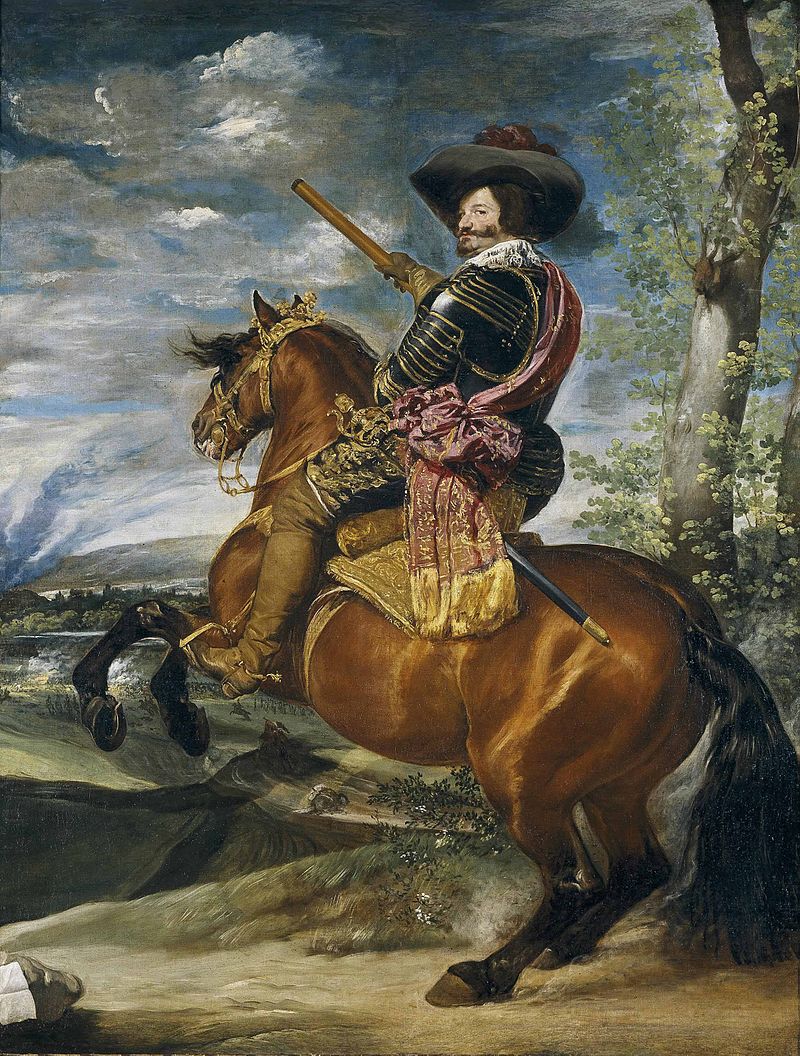
However, I still found this quite a nice descriptive passage, evocative of bottom-up historical considerations and daily experience - and an explicit counter to the Spain of Philip II, the Armada, the Count-Duke of Oliveres and Velazquez at the Royal Court.

Velázquez - Conde Duque de Olivares (Museo del Prado, 1634-35).jpg
Equestrian Portrait of the Count-Duke of Oliveres, by Diego Velazquez
Found here.
In fact, it was almost a perfect invocation of major elements of Kapalleron, a southern Imperial province in Terrae Vertebrae. Something that had struck my mind before I had found an example of it. Reading Sackville-West, I think that Kapalleron might still have some life in it - especially as the land north of Punth.

Asceticism, not indulgence was again the note, as asceticism compounded of soldierly honour and religious intensity, a mixture of sobriety and excess, severity and pride. There was the background of high deeds, celebrated in romance, a romance not dressed in silks and velvets but leather and chainmail. There were stone floors and thick walls, all grey; and between the battlements the views opened over the grey plains where a convoy of waggons slowly crawled or a messenger rode swathed and huddled on his mule.


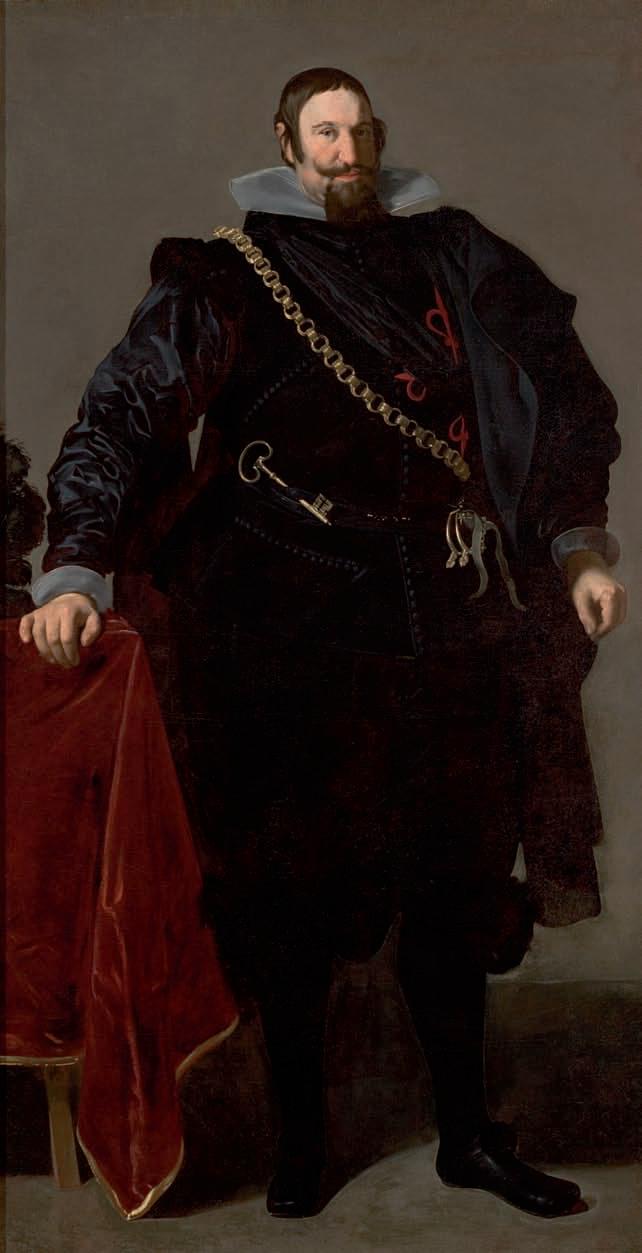
Velazquez - condedqolivares03.jpg
Clearly an ascetic.
This is Olivares by Velazquez again, found here.

Saturday, 29 June 2019

Priests, Beasts and Sacred Geese

If we consider a number of cases from real-world history and religion:

The Sacred Geese of Rome.

'What's that, Mr Hissy? Timmy's fallen into the aqueduct?'
(Image found here.)
This is a beautiful picture. Those are some implausibly fancy goose houses.

The Sacred Bull of Apis, in the Histories of Herodotus.

Crocodopolis, on the Nile and the sacred reptile there within.

The Sacred Cow of Hinduism and the various animal or half-animal incarnations of Vishnu.

The imagery of the Lion of Judah, or the Brazen Serpent.

The prophet Elijah being fed by ravens.

Odin's surveillance ravens; the cats on Freya's chariot and the goats that pull Thor's.

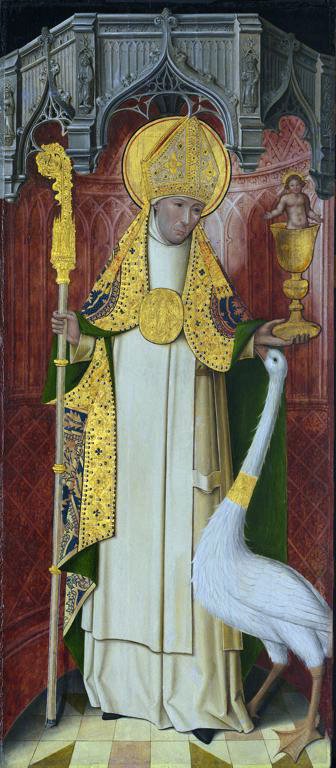
The tame bear of St Corbinian and the Swan of St Hugh of Lincoln.

Hug-lin-pi.jpg
St Hugh of Lincoln, being pestered at an inopportune moment.
Image found here.

To say nothing of literature:

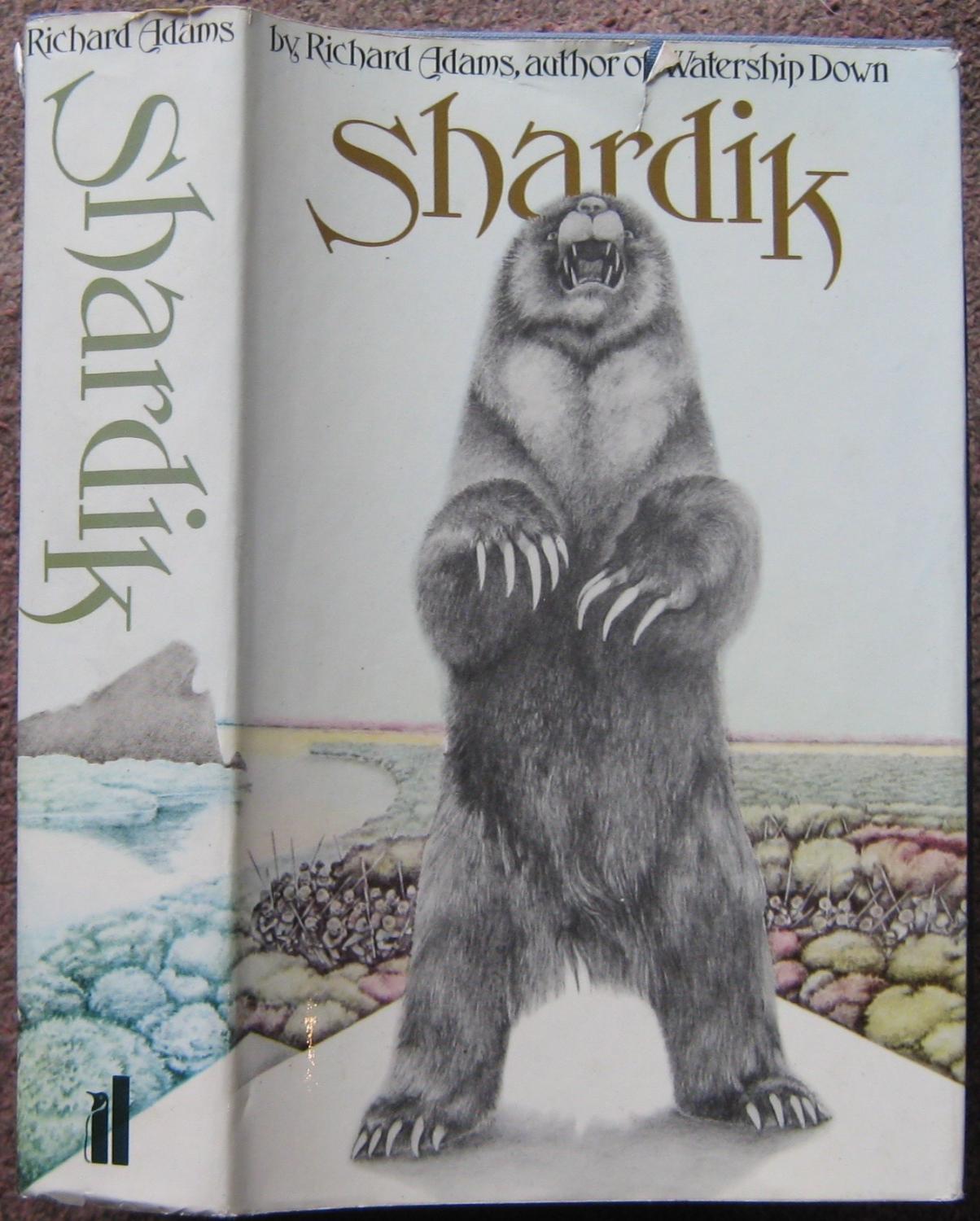
Shardik, the titular great bear of Richard Adams's novel.

Image found through AbeBooks.
Shardik is a pretty major influence on this post. That and the goose painting.

The Chronicles of Prydain, with their oracular pig and assistant pig-keeper.

The Chronicles of Narnia, with Aslan, who is definitely a lion, not one who is strong as a lion (as Trumpkin finds out) - and certainly not a tame lion.

Small Gods, and its numerous invocations of incarnate deities...

There is ample reason for clerics (prophets) to have an animal companion of some kind.

However: there is a distinction between a priest having a pet and a divine presence in the shape of a beast. The one is commonplace and adds little thematically; the other has some degree of greater interest. The distinction is much like that of G K Chesterton's Father Brown: he is a priest who solves mysteries, not a detective who sometimes says mass.

So, I shall determine a number of states in which a prophet in The 52 Pages might have a Sacred Animal around them and how this effects play.

This is deliberately dissimilar to spells like Call Familiar or Befriend Beast. The latter could hypothetically co-exist with the Sacred Animal.

Firstly, there is a theological status to consider:

1. Animal is God. Trying to herd or constrain the Sacred Animal is blasphemous. Aslan is not a tame lion. It has a direct line to the deity, or the Animal is the deity.  + 2 spell casts a day

2. Animal is Beloved of God. The believer must not direct the Sacred Animal, but may advise it as best possible. Any true Sacred Animal will listen - at least some of the time. No goad or leash is permitted. + 1 spell cast a day

3. Animal is Sacred The Prophet is the Animal's keeper. They are blessed, if not outright divine and may be guided or questioned - as a cleric might a hermit. Nonetheless, harsh or abusive treatment is blasphemous.

Then there is the nature of the animal to consider:

A. Animal may readily Ignore Man A bear, a lion, a dragon. Pretty terrifying, largely unstoppable. None of these could be a domesticated animal.  Start with 2 extra spells of a suitable school.

B. Animal may be Led by a Man A bull, a horse, a crocodile - you wouldn't want to tangle with them, but they are not the most fearsome of beasts. Some may be domesticated. Start with 1 extra spells of a suitable school.

C. Animal is Easily Controlled by a Man A goose, a dog, a tortoise - they may be actively domesticated  they certainly can be picked up.

The Sacred Animal functions rather like a Wizard's spellbook - it must be present at some point throughout the day for the Prophet to cast spells.

The movements of the animal are determined by the factors above, the player's choices and the GM's decisions (as well as what kind of animal it is - a bird can fly, but may be unwilling to go underground; a sacred whale is subject to numerous restrictions). A Sacred Animal might be tougher and cleverer than other animals - but it can still be killed (in what will doubtless form a new portion of divine scripture).

In play, (not that this has been tested) a Prophet with a 1A Sacred Beast (for instance) has the assistance of the Tiger Avatar of the Bone Goddess (IE, a larger than usual tiger will turn up and rip into your foes) and more spells and more chances to use them. However, said tiger goes where said tiger pleases.

A Prophet with a 3C Sacred Beast is rather in the position of Brutha from Small Gods (yes, I know the tortoise is Om himself); more guile and craft will be needed, though the player is freer to move around.

A 3A Sacred Animal is rather like the novel Shardik (never mind the actual theology of the Ortelgans); a massive bear roughly speaking on your side, but still a massive bear that goes it's own way.

A 1C Sacred Beast is powerful and portable - but the prophet is still compelled to acknowledge their demands, which may be awkward.

Dragons and other outsize beasts probably deserve an 'A+' ranking: you really can't follow them - but you don't have to so much; their spell granting influence lingers a little longer. They don't turn up often, but when they do, you have a dragon by your side, with all that entails. No A+ Sacred Beast can be a 3.

A SLIGHLTY SILLY GRIMDARK ALTERNATIVE:

You are playing a Prophet from the Church of Stern Feudal Monotheists. There is an inquisition, a hierarchy and flagellants.
The Church of Stern Feudal Monotheists once had an sainted exorcist that trapped demons in pigs. The pigs have been kept over the years and may be convinced by sundry means to perform magical spells for the benefit of the Church.
As a Holy and Devoted Servant, you have been entrusted with their use and will presumably evolve a humorous buddy-cop style relationship between yourself and a pig that occasionally speaks with a voice straight out of diabolical central casting to offer you a Faustian bargain.

A SLIGHLTY LESS SILLY GRIMDARK ALTERNATIVE:

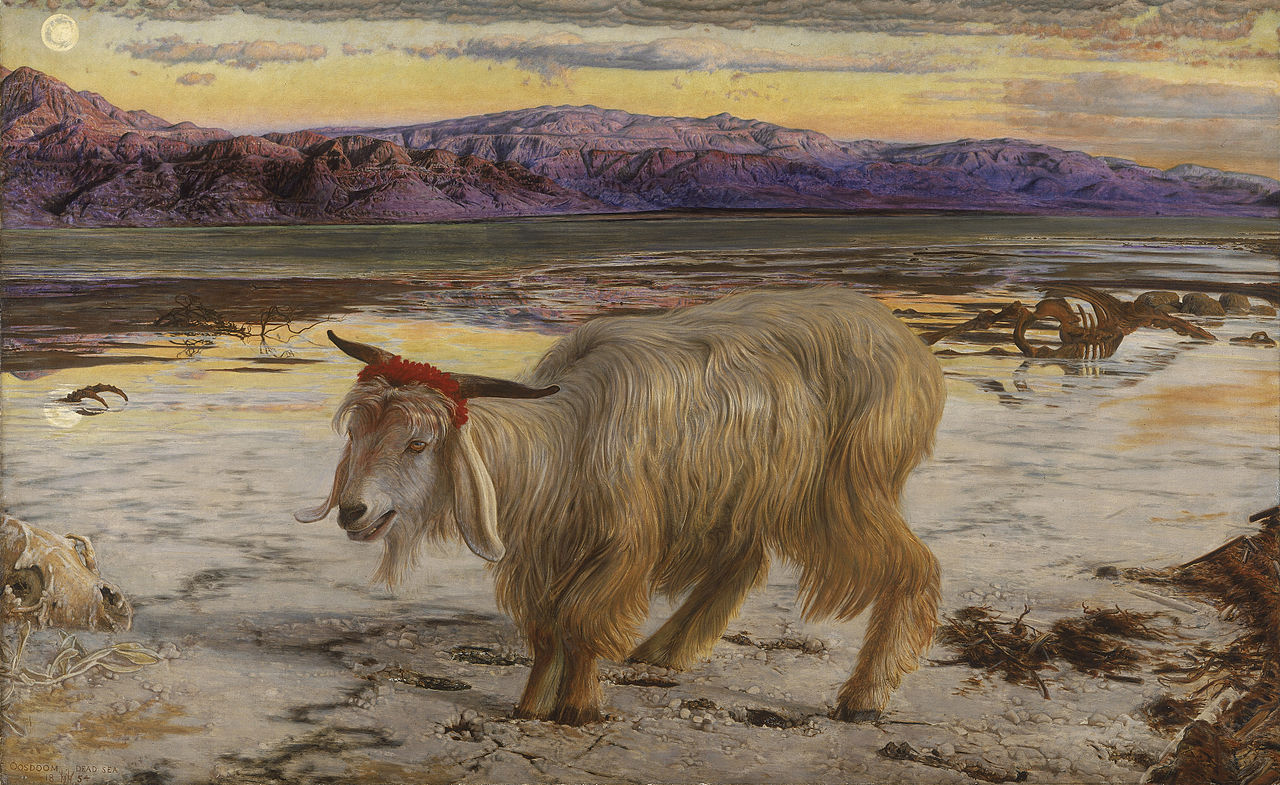
The Scapegoat, William Holman Hunt.
You have to follow this thing everywhere.
Found here.
The Beast is far from sacred, but must be supervised anyway by a Holy Man. It is a scapegoat, burdened with the sins of many and so a vessel of a certain degree of power. Your job is to bind the sins of many into it on your travels (there's your Level-up mechanic!), use it wisely and hopefully get it killed somewhere remote doing something useful.

Any thoughts?

Saturday, 15 June 2019

Unlikely Golems

A bid to produced golems divorced from the elemental concept - and hopefully with some interesting structural elements. These aren't as wild, say, as some of those in China Mieville's Iron Council - but they are deliberately distinct from the natural or elemental ideas in that book.  The below are also intended to be for purposes beyond smashing things, as I hope the below makes clear.

Rope Golem
In appearence: much like a corn dolly; a roughly humanoid bundle of ropes and cables.

Capabilities and properties: it is able to knot or plait itself together into thicker, but stronger lengths.

Intended purpose: among other uses, the golem is known for its use in rescue missions, able to prise away broken rubble.

Location of the words of power that give it motion and purpose: stitched onto a central rope.


Reed Golem
In appearance: a great bundle of thatch, like a squat humanoid, with thickly ridged arms and a peaked head, somewhat reminiscent of a Pharaonic headdress.

Capabilities: it floats on water and is lighter than most of its kind. Water sheds from its exterior.

Intended purpose: a reed golem is often used as a 'less-lethal' means of crowd control. However, a popular model of golem can twist itself into a strange form of boat - the peaked head forming a prow of sorts. Their relative cheapness, bulk and ease of decorating often can see then used in theatrical work.

The words of power: these are twisted sigils made from reed stalks embedded along the line of the golem's 'spine'.


Wattle and Daub Golem
In appearance: a bulky, squarish, Deco sculpture - if sculpted out of packed earth. Neat lines of studs line its body - the protruding portions of its framework.

Capabilities: it has a distinct frame, making it slightly more coherent than the Clay 'Classic' Golem.

Intended purpose: it is much like a classic golem - but it is on the whole, cheaper and easier to repair.  The AK47 of golems.

The words of power: these are cut into the line of the thigh rod of the skeleton.


Wood shaving golem
In appearance: a wall of little curled cylinders all pointing the same way, elements of which separate to form arms and legs. If the wind is in the right direction, it makes a slow eerie whistling as it walks.

Capabilities: it is formed of lots of woodshavings, hardened with an alchemical varnish. It is remarkably lightweight and can become quite compact; it can walk almost silently.

Intended purpose: it is very popular as a silent servitor and useful for handling delicate articles.

The words of power: one of the cylinders is a scroll. Good luck on finding it.


Enamelware Golem
In appearance: a bulbous figure. Rounded covers protect the joints, of which there are few. The hands alone are primitive - frequently mitten-like, or pincers. It comes in a range of colours. It might put you in mind of a nineteenth century diving suit.

Capabilities: the golem is effectively a hollow frame. Tough, but not super-resilient. Easily cleaned.

Intended purpose: the fact that the golem can be cleaned is valuable for those who need it to do dirty jobs or deal with noxious substances.

The words of power: are kept in a hermetically sealed vial in the head.


Fur Golem
In appearance: an odd thing, like a slumped hollow sack made of fur. Its limbs bend trying to imitate those of a beast. It is, or can be, dead fancy.

Capabilities: hollow,  flexible and warm.

Intended purpose: is there something you need kept warm and safe in a cold place? Would this by any chance be yourself? A walking shelter is not to be despised. They can also be a status symbol of sorts.

The words of power: are stitched onto the interior.

Gravel Golem
In appearance: a torso and two heavy limbs that it lifts itself with. In form, it always seems like it is held together loosely by some unseen sack.

Capabilities: it is slightly flexible and resists beating. It shifts but holds - rather like a gabion.

Intended purpose: a movable, multipurpose prop or bastion.

The words of power: are carved on one stone, larger than the others.


Canvas Golem
In appearance: a bulky, flapping thing - slightly rigid. A bit like a man walking carrying a door frame around himself. It has a face of loose flaps; when it fills with wind this puffs out like a baroque cherub.

Capabilities: living, tough canvas that can keep off the water or gather the winds.

Intended purpose: the most obvious uses are nautical, but canvas golems can also be used as part of theatrical backdrops.

The words of power: are across the fabric of the golem in bands of Ogham like stitching.

Monday, 27 May 2019

Beggarstaffs, Ruin and the Great Outdoors

A recent exhibition at the Fitzwilliam Museum, near me in Cambridge occasioned a visit. This set out some of the work of William Nicholson and James Pryde. The two are most famous for cooperating to create posters - as 'Beggarstaffs' - but the exhibition dealt with more than this. Portraiture, illustrations and other scenes from both artists were on display.

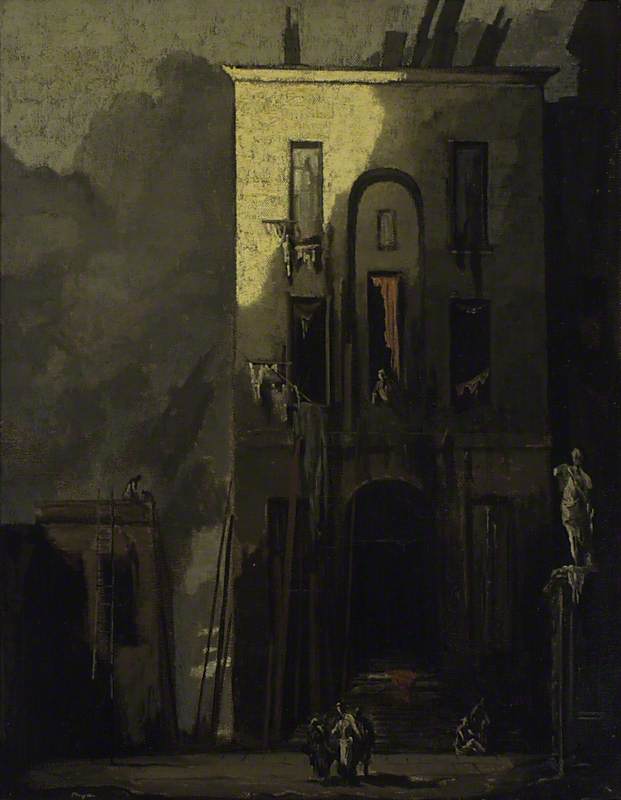
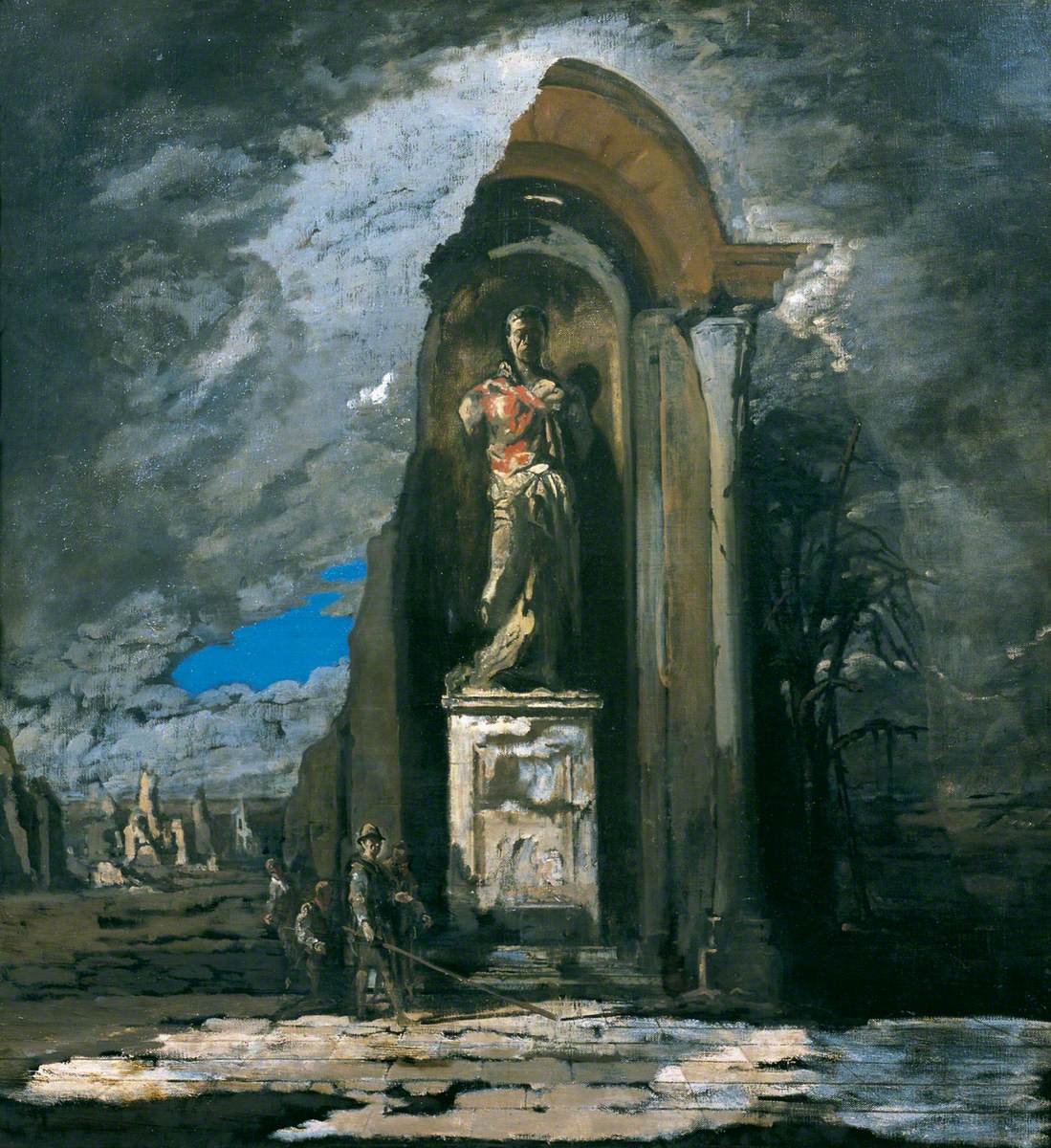
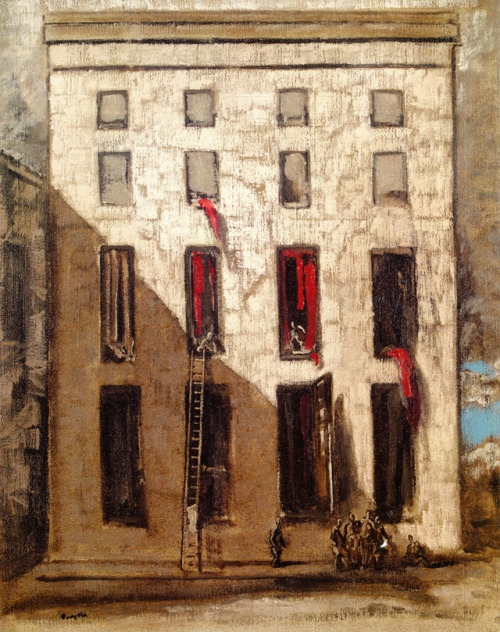
Among these were a series of gloomy city scenes by Pryde, generally focusing on an archway as an overriding feature.
The Slum, 1916
Image found here: https://artuk.org/discover/artworks/the-slum-142570

The Monument
You'd never guess these were made around the First World War, would you?
Image found here: https://artuk.org/discover/artworks/the-monument-29078

I don't want to give the impression these all involved arches. I think this one involved Venice.
Anyway, the combination of ruins, deprivation and the miserable inhabitants of heroic scale monumental architecture produced one notable response in me: OSR Aesthetics of Ruin. I know, I've written about this before (beware the man of only one blog post!). But Pryde may be worth adding to the index of artists for such material.

***

That might have been where the post finished, but no. My reading of late has taken in The Old Ways by Robert Macfarlene, as well as Patrick Stuart's Silent Titans (which I might write a dedicated response to later on). Either way, my mind has been homing in on landscapes.

Does the the corner of tabletop roleplaying I am interested in have much scope for the large, the slow - the geological? Hexcrawls abound, but they have a tendency to seem a little unnatural - oddly curated. Perhaps it is the GM's jobs to smooth the discrete hexes into the flow of a realistic landscape.  Enclosed spaces: Dungeons, Cities, Mazes, Caves - these are the places in which the most impressive work has been done. Even if the scale is inflated it is still an enclosed, finite space. Puzzle-box environments, full of mechanisms.

Could this be done in a natural (or largely natural environment)? The Gardens of Ynn are rather too managed (or, formerly managed) for this to take place, and the Wir-Heal of Silent Titans has been so comprehensively fractured on the dimensional level I'm not sure either count. The video game Fallout: New Vegas had Zion National Park, with its maze of canyons and possibilities for verticality, which comes pretty close to this.

However, thinking of the sweep of the landscape one encounters on walks: in which each spur seems to promise the tip of the headland, where long empty skies change the system of thought, where the terrain under foot changes your whole mode of walking (try going from a sandy beach to a pebble beach).  The scale of landscapes seen from above in Peter Jackson's Lord of the Rings, bare and vast. T. E. Lawrence, in Seven Pillars of Wisdom, writes about how dramatic a change of rock was to campaigning in the desert, because of what it meant for vehicles or beasts of burden. Reading about this made it seem as dramatic as a minefield or an obstacle like an enemy bunker, because of the hostility of the desert (Lawrence is good when writing about rocks).

Perhaps the small-party-of-adventurers is the wrong unit for a game to talk about landscapes. Even mounted, they don't necessarily move quickly enough to take it in. Joseph Manola's Against the Wicked City is good about discussing the sweep of Central Asia, but passes over much of the countryside proper (see the comments in that last link). This is hardly blameworthy; Manola wishes to make Against the Wicked City, not Steppe Simulator Five.

Perhaps the place to look is to vehicle combat as a central gameplay feature. Mad Max is the touchstone - not in terms of the internal combustion engine, the post-apocalyptic or Australia, but in terms of speed, the importance of relative position, the possibilities of open space, the consequences of terrain (not that you can't traverse something, but what it will do to you as you traverse it).

This may merit further research, as well as mooting a series of simple settings suitable for this kind of combat.

Monday, 20 May 2019

Sans-culottes, but not sans Style

Tell me, how do you picture the dress of those in Revolutionary France? Ragged members of the mob? Jacobins in torn shirts? Cold-eyed Robespierre imitators in eyeglasses and tight coats? The Scarlet Pimpernel in disguise?

Perhaps you are right. But the French Revolution saw a change of many things, in line with rational principles. A new calendar, free of the names of the past. The metric system, the same system of measures across France. The Rights of Man.

Behold then, the rationally dressed man.

Thank you, Wikipedia.

This is the costume of a member of the Council of Ancients as formed by the Constitution of the Year Three. This was the Upper House; the Council of Five Hundred, the lower, didn't look dissimilar. Take in the heavy, tall hat with its plume; the immense sash, the red pseudo-Grecian cloak. It really is something.
Coat of arms or logo
Bonaparte's Coup of the 18 Brumaire. Slightly less detail here.
Whilst the Constitution does not per se go into details of the costume, it is clear that a legislators uniform will be worn.

Article 165:
The members of the Directory, when engaged in the exercise of their functions, whether upon the outside or within the interior of their residences, can appear only in the costume which is appropriate for them.

Article 369: 
The members of the legislative body and all the public functionaries wear in the discharge of their functions the costume or symbol of the authority with which they are invested: the law determines the form thereof.

The picture of revolutionary fervour.
I have made mock, but this was a serious issue: an invocation of a new way of life for lawmakers, an obvious sign of their position - a clear break also with the fashions of the old regime. There will be no display of status by legislators, for they will all be dressed alike.

There was even conflict over the uniform: I understand from this chap that the uniforms were meant to be of purely French manufacture. When it emerges that some were not, they were seized by a local governor.

I'm not sure these uniforms were ever that prevalent (even given the changes wrought to the French Republic by Napoleon). They don't seem to have worked their way into the popular consciousness or the elite self-image of the legislators themselves.

Nevertheless, the above is worth considering. If depicting a Revolution in surroundings or with features like that of 1789, Che Guevara-style 'men of the people' in drab khaki or boiler suits may not be the image that should come to mind. There's no reason the new order can't look good.

Wednesday, 1 May 2019

Wear, Tear and Repair of Magic Wands, Staffs &c

Swords must be sharpened, or they lose their edge. Armour must be leaned and oiled, or it will rust. If you find an old battle-axe, it will be indeed of restoration before use. Magic wands and staffs are no different in that they must be maintained, but of course, the problems and the solutions are rather different.

This article will be discussing magical items that are used to cast spells. This is treated as distinct from, say, a sword that magically bursts into flame. IE, Sting glows blue when orcs are about - but this is part of the nature of Sting. Power is not directed through it in the same way as, say, a wand in Harry Potter. I've used wands or staffs as the example - but, for instance, an athame or amulet could suffer similar problems. 

This assumes a semi-Vancian magic - a wand is 'loaded' with spells, but may only be able to take one form of spell (like a relatively specialist gun and ammunition). Said wand may draw upon magic as a whole to recharge itself. The below is hopefully flexible enough to be applied across systems.

1. Permanently Submerged
How does it happen? What effects does it have? A magic wand or similar is submerged in water for longer than a day. It begins to take on the nature of the water and gains a permanently damp and slick surface, producing a substance called Thaumoleum, the colour of corroded bronze (this can be used as a base for low-quality potions, though the hands of those who handle it can be permanently marked). Handling said wand now becomes much more difficult.
How to fix it? Dry it off and keep it dry. Then place it in an oven lit or sustained by magical flames for a day.

2. Breaks the Law of Gravity
How does it happen? What effects does it have? The wand has slipped away from its mooring in this world. It begins to defy weight, though it still possesses mass. This is not cumbersome, initially. In time, it will slip your hand and disappear into orbit. It is thought that this may be down to a spell-caster's arrogance.
How to fix it? Stop using it. Perhaps permanently. If this is not an option, tethers are recommended.

3. Murmuration and tintinnabulation
How does it happen? What effects does it have? Wands, if unused, may store a great deal of potential magic within them. An unused wand, thus, if struck, dropped or touched, may sound like a bell or cymbal. The fabric of the wand has become as resonant as the metal of a bell.
How to fix it? Use it as much as possible in a short space of time. You must discharge every spell and leave it empty.

4. Reduced scope
How does it happen? What effects does it have? Eroded, abraded or lessened by physical means: if these happen to a wand, but the wand itself is still largely intact, it will function, but not nearly as well. A fireball will fly less far; an illusion cannot be cast at the same distance - and may be less convincing, expressing less of the sorcerer's intentions.
How to fix it? Painstaking craftsman's work to repair the physical elements of the wand without replacing any undamaged portions. Certain varnishes can be used, for instance - but their making is costly, and those with the knowhow are rare.

5. Back to Nature
How does it happen? What effects does it have? The wand has had its magical centre knocked askew and the material of the wand seeks to return to the natural state of it's substance. A wooden staff will start to grow shoots and leaves; a leather item will take on the texture of living skin; a metal rod will morph into a polished rod of ore, with vein of stone.
How to fix it? Isolate the wand from all magic using a lead casket, having first discharged every spell. Keep it within said casket at least for a day, far away from all wielded magics. Lead studs, pushed into the wood of a staff can also dissipate this effect - whilst making said staff much more unstable.

[At least one magician has cultivated this quality, producing a staff with a branch protruding from it that grows a single apple each day.]

6. Exothermic
How does it happen? What effects does it have? If a magic wand does not produce sound or light by its spells, it will grow in temperature slowly but surely. This will not alter the form of the wand - a metal wand will not melt or glow - but it can still scorch flesh if not dealt with.
How to fix it? Use the wand to light a fire in a quiet place. It must burn for at least an hour - and you must watch it burn. As the fire burns, the wand will reduce its temperature.

I may write a few more of these.


Sunday, 21 April 2019

Entertaining a Notion: The Lannisters are Spaniards

Websites and the mouths of colleagues are abuzz with the latest and last series of HBOs adaption of A Song of Ice and Fire, Game of Thrones. Whilst I am familiar with the series, my interest waned sometime ago; this is a pungent and apt criticism. Besides, I do not watch much in the way of television these days.

Anyway, I might as well share this with you as a pet theory. It is of little significance really, but may provoke thought.

It is commonly known that A Song of Ice and Fire draws upon Medieval European history for much of its inspiration: the Wars of the Roses are frequently mentioned. This has spawned various articles, images, &c mapping on bit of Westeros or another to Europe - or vice versa.

Some of these have more worth than others, but I like to see folk thinking about history and how it can be applied to a certain kind of narrative. However, I'd tend to quibble with at least one of their interpretations. Dorne certainly may be thought of as Spanish: we even have authorial fiat on this. However, I should say that it rather represents a Moorish Spain - with a different faith, different mores and somewhat distinct physical features.

If we can map most of Westeros to Western Europe, what of the rest of the Iberian Peninsula? Some can be put in the Dornish Marches. But I'd like to make a case that The Westerlands, home of House Lannister can be thought of as having similarities with Northern Spain.

The mountainous terrain is perhaps one example of this - though that alone is scarcely enough. The long, ocean-facing coast line compares well to the Atlantic, with a sort of Bay of Biscay to the south. Its inhabitants are closer to the capital and court of Westeros than other regions (Dorne, the North and the Iron Islands are somewhat peripheral). The most famous castle of the region is Casterly Rock - which is almost a phonetic reading of Castille. The Lannisters have as their arms the lion: not unique to Spain, but pointing nicely to the Kingdom of Leon. The insistence on wealth and gold maps nicely onto an Early Modern Spain, reaping the rewards of Europe's discovery of the Americas.

[The notion that A Song of Ice and Fire speaks as often to the Early Modern as to the Medieval is not new; however, given Martin was willing to put a Late Medieval Venice equivalent and Pseudo-Babylon on the same continent (and stick down the Colossus of Rhodes at the entrance of the lagoon), linking it all to one time period is a fools errand.]

Said trade might also correspond nicely to the Kingdom of Aragon. We have at least one Westerlands name straight out of Spain: Jaime. Wikipedia suggests that this is simply in the style of distorted real world names, as 'Eddard' for Edward; perhaps, but I mention it anyway. House Westerling, a Westerlands house of narrative relevance bears several sea-shells on its coat of arms - which feels rather like a reference to Santiago de Compostela with its Pilgrim trail and sea-shell badge.

Is all this proof? Barely. But we construct parts of our images of fictional worlds from real places. Here is a little material to perhaps make those images richer.

Saturday, 20 April 2019

Valkyries vs Vampires

My last post, tying into the Harry Clarke Project drew on (and obliquely referenced) both the Swan-Maidens of Norse myth and the image of the Vampire. Said Maidens overlap with Valkyries, to some degree or the other.

Therefore, an idea naturally occurs, spurred by the attraction of alliteration. This may hopefully be dropped in at will into a wider narrative.

Our bold heroes are travelling, when they come across the remains of a battle. Fairly recent, too - both sides have retreated, but the dead and dying litter the field. But in the midst of the carnage, figures are moving.

The shapes of armed, beauteous women descend (possibly on horses, perhaps on wolves, conceivably on giant ravens). Valkyries, choosers of the slain. They are picking the battlefield for heroes, to recruit them for the armies of the Allfather*. How can these adventurers see the psychopomps such as these? Presumably they've been around enough magic for it to have had a permanent effect.

If you are unwilling to dig up or make up a unique set of valkyrie rules, I imagine they couls be 'glossed' as high level paladins.

A list of Valkyries might include:
Brünnhilde(soprano)
Waltraute (mezzo-soprano)
Helmwige (soprano)
Gerhilde (soprano)
Siegrune (mezzo-soprano)
Schwertleite (contralto)
Ortlinde (soprano)
Grimgerde (contralto)
Rossweisse (mezzo-soprano)

But amongst the corpses, others lurk. Vampires are preying on the dead (or more likely, the dying) of the battlefield. They are not just here for blood, however. Skilled (if defeated) warriors could be of use as thralls, risen from the dead and under their master's spell.

The Vampires are accompanied by various undead and human minions- the latter very much in the Renfield vein. Among other things, said minions can assist their masters in picking over the battlefield or holding parasols.

A list of Vampires might include:
Graf von Orlock
Sir Francis Varney
Lord Ruthven
Count Alucard
Prince Mamuwalde

(None of the above are known for their vocal work.)

Why might Vampires and Valkyries fight? The main source of conflict here is over resources. Even if it is the spirit of a fallen warrior that gets taken up by a Valkyrie to Asgard, the source of a vampires nourishment is not purely in bodily fluids. Even a lightly touched soul is 'locked down' by vampiric influence.

Why might our heroes back one side or the other? 
Do you want to be a vampire? Wouldn't that be cool?
Are any of your party half-giants? Have they grown up with tales of the wickedness of the Aesir?**
Does the cleric belong to some Pseudo-Christian faith that despises the pagan gods?
How might said cleric feel about vampires?
Does an eternity of battle really sound that good an afterlife?
Presumably, the long-lived earthbound vampires have deeper pockets than valkyries....
...but the valkyries are better suited to return favours - and more likely to keep their promises.


*Probably Odin, or an ersatz version. Though the use of Tyr could be appropriate.
** There are people writing about just this sort of thing. I can't find it, but I do recall some article pointing out that Ragnarok is revenge for the death of Ymir - entirely to be expected, and perhaps even praised by Norse standards.

Friday, 12 April 2019

Harry Clarke Project: The Hawk-Dandy


Armour Class: as leather
Hit Dice: 4
Movement: twice that of a human, but they can fly.
Attacks: two elegant ritual blades, kept hidden under the robe. Charm spells, at the GM's discretion.
Damage: 2d6
No. Appearing: 1
Morale: 8
Treasure: rather little. The robe becomes rather less magnificent upon a Hawk-Dandy's death, the blades less sharp. Some Hawk-Dandies do keep trophies.
Alignment: Neutral

The Hawk-Dandy or Ornifopter appears as a comely young man stepping through thin air. He wears unfamiliar clothing, loose and robe-like, somewhat resembling feathers. Though it is largely unfamiliar, it nonetheless generally strikes the observer as being rather fine and costly. 

Hawk-Dandies dwell in the most impressive locations possible. If the Ornifopter is not poising artistically, or regarding others, or dropping a bon mot into a conversation, they will absent themselves. They dare not eat, groom or complete other personal tasks in the presence of others.They will in fact attempt to kill those that observe them bathing or dining. Pressing them for details of the same is foolish. 

This has meant that some see them as semi-divine, the equivalent of the Swan-Maidens that attend upon some in the Divine Realm. To intrude upon them would be an offence. To inquire after them would be fruitless. 

There is another account of the Hawk-Dandy. A Hawk-Dandy was once human - albeit a magically gifted one. Naturally, they attended one of the prestigious academies of magic. In such schools, there are those pupils that begin to focus less on their studies and more on the social scene and the possibilities fine clothes and delicate conversation can offer. More magic is focused on the self, upon image - and prestigious image at that. In time, a secret of magic becomes clear: your image can override the world around you. 

However, if you spend all your time looking cool, looking cool is about all your magic will offer to you: and you dare not stop looking cool. The student withdraws into the image and is consumed by it, becoming something of elegance and power - under narrow conditions. A Hawk-Dandy's former tutors regard them with pity and resignation, the way a chemistry teacher might regard a bright pupil now working for a notoriously vicious drug cartel.


The meeting of Hawk-Dandy with Hawk-Dandy often results in a duel. 


This has been a post for the Harry Clarke Project, started over at Cavegirl's Game Stuff. It is submitted under Creative Commons Attribution 4.0: https://creativecommons.org/licenses/by/4.0/